Khizar Seo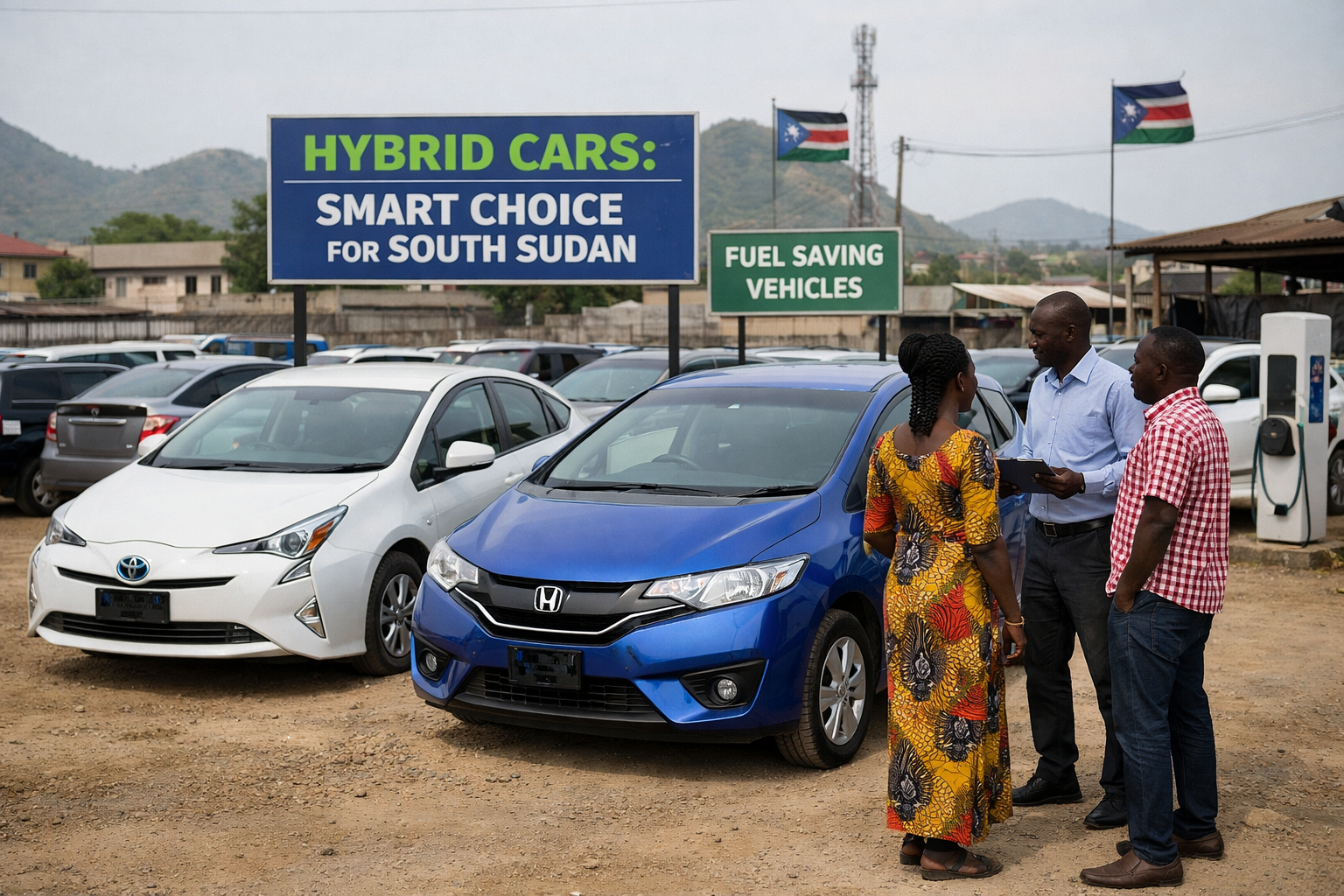
In South Sudan, the conversation around cleaner vehicles is becoming more relevant than ever. As more buyers look for practical ways to reduce fuel costs and improve everyday driving, hybrids and electric vehicles are starting to attract real attention. The local market has its own unique conditions, which means buyers are approaching these options in a way that fits South Sudan’s realities. That makes the shift especially interesting, because it is not just about following global trends, but about finding smarter, more practical solutions for local drivers.
This is not a market where people can assume reliable electricity, widespread charging points, or stable operating conditions for full EV ownership. Instead, the conversation has to start with what is practical. That is exactly why hybrids are becoming more relevant. They offer better fuel efficiency and lower running costs without depending on public charging infrastructure or major lifestyle changes.
Why Lower Running Costs Matter More Than Ever
For many South Sudanese buyers, vehicle ownership is not just about the purchase price. It is about what the car will cost to run every single day.
When fuel prices rise sharply, the pressure on families, businesses, and transport operators becomes immediate. In that kind of environment, efficiency is no longer just a bonus feature. It becomes one of the most important parts of the buying decision. That is why more buyers are starting to look beyond traditional petrol-only vehicles. They want something that can reduce fuel use, manage stop-start driving more efficiently, and make everyday transport more affordable over time.
Why Hybrids Are the Most Practical Choice for Most Buyers
This is where hybrids clearly stand out. A conventional hybrid does not need to be plugged in. It charges itself through regenerative braking and the petrol engine, making it far more practical in a country where electricity access remains limited, and power supply can be unstable. That is a major advantage in South Sudan. A hybrid still feels familiar in day-to-day ownership. You drive it like a normal car, refuel it like a normal car, and use it without depending on charging stations. At the same time, it uses fuel more intelligently, especially in city traffic and at lower speeds. For most South Sudan buyers, that balance makes hybrids the smarter first step toward lower-cost driving.
Where EVs Still Have a Place in South Sudan
Electric vehicles still offer genuine advantages. They are quiet, smooth, and mechanically simpler in many ways than conventional petrol cars. They also have fewer moving parts and can reduce some maintenance needs over time. For the right type of owner, an EV can be a very good fit. But in South Sudan today, that fit is still narrow.
A full EV is more realistic for someone with predictable urban driving, access to dependable private charging, and limited need for long-distance travel. That means EVs are not irrelevant, but they are not yet the easiest answer for the broader market. So while EVs do have a place, hybrids currently suit a much larger share of real-world buyers.
The Types of Cars That Make the Most Sense Right Now
For buyers who want lower running costs without adding charging risk, proven Japanese hybrids are currently the most sensible place to start. Models such as the Toyota Prius, Toyota Aqua, Honda Fit Hybrid, Honda Vezel Hybrid, and Toyota Corolla Fielder Hybrid all make strong sense because they are widely known for fuel efficiency, daily usability, and practical ownership. They allow buyers to benefit from hybrid technology without taking on the extra demands of full EV ownership.
For buyers who still want to explore a fully electric option, the Nissan Leaf remains one of the most realistic examples. It works best as a city-focused vehicle for owners with reliable charging access and predictable travel patterns. That makes it a more specialized choice rather than the default solution for most people.
Why Hybrids Deserve More Serious Attention in South Sudan
The biggest point is simple. South Sudan does not need to rush into the idea that EVs are taking over overnight. That would not reflect current conditions. What the country does need is a more realistic conversation about which vehicles actually fit local life today.
Right now, hybrids deserve much more serious attention because they reduce fuel use, support lower running costs, and do not depend on a fully developed charging ecosystem. They offer a practical middle ground between traditional petrol ownership and full electrification. That makes them the strongest fit for the wider South Sudan market at this stage.
Why Carbarn South Sudan Can Play an Important Role
As interest in hybrids and EVs begins to grow in South Sudan, buyers need more than just access to vehicles, they need clear, practical guidance they can trust. Choosing the right vehicle is not only about technology or global trends, but about finding what truly suits local roads, daily travel needs, fuel costs, electricity access, and overall affordability. This is where Carbarn South Sudan can stand out by helping buyers make confident, well-informed decisions based on real conditions in South Sudan. By offering honest advice, practical vehicle options, and transparent support throughout the buying process, Carbarn South Sudan can position itself as a trusted name for smarter, more suitable car choices in a changing market.
Final Thoughts
The right conclusion for South Sudan is not that EVs are already the answer for everyone. The more accurate conclusion is that hybrids make far more sense for most buyers right now.
They offer the fuel-saving benefits people want, while avoiding the charging and electricity challenges that still limit wider EV adoption. EVs do have a role, but for now that role is more specific and more selective.
For buyers who want to reduce running costs, make smarter long-term decisions, and choose a vehicle that truly fits life in South Sudan, hybrids are currently the more practical choice.
And as more people begin to explore that shift, Carbarn South Sudan is well positioned to help lead the conversation with clarity, trust, and the right vehicles for the market.