Admin
Admin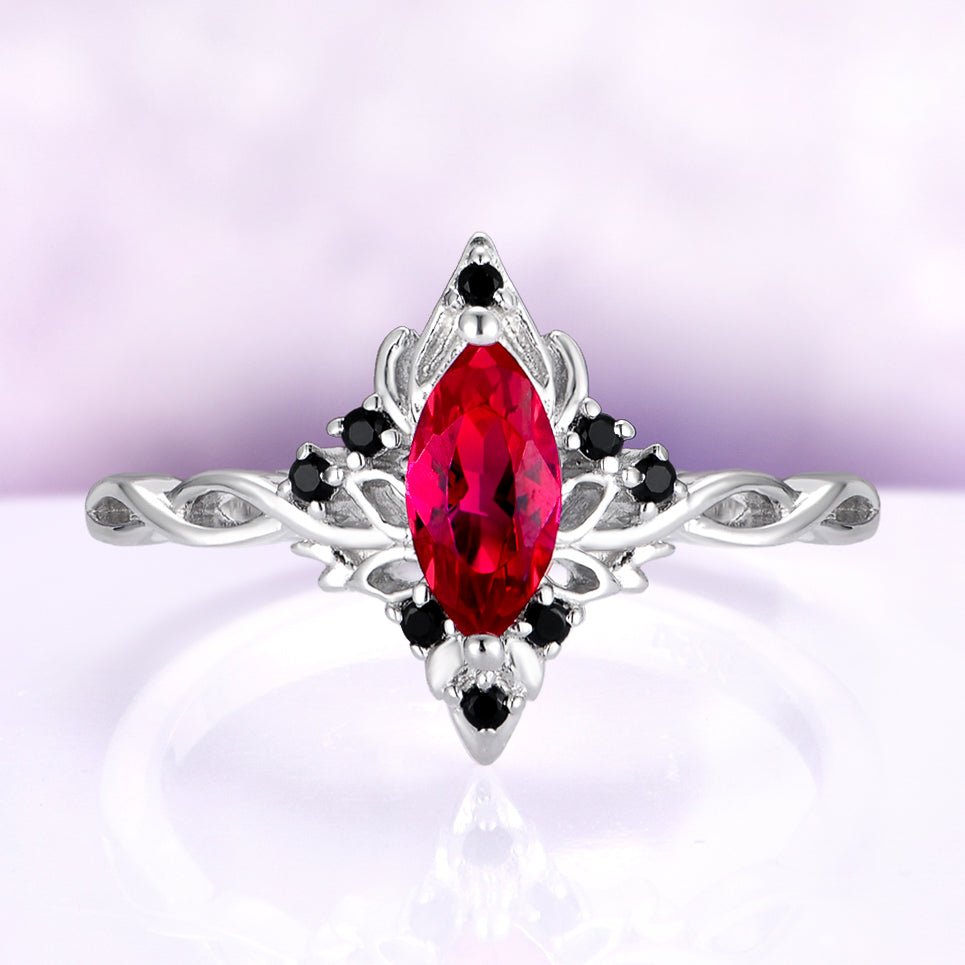
Gothic style is less a single look than a mood. It borrows from cathedral architecture, Victorian mourning jewelry, and the romance of shadow and light, then translates all of that into something you can wear on one finger. When people say an engagement ring feels gothic, they are usually responding to a handful of specific design choices working together rather than to any one dramatic feature. Understanding those choices makes it far easier to recognize the style, describe what you want, and tell the difference between a ring that merely looks dark and one that genuinely reads as gothic. If you want to see how these ideas come together across a range of designs, browsing a specialist maker such as Aquamarise.com is a good way to train your eye before you decide what speaks to you.
Dark and moody stones set the tone
The fastest route to a gothic feel is the center stone, and here the mood matters more than any single color. Deep, saturated stones read as gothic because they absorb light instead of scattering it brightly. Think of the smoldering red of a garnet or ruby, the near-black depth of a dark spinel, the ink of a moody sapphire, or the cool gray of a smoky quartz. These stones carry drama quietly, catching a glint only when the light hits them directly. Contrast is part of the effect too. A rich, brooding center stone framed by small pale accents creates the push and pull between darkness and light that defines the whole aesthetic. A stone does not have to be literally black to feel gothic; it simply needs that sense of depth, secrecy, and controlled intensity that lighter, sparklier gems tend to lack.
Blackened and antiqued metal tones
Metal color does a huge amount of quiet work. Bright, high-polish surfaces feel modern and cheerful, which is the opposite of the gothic register. Darkened, oxidized, and antiqued finishes shift the whole mood toward something older and more mysterious. A recessed pattern that reads as shadowed, a matte or brushed surface that softens reflections, or a deliberately aged look in the crevices of a design all suggest history and gravity. The point is purely visual. These deeper tones make engraving and texture stand out, because the low areas stay dark while the raised areas catch the light, giving the ring a hand-worked, heirloom quality. Even a relatively simple band can tilt gothic when its finish trades showroom shine for something more subdued and moody, letting the structure and detail speak instead of the sparkle.
Contrast between a bold stone and dark accents defines the gothic look.
Ornate and architectural settings
Look closely at a ring that feels convincingly gothic and you will often find the influence of buildings. Gothic architecture gave us pointed arches, spires, tracery, and filigree, and jewelers borrow that vocabulary directly. A setting that frames the stone with arch-like prongs, openwork that echoes a rose window, or fine metal lace that climbs the sides of the band all carry those cathedral cues. Detail is prized over minimalism here. Where a contemporary solitaire strips everything away to spotlight the stone, a gothic setting surrounds it with structure, shadow, and ornament. This is also why so many gothic-leaning designs feel substantial and sculptural rather than dainty. The setting is not just a way to hold the stone; it is a small piece of architecture in its own right, meant to be admired from every angle.
Unusual silhouettes and shapes
Silhouette is where a gothic ring quietly breaks from convention. Instead of the familiar round or oval outline, gothic design gravitates toward shapes with points, edges, and drama. Elongated marquise stones with their tapering tips, angular geometric outlines, and settings that come to a distinct point all feel more gothic than a soft, rounded profile. The overall shape of the ring can lean asymmetric or slightly unexpected, hinting at the wild and the untamed rather than the neat and symmetrical. This is a subtle lever, but a powerful one. Two rings can use the same stone and the same metal tone, yet the one with the sharper, more elongated silhouette will read as noticeably darker in spirit. Points and edges suggest intention and edge in the figurative sense, which is exactly the emotional note the style is reaching for.
Symbolism and meaningful motifs
Gothic jewelry loves a story, and motifs are how it tells one. Romantic and slightly mysterious symbols recur again and again: hearts wrapped in thorns, serpents coiled around the band, ravens and feathers, celestial moons and stars, roses, and the interplay of light and dark as a theme in itself. These details reward a second look and give the ring meaning beyond its materials. A serpent can stand for eternity and rebirth, a moon for intuition and change, a thorned rose for love that endures difficulty. Choosing a motif that resonates with your own relationship is one of the most personal parts of the process, and it is often what makes a design feel truly yours. If you are drawn to this symbolic, storytelling side of the style, exploring a curated selection of a unique gothic engagement ring is a helpful way to see how different motifs are handled in practice. The best examples never feel like costume pieces; the symbolism is woven into the structure rather than stuck on top.
Balancing drama with everyday wearability
The final ingredient is restraint, which may sound surprising for a style built on drama. A ring you wear every day has to live comfortably on your hand through ordinary life, so the most successful gothic engagement rings balance their theatrical elements with practical proportions. That might mean a bold center stone paired with a smoother, low-profile band, or intricate detailing kept to a scale that will not catch on clothing. The mood stays intact while the ring remains genuinely wearable. Think of it as choosing one or two strong gothic gestures and letting the rest of the design support them quietly, rather than piling every dark element into a single piece. A ring that whispers its darkness tends to age better than one that shouts it, and it works just as well with jeans as it does with something more dramatic.
The takeaway
A gothic engagement ring is not made by any single feature but by a set of choices pulling in the same direction: moody stones, deeper metal tones, ornate and architectural settings, sharper silhouettes, meaningful motifs, and a sense of proportion that keeps it wearable. When those elements agree with one another, even a subtle ring can feel unmistakably gothic. Start by deciding which one or two of these levers matter most to you, and let the rest follow. That way the finished ring feels intentional and personal rather than merely dark for the sake of it, and it becomes a piece you can wear and love for a very long time.