Khizar Seo
Clean drinking water isn’t a luxury—it’s a necessity. Yet for millions of apartment dwellers in urban settings, accessing reliably pure water presents unique challenges. Aging building pipes, municipal treatment limitations, and the presence of biological contaminants like bacteria and viruses make water filtration more than just a preference. The question many renters and small-space homeowners ask is straightforward: how much does a reverse osmosis system cost, and can it realistically fit into a compact living situation?
Space limitations add another layer of complexity. Traditional under-sink systems with bulky storage tanks simply won’t work in a galley kitchen or a studio apartment with minimal cabinet room. Fortunately, the market has responded with innovative, space-conscious designs that deliver hospital-grade filtration without consuming precious square footage. This article provides a detailed cost breakdown of reverse osmosis systems tailored for small spaces, explores practical installation solutions, and helps you determine whether an RO system—or an alternative—makes the most sense for your budget and living arrangement.
Breaking Down the True Cost of a Reverse Osmosis System
A reverse osmosis water purification system forces water through a semi-permeable membrane, removing up to 99% of dissolved solids, bacteria, viruses, and chemical contaminants. The membrane’s microscopic pores allow only water molecules to pass, rejecting everything from lead and chlorine to pharmaceutical residues. Understanding how much a reverse osmosis system costs requires examining three distinct expense categories: the upfront purchase, installation, and ongoing maintenance—each of which shifts significantly when you’re shopping for compact models designed for apartment living.
Initial Investment: Purchase and Setup
Entry-level under-sink RO systems typically start around $150–$300, offering basic 3–4 stage filtration suitable for most municipal water supplies. Mid-range models with 5–7 filtration stages, faster flow rates, and tankless designs fall between $300–$600—these represent the sweet spot for small-space dwellers who need performance without bulk. Premium countertop units, which require zero permanent installation, range from $400–$800 depending on brand reputation and filtration sophistication. Factors driving price differences include the number of filtration stages, membrane quality, flow rate measured in gallons per day, and whether the system includes smart monitoring features like filter life indicators. Professional installation adds $100–$250, though many compact systems now ship with quick-connect fittings that make DIY setup realistic in under an hour.
Long-Term Ownership: Maintenance and Operational Costs
The purchase price tells only part of the story. Annual filter replacements—typically sediment, carbon, and post-carbon filters—run $40–$80 per year for most compact systems. The RO membrane itself lasts 2–3 years before requiring replacement at $30–$75 per membrane. Water waste is another hidden cost: traditional systems produce 3–4 gallons of wastewater for every gallon of purified water, though newer models achieve 1:1 or even 2:3 pure-to-waste ratios, meaningfully reducing your water bill. Energy consumption remains negligible for most residential units—typically under $5 annually. Proper maintenance directly impacts total cost of ownership; neglecting filter changes forces the membrane to work harder, shortening its lifespan and degrading water quality. Over a five-year period, expect total ownership costs between $500–$1,200 for a quality compact system, making it considerably cheaper than bottled water at roughly $0.03–$0.05 per gallon of purified water produced.
Why Apartment Dwellers Need Specialized Water Filtration Solutions
Living in an apartment means navigating constraints that homeowners rarely consider. Cabinet space under the kitchen sink might accommodate a small trash bin and cleaning supplies—leaving zero room for a traditional RO system with its pressurized storage tank. Shared plumbing infrastructure compounds the problem: older buildings with galvanized or lead-soldered pipes introduce heavy metals long after water leaves the treatment plant, while high-rise systems with rooftop storage tanks create breeding grounds for bacteria and biofilm. Municipal water reports reflect quality at the source, not what flows from your twentieth-floor faucet.
Biological contaminants present particular concern for apartment residents. Legionella, coliform bacteria, and even viruses can proliferate in building plumbing systems with stagnant sections or inconsistent temperatures. Standard pitcher filters and faucet attachments reduce chlorine taste but offer minimal protection against these microorganisms. Traditional under-sink RO systems solve the contamination problem but create a space problem—their 2–4 gallon tanks occupy roughly 70% of available cabinet volume in a typical apartment kitchen. This tension between effective purification and spatial reality is precisely why manufacturers have developed tankless, slim-profile, and countertop RO units that deliver comprehensive filtration within footprints as small as a coffee maker. The right system eliminates the compromise between clean water and livable space, but selecting it requires understanding which innovations actually matter for your specific situation.
Compact Reverse Osmosis Systems: Features, Prices, and Innovations
The evolution of reverse osmosis technology over the past decade has produced systems that would have seemed impossible in earlier generations. Today’s compact RO units leverage advanced membrane engineering and innovative design to deliver comprehensive water purification from devices barely larger than a thermos. These systems specifically address the needs of apartment dwellers who refuse to compromise between water quality and living space, incorporating features that eliminate biological contaminants—including bacteria, viruses, and protozoa—while maintaining footprints compatible with even the tightest kitchen configurations.
Key Features for Small-Space Efficiency
Tankless technology represents the single most important innovation for apartment-friendly RO systems. By eliminating the bulky pressurized storage tank, these units reduce their footprint by up to 60% while delivering fresh-filtered water on demand rather than storing it where bacteria could potentially regrow. Multi-stage filtration packed into slim housings—often combining sediment removal, activated carbon adsorption, the RO membrane, and post-filtration remineralization into a single integrated cartridge—means fewer components competing for cabinet space. Quick-connect fittings and universal adapter kits allow renters to install systems without permanent plumbing modifications, preserving security deposits. Smart features like app-connected TDS monitors and automatic flush cycles extend membrane life while giving users real-time confidence in their water quality. Some countertop models now incorporate UV-C sterilization as a final stage, providing an additional barrier against biological contaminants without adding meaningful bulk to the system’s dimensions.
Cost Comparison of Popular Compact Models
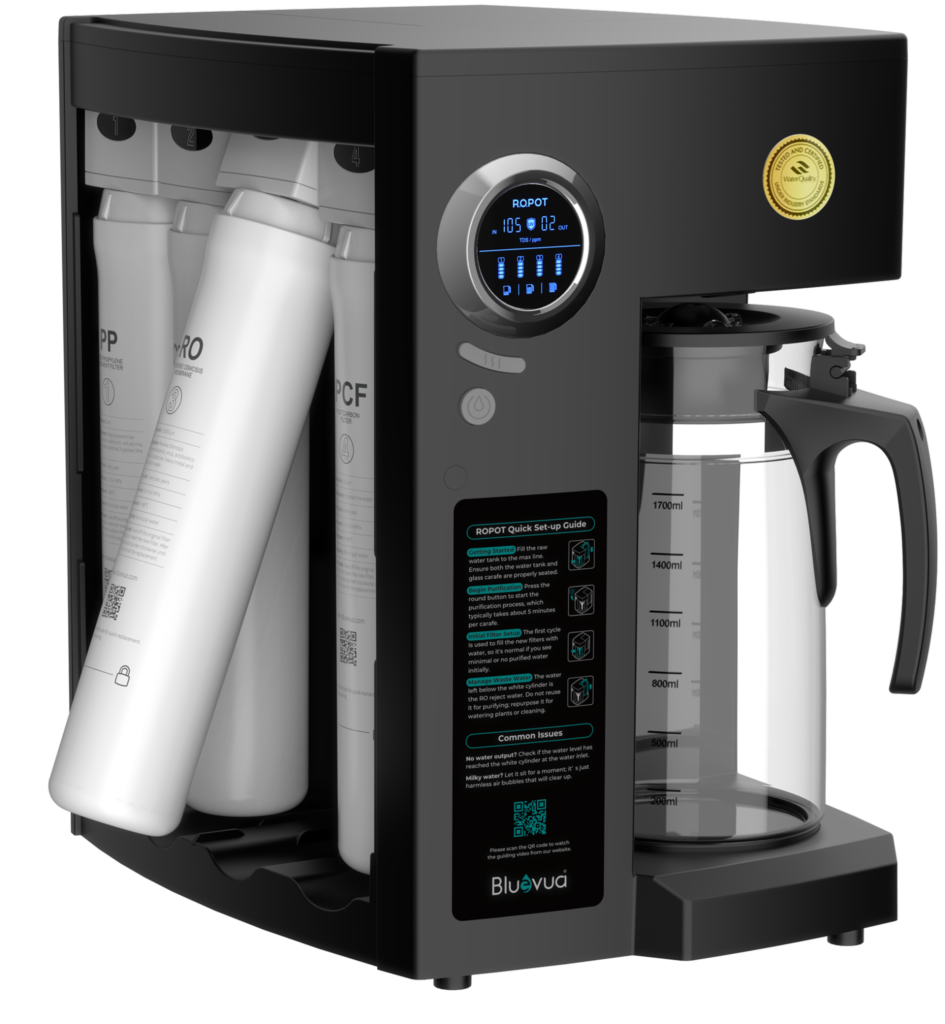
Understanding how different compact systems compare helps narrow your decision. Tankless under-sink models occupy roughly the space of a large water bottle laid on its side and typically cost between $350–$550, offering 400–800 gallons per day with pure-to-waste ratios around 2:1. Countertop RO systems requiring no installation—simply connect to your faucet aerator—range from $400–$750 and suit renters who need portability between apartments; brands like Bluevua have gained attention in this category for their compact countertop designs tailored to small living spaces. Portable pitcher-style RO units, a newer category, fall between $150–$300 but filter more slowly and handle lower daily volumes. Under-sink slim-profile models with integrated mini-tanks (holding roughly half a gallon) bridge the gap at $250–$450, providing instant access to filtered water without the bulk of traditional tanks. When evaluating these options, prioritize the system’s certified contaminant removal list, its waste water ratio, and whether replacement filters use proprietary or universal cartridges—since proprietary filters often carry premium pricing that inflates long-term ownership costs significantly.
Step-by-Step Guide to Implementing a RO System in Small Spaces
Moving from research to action requires a systematic approach, especially when you’re working within the constraints of apartment living. The difference between a successful installation that serves you for years and a frustrating purchase that ends up in a closet often comes down to preparation. Following a structured process—from initial assessment through ongoing maintenance—ensures you select and install the right system while keeping costs predictable and manageable.
Assessment and Selection Process
Start by testing your water. A basic home testing kit costing $20–$40 reveals your specific contaminant profile—hard minerals, chlorine levels, heavy metals, and bacterial presence all influence which system you actually need. If your building has older plumbing, request a copy of your landlord’s most recent water quality report and compare it against EPA standards. Next, measure your available space precisely. Open your under-sink cabinet and measure depth, width, and height, accounting for existing plumbing connections, garbage disposal units, and drain pipes. Photograph the area and bring measurements when shopping. Match your findings to system specifications: if testing reveals biological contaminants like bacteria or viruses, prioritize systems with certified removal rates above 99.9% for microorganisms. If space measures less than 12 inches in any dimension, countertop models or ultra-slim tankless units become your primary candidates. Set your budget by calculating not just purchase price but projected two-year ownership costs including filters, and compare that figure against your current bottled water spending to confirm the investment makes financial sense.
Installation and Maintenance Best Practices
Most compact RO systems designed for apartments feature tool-free installation using push-to-connect fittings. Begin by shutting off the cold water supply valve beneath your sink, then attach the system’s feed water adapter to the existing cold water line—this typically involves a simple T-connector that splits flow between your faucet and the RO unit. Mount the system using the included bracket or simply position it on the cabinet floor if space allows. Connect the drain line to your sink’s drain pipe using the provided saddle valve or drain adapter, ensuring it sits above the trap to prevent backflow. For countertop models, the process is even simpler: unscrew your faucet aerator, attach the diverter valve, and connect the feed line. Run the system for its recommended flush cycle—usually 15–30 minutes—before consuming any water, as this removes manufacturing residues from the membrane. Establish a maintenance calendar immediately after installation: replace sediment and carbon pre-filters every 6 months, the RO membrane every 24–36 months, and the post-filter annually. Setting phone reminders prevents the common mistake of running filters past their effective lifespan, which degrades water quality and strains the membrane. If you notice flow rate dropping between scheduled changes, check for kinks in tubing or air locks before assuming filter failure—these simple issues account for most performance complaints and cost nothing to resolve.
Alternatives and Comparisons: Portable Water Filters and Beyond
Reverse osmosis isn’t the only path to clean drinking water in a small apartment. Portable water filters offer viable alternatives depending on your contamination concerns and budget. Gravity-fed filters using ceramic and carbon elements cost $50–$150 upfront and remove bacteria and protozoa effectively, though they struggle with dissolved solids and viruses that RO membranes handle easily. UV water purifiers, available as portable bottle-style devices for $60–$120, neutralize biological contaminants including viruses within seconds but leave chemical pollutants and heavy metals untouched. Activated carbon filter pitchers remain the most affordable entry point at $25–$50, excelling at chlorine and taste improvement while offering minimal protection against serious contaminants. For apartment dwellers whose water testing reveals primarily biological concerns rather than heavy metals or dissolved solids, a combination of a quality carbon filter with a UV sterilizer can cost less than a full RO system while addressing the most pressing health risks. However, if your water contains lead, PFAS, or elevated TDS levels—common in buildings with aging infrastructure—no portable filter matches the comprehensive removal that reverse osmosis provides. The decision ultimately hinges on your specific contaminant profile: portable filters suit travelers and those with relatively clean municipal water, while RO systems remain the gold standard for apartment residents facing complex water quality challenges who want single-system peace of mind.
Your Budget-Smart Path to Clean Water in Small Spaces
Answering how much a reverse osmosis system costs for small spaces requires looking beyond the sticker price. A quality compact system runs $250–$600 upfront, with annual maintenance adding $50–$100—totaling roughly $500–$1,200 over five years. That translates to pennies per gallon of purified water, dramatically undercutting bottled water while eliminating plastic waste and storage hassles. For apartment dwellers facing aging building plumbing and biological contaminants, this investment delivers measurable health protection within a footprint that respects spatial reality.
The market now offers genuine solutions for every constraint. Tankless under-sink models fit where traditional systems never could. Countertop units move with you between rentals. Portable alternatives serve those with simpler contamination profiles or tighter budgets. The right choice depends on three factors you can determine today: test your water to identify actual contaminants, measure your available space, and calculate your two-year budget including filter replacements. Armed with those specifics, you can confidently select a system that protects your health without overwhelming your kitchen or your finances. Clean water in a small space isn’t a compromise—it’s an achievable standard.