Khizar Seo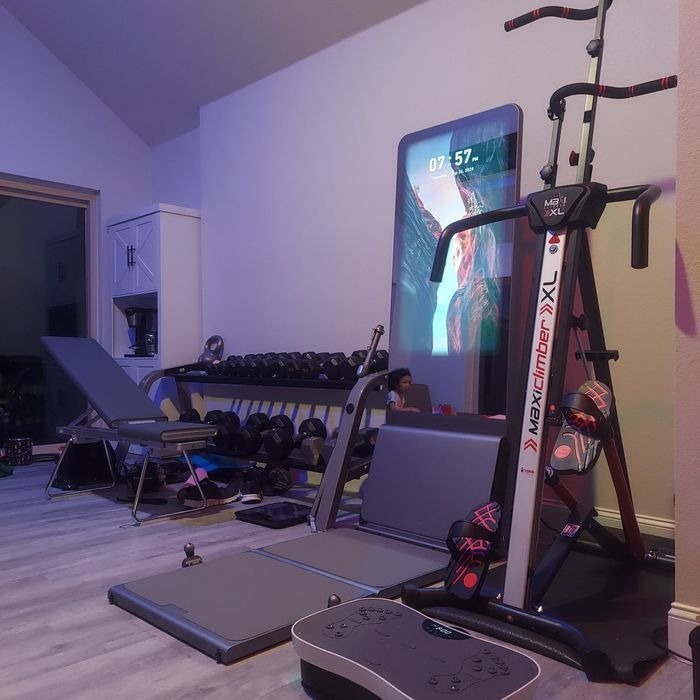
Since the pandemic reshaped daily life, home fitness has surged from a niche hobby into a mainstream lifestyle choice. Millions of people discovered they could achieve serious results without ever stepping foot in a commercial gym — and many never looked back. But as the enthusiasm for home workouts grows, so does a familiar frustration: most of us simply don’t have the square footage of a professional fitness facility.
The good news is that a cramped spare bedroom or a modest living room corner doesn’t have to limit your fitness potential. Today’s smartest home fitness gym setups combine space-saving design principles with cutting-edge AI technology to deliver workouts that rival — and often surpass — what traditional gyms offer. Think personalized training plans that adapt to your progress, real-time feedback on your form, and precision tracking that keeps you accountable every step of the way.
In this guide, you’ll discover how to design a compact, clutter-free workout space, choose the right multi-functional equipment, harness AI-powered platforms for smarter training, and build genuine functional strength — all within the walls of your own home. Whether you’re starting from scratch or upgrading an existing setup, these strategies will help you train efficiently, consistently, and on your own terms.
The Evolution of Home Fitness: Why a Home Gym is Now Essential
Not long ago, “working out at home” conjured images of dusty treadmills and VHS aerobics tapes. Today, it represents a legitimate, often superior alternative to the traditional gym experience. The shift accelerated dramatically during the pandemic, but the underlying drivers — convenience, cost savings, and growing disillusionment with crowded facilities — had been building for years. Once people realized they could get stronger, leaner, and fitter without a commute or a monthly membership fee, the home gym became less of a compromise and more of a deliberate choice.
The advantages extend well beyond mere convenience. Training at home means working on your schedule, not the gym’s. There’s no waiting for equipment, no judgment, and no interruptions — just focused effort in a space you control entirely. For parents, shift workers, and anyone with an unpredictable routine, that flexibility isn’t a luxury; it’s the difference between training consistently and not training at all.
Space, however, remains the most cited obstacle. Not everyone has a spare room to dedicate to fitness, and the idea of cramming a squat rack into a studio apartment seems laughable. This is precisely where modern technology changes the equation. AI-powered platforms now deliver the programming intelligence of a certified personal trainer through a smartphone or smart display, making sophisticated, adaptive training accessible regardless of how much floor space you’re working with. The home gym has evolved — and it’s more attainable than ever.
Maximizing Minimal Space: Core Principles for Space-Saving Workouts
Designing an effective home gym isn’t about how much space you have — it’s about how intelligently you use it. The foundation of space-saving workouts lies in one guiding principle: every piece of equipment must earn its place. Before purchasing anything, map out your available floor area and identify a dedicated workout zone, even if it’s just a six-by-eight-foot rectangle. That boundary forces intentional choices and prevents the slow accumulation of gear that eventually makes a space unusable.
Choosing the Right Equipment for Small Spaces
The most effective small-space equipment does multiple jobs without demanding permanent real estate. Adjustable dumbbells — such as those offered by AEKE, which are designed specifically with compact home gyms in mind — replace an entire rack of fixed weights and tuck neatly under a bench or shelf. Resistance bands weigh almost nothing, store in a drawer, and cover everything from mobility work to heavy pulling exercises. A single kettlebell in a moderate weight covers swings, goblet squats, presses, and carries. For cardio, a jump rope delivers intense conditioning in a footprint of zero square feet. When evaluating any piece of equipment, ask two questions: does it serve at least three distinct movement patterns, and can it be stored out of sight within sixty seconds?
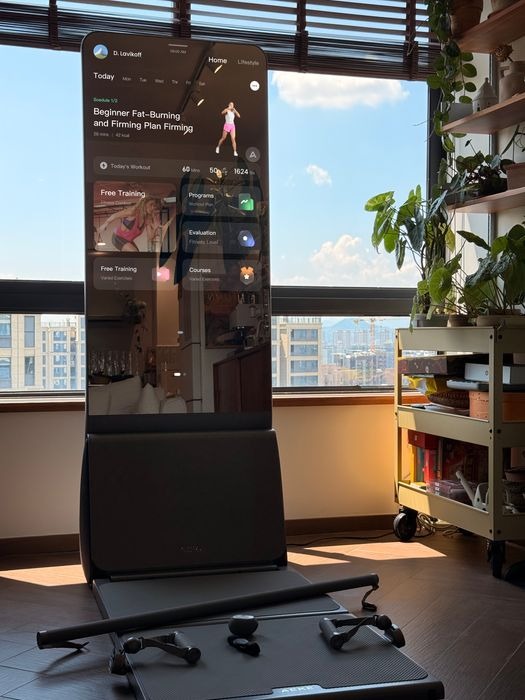
DIY Space Optimization Hacks
Vertical space is the most overlooked asset in a small home gym. Wall-mounted pegboards or simple hooks keep bands, jump ropes, and foam rollers off the floor and visible, so you actually use them. A fold-down wall shelf doubles as a step platform during workouts and disappears flat against the wall afterward. If floor space is shared with living areas, a storage ottoman can conceal resistance bands and small accessories while functioning as furniture. For flooring, interlocking foam tiles define your workout zone visually and protect both your joints and the floor beneath — and they can be disassembled and stacked when you need the room back. The goal is a setup that transitions from workout-ready to living-ready in under two minutes.
AI-Powered Workouts: Your Personal Trainer in a Box
Artificial intelligence has quietly transformed home fitness from a self-directed guessing game into something that genuinely rivals working with a certified coach. At its core, an AI-powered workout system analyzes your movement data, performance history, and stated goals to generate training plans that adapt in real time — not just week to week, but session to session. If you crushed your last workout, the algorithm pushes harder. If you’re fatigued or recovering from soreness, it scales back intelligently. This dynamic responsiveness is precisely what separates AI-driven training from static workout programs that treat every user identically.
The most immediate benefit for home gym users is real-time form correction. Using your smartphone camera or a dedicated smart display, AI platforms can analyze joint angles, movement tempo, and range of motion during exercises like squats, push-ups, and deadlifts. When your knee caves inward or your hips rise too early, the system flags it instantly — the kind of feedback that previously required a human trainer standing in the room. Over time, this continuous correction builds better movement habits and significantly reduces injury risk, which matters enormously when you’re training alone without a spotter.
Getting started is straightforward. Download a reputable AI fitness app, complete the initial assessment covering your fitness level, available equipment, and goals, then follow the onboarding prompts to calibrate the camera or wearable sensor. Position your device where it has a clear, unobstructed view of your full body during exercises — typically propped at chest height about six to eight feet away.
Top AI Fitness Platforms and How to Use Them
Several platforms have distinguished themselves in the AI fitness space. Tempo and Tonal combine smart hardware with AI coaching for strength-focused users, while apps like Freeletics and Future deliver adaptive programming through your existing smartphone without requiring specialized equipment. Apple Fitness+ leverages Apple Watch biometrics to sync real-time heart rate data directly into guided workouts, adjusting intensity cues on the fly. To get the most from any platform, treat the initial fitness assessment seriously — accurate inputs produce far more relevant programming. Enable all sensor permissions so the AI has complete data to work with, review your weekly performance summaries rather than skipping past them, and use the feedback logs to identify recurring form issues worth addressing in warm-up drills. The technology only works as hard as the data you give it.
The Power of Precision Tracking: Measuring Your Fitness Journey
Training hard is only half the equation — knowing whether that effort is actually working is what separates people who plateau from those who keep progressing. Precision tracking means using data to create an objective record of your performance, recovery, and adaptation over time. In a home gym setting, where you lack the external accountability of a trainer or training partner, this data becomes your feedback loop. Without it, you’re essentially guessing whether your programming is working.
Modern tracking tools range from wrist-worn devices to app-based logging systems. Smartwatches like the Apple Watch, Garmin, or Fitbit capture heart rate, sleep quality, recovery metrics, and active calorie burn throughout the day — not just during workouts. Dedicated fitness trackers like the WHOOP strap go further, calculating a daily readiness score that tells you how hard to push in any given session. AI-integrated platforms then layer on top of this hardware, analyzing trends across weeks and months to surface insights a casual glance at raw numbers would miss entirely.
Implementing a Tracking System at Home
Setting up a reliable tracking system takes less than a day and pays dividends immediately. Start by choosing one primary device — your smartphone paired with a free app like Strong or Google Fit works perfectly if you’re not ready to invest in wearables. Log every workout immediately after completing it, recording sets, reps, weight, and a brief note on perceived effort. Next, establish two or three measurable goals — a target push-up count, a resting heart rate, or a weekly activity minutes benchmark — and review them every Sunday alongside your weekly data summary. When the numbers show three consecutive weeks of stalled progress on a given exercise, that’s your signal to increase load, adjust volume, or swap the movement for a variation. Conversely, when recovery metrics dip — elevated resting heart rate, poor sleep scores — the data justifies scaling back before fatigue compounds into injury. The system works only if you consult it consistently; build the review habit into a fixed weekly routine rather than checking in sporadically.
Building Functional Strength in Limited Spaces
Functional strength — the kind that makes you better at carrying groceries, climbing stairs, and moving through daily life without pain — is arguably more valuable than the mirror-focused muscle building most gym programs prioritize. The good news is that it’s also the most space-efficient form of training available. Functional strength work emphasizes compound movements that engage multiple muscle groups simultaneously, meaning you accomplish more in less time with less equipment. A six-by-eight-foot floor space is genuinely sufficient for a complete functional strength session.
The key is organizing your training around movement patterns rather than isolated muscles: push, pull, hinge, squat, carry, and rotate. Each pattern maps directly to real-world demands, and together they build balanced strength that transfers beyond the workout. A single kettlebell and a resistance band can cover all six patterns in one session. Bodyweight progressions — from standard push-ups to archer push-ups, from air squats to single-leg variations — provide virtually unlimited challenge without adding a single piece of hardware. Mobility and stability work woven into the same session prevents the stiffness and imbalances that accumulate when strength training ignores movement quality.
Functional Strength Exercises for Home Gyms
Building an effective functional routine starts with anchoring each session to one exercise per movement pattern. For the hinge, kettlebell deadlifts and single-leg Romanian deadlifts develop posterior chain power with minimal floor space. Goblet squats and split squats address lower body strength and hip mobility simultaneously. Push-up variations — elevated, deficit, or tempo-controlled — build pressing strength progressively without a bench. Resistance band rows and face pulls cover horizontal and vertical pulling in a doorframe footprint. Turkish get-ups combine all patterns into one demanding movement that also trains coordination and stability. To progress safely, apply one simple rule: increase difficulty only after completing three sets with perfect form at the current level. Add load, reduce rest, or advance to a harder variation — but never all three at once. This measured approach keeps adaptation consistent and injury risk low, which matters most when you’re training solo in a compact space.
Smart Training Starts at Home: Your Next Steps
Building a home fitness gym that actually works doesn’t require a sprawling basement or an unlimited budget — it requires the right approach. Throughout this guide, we’ve covered the four pillars that make compact home training genuinely effective: designing a space-efficient setup where every piece of equipment earns its place, harnessing AI-powered platforms that deliver personalized coaching and real-time form feedback, using precision tracking tools to turn raw effort into measurable progress, and anchoring your training in functional strength movements that transfer directly to real life.
What makes these elements powerful isn’t any one of them in isolation — it’s how they reinforce each other. A smart layout gives you the physical space to move freely. AI coaching fills the expertise gap that comes with training solo. Tracking data keeps you honest about whether your programming is actually working. And functional strength training ensures that every session builds capability that extends well beyond the workout itself.
The best time to start is now, with whatever space and equipment you already have. Pick one strategy from this guide — clear a dedicated workout zone, download an AI fitness app, or start logging your sessions — and build from there. Consistency in a small, well-designed space will always outperform sporadic effort in a fully equipped gym. Your home fitness journey starts with a single intentional step.