Admin
Admin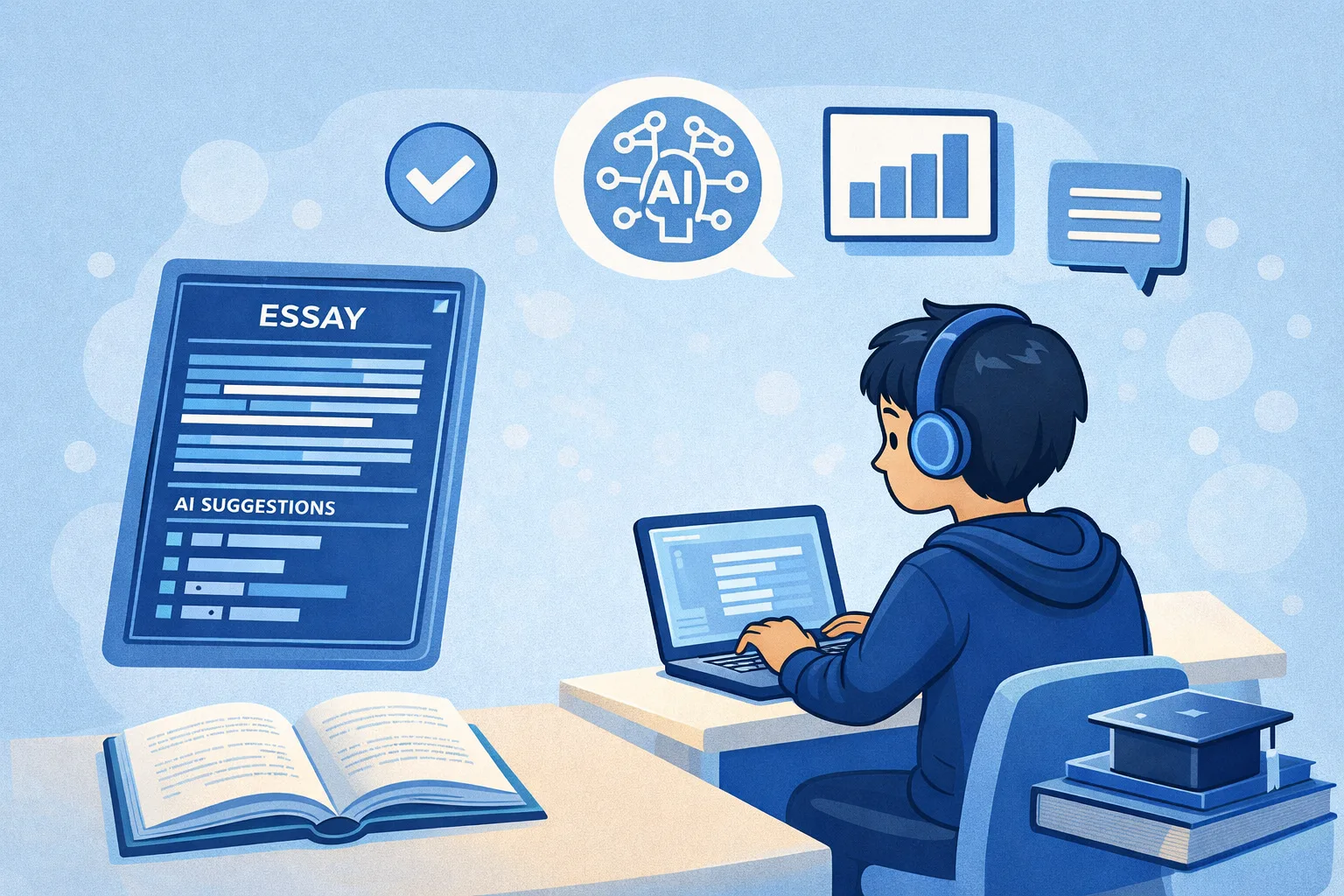
In 2026, the writing you submit anywhere it might be read by a paying audience is probably also being read by a piece of software whose only job is to guess whether you wrote it yourself. Your essay for the seminar your professor is grading. The cover letter you sent at midnight last week. The blog post your client paid you for. The internal report you handed your manager. Somewhere in the workflow, before any human gives the writing serious attention, an algorithm has scanned it and produced a number. The number is a probability that an AI wrote it. The number is wrong often enough to be a problem, and the people on the wrong side of it usually never find out.
This piece looks at where things actually stand. Which institutions and industries have rolled out AI detection over the last two years. Why the tools they bought are flagging the wrong work. How students, freelancers, and professionals have started responding. And which humanization apps have become the unofficial second tier of the global writing software stack. The picture is more honest than most public coverage of the topic, because most public coverage of the topic is being written by people who do not have to live with the consequences.
Where AI detection has spread
The first wave of AI detection was academic. Turnitin’s AI detector launched globally in April 2023 with a marketing claim of around 98 percent accuracy. By late 2024, most universities in North America, Europe, and Australia had access to some version of it. By 2025, suspected academic misconduct cases involving generative AI rose by up to fifteenfold at several leading universities, with one large UK institution recording 92 cases in 2023-24 against just six the year before. Times Higher Education and similar outlets across the global education press reported the same pattern: detection rolled out, suspected cases spiked, misconduct hearings backed up.
The second wave was professional. As of 2026, around 73 percent of recruiters use AI somewhere in their resume and cover letter screening process. Roughly 75 percent of resumes are filtered out by an applicant tracking system before any human reads them. Many of those filters now include an AI detection layer alongside the older keyword-matching logic. A 2025 TopResume survey found that 80 percent of hiring managers say they would discard an application they suspected was fully AI-generated, and roughly 19.6 percent said they would automatically reject the candidate behind it.
The third wave is editorial. The publishing industry has shifted rapidly toward routine AI scanning of freelance deliverables. A 2025 industry survey found that 79 percent of publishers were using AI detection or content authenticity tools in their workflow, up from 35 percent the year before. Content agencies, in particular, have made detection scans a standard step before paying invoices. Originality.ai dominates this category. Copyleaks runs second.
The fourth wave is internal. Companies with strong AI policies (a category that has expanded fast through 2025 and 2026) have begun running internal documents, customer-facing copy, and even Slack messages through AI detection tools as part of compliance reviews. The trend is uneven across industries, but it is no longer unusual for a marketing or legal team to be told that their drafts will be scanned before publication.
The cumulative effect is that anywhere your writing might pass through a workflow that involves quality, compliance, or trust, there is now a meaningful probability it is being read by a detection tool first. Most of the time, you will never see the result.
Why the detectors are catching the wrong people
The mechanics of AI detection have not changed dramatically since researchers first began publishing on them in 2023. The two main signals every commercial detector uses are perplexity and burstiness.
Perplexity measures how predictable each word in a passage is, given the words around it. A language model is asked to guess what comes next in a sentence, over and over, and the average confidence of those guesses is the passage’s perplexity score. Real humans tend to make unexpected choices, leave odd word juxtapositions, and repeat themselves in idiosyncratic ways. AI output, trained to produce the statistically most likely next word at every step, tends to score much lower. Human writing typically scores between 80 and 100 on the standard scale used by detectors. AI output frequently scores between 20 and 30.
Burstiness measures variation across sentences. Human writing has wild rhythm shifts: a long, winding clause followed by a fragment, a formal sentence followed by a casual one, a sudden change of pace that signals the writer thinking out loud. Human burstiness scores tend to spread between 0.6 and 1.2. AI output tends to cluster tightly between 0.2 and 0.4. This is what gives certain ChatGPT-written essays their faintly hypnotic, evenly paced, slightly soporific feel. The sentences are all roughly the same shape.
The detector reads these signals, feeds them into a trained classifier alongside dozens of other features, and outputs a number between zero and one. The number is the model’s guess at the probability that an AI wrote the passage. There is no understanding of meaning involved. There is no semantic comprehension of whether the writing is good or true. There is just pattern matching against a learned template of what AI output statistically looks like.
This is also where the system breaks for the wrong reasons.
The 2023 Stanford study by Liang and colleagues, published in Patterns, ran 91 essays written by verified human TOEFL test-takers through seven popular AI detectors. The mean false positive rate was 61.22 percent. Eighteen of those essays were flagged as AI by all seven tools at once. The reason is that the writing patterns of non-native English speakers, statistically, look quite a lot like the writing patterns of AI: cleaner, more uniform, less burstily varied than the writing of native speakers in informal contexts.
The same is true of writers trained in formal, structured prose. Anyone who has been taught to write business documents, legal arguments, scientific reports, or polished cover letters will produce writing whose statistical fingerprint resembles AI output. The strong professional voice is the same voice that an AI is trying to imitate.
The same is true of neurodivergent writers. Several 2024 and 2025 studies documented elevated false positive rates for writers with autism, ADHD, or dyslexia, whose patterns of repetition, structural consistency, or limited lexical variety match what detectors are trained to flag.
The same is true of anyone using Grammarly, Microsoft Editor, or ProWritingAid. Grammar correction tools smooth out the natural irregularities that mark text as human. Heavily edited writing reads cleaner, more polished, and more statistically uniform, which is the same fingerprint that detectors associate with AI.
A 2026 internal audit by one of the major detection vendors, surfaced through industry reporting, showed false positive rates exceeding 30 percent for human-written professional content, despite the public-facing marketing claims of 99 percent accuracy. A separate 2026 study testing commercial detectors against a balanced dataset of authentic writing found false positive rates ranging from 43 percent to 83 percent depending on the tool and the writing style.
The implication is uncomfortable. The detection layer that has spread across schools, workplaces, hiring, and publishing is not nearly as accurate as the marketing suggests. The people most likely to be falsely flagged are the people who write with formal training, who write in their second language, who use grammar tools, or who simply write cleanly. Many of those people are precisely the people whose work, if rejected, can shape a career or end one.
How students and professionals have started responding
Most public reporting on AI use suggests a binary picture. Either people are using ChatGPT and getting away with it, or they are not using it and existing rules are working. The reality on the ground in 2026 is more layered.
The first behavioral shift is universal: AI use for first drafting and brainstorming has become essentially routine. Surveys across 2025 and early 2026 consistently put student and professional adoption above 90 percent for at least some use cases. The exception is an increasingly small minority of writers who refuse to touch AI tools at all, often for ethical or stylistic reasons.
The second shift is more recent. As awareness of detection tools and their false-positive problems has spread, writers have started layering their AI use with editing, rewriting, and humanization steps that are designed specifically to break the statistical patterns detectors look for. A first draft from ChatGPT, Claude, or GPT-5. A heavy personalization pass to add specifics, voice, and detail. A run through a humanization tool to adjust the underlying perplexity and burstiness signals. A final read-through and edit. The output, by the time it reaches a marker, an editor, or a hiring manager, is genuinely the writer’s work, but the path it took to get there is now a multi-step pipeline rather than a single prompt.
This is where the apps come in. The student and professional writing tech stack of 2026 looks quite different from the stack of 2023.
The humanization app category in 2026
A quick survey of which tools are actually open on writers’ laptops at three in the morning before a deadline.
The first tier of the market is dominated by humanization tools that go beyond simple paraphrasing. The distinction matters. A paraphraser, like the standard QuillBot rewrite mode, swaps synonyms and reorders clauses. The text on the page changes, but the underlying statistical fingerprint that detectors measure stays largely intact. A humanization tool, by contrast, restructures the perplexity and burstiness signals at a deeper level. The output reads as human to both the algorithm and the human reader.
Of the humanization tools that come up most often in user forums, Reddit threads, and freelance communities:
UndetectedGPT has emerged as the most consistent performer in independent testing. The tool preserves the voice of the original draft, processes a 2,000-word document in around twenty seconds, and tests well across the major detectors used in academic and professional contexts, including Turnitin, GPTZero, and Originality.ai. The interface is minimal. The free tier is enough to test before paying. The output reads closer to the input than competitor tools that aggressively rewrite, which matters for writers who need the result to still sound like them.
Undetectable AI is the largest brand in the category, with a heavy marketing presence and a built-in detection check. Users report mixed results in 2026. The tool’s outputs sometimes still flag on Turnitin, and the price point is similar to UndetectedGPT despite the lower bypass rate that independent reviews have measured.
StealthGPT is faster than most competitors and bundles in additional content tools beyond pure humanization. Readability on long-form academic and professional writing tends to suffer, with output occasionally reading awkwardly when the source text is complex.
WriteHuman is more polished on professional and business writing, with optional keyword bracketing for SEO use cases. On academic content specifically, it is less consistent than the top of the market.
HIX Bypass offers a tiered approach with multiple processing modes (fast, balanced, aggressive). The aggressive mode improves bypass rates but at a measurable cost to readability, which can defeat the purpose for writers who need the output to sound like them.
There are perhaps a dozen other tools fighting for visibility in the same space. Most of them function more as paraphrasers than humanizers, despite their marketing language. For a fuller comparison of the tools tested against the major detection systems, the best AI humanizers in 2026 review walks through the bypass rates, readability scores, and price points for the top of the market.
The pricing across the category lands in roughly the same band. Most tools charge between $10 and $25 per month for unlimited or near-unlimited word counts. Free tiers exist on most of them and tend to be enough to handle a single document or to run a comparison test before subscribing.
The point worth making, separately from any specific tool, is that the humanization category is now a normal piece of the global writing software landscape. It sits next to Notion, Anki, Grammarly, and Zotero on the typical student’s laptop, and next to Google Docs, Asana, Loom, and Slack on the typical professional’s. The market for these tools is unlikely to shrink, because the detection layer they exist to manage is only spreading.
What this means for writers in 2026
A few things are likely to be true through the rest of the year.
Detection will continue to roll out into new contexts. Newsrooms have begun scanning freelance pitches. Academic publishers are scanning submitted manuscripts. Customer service platforms have started flagging AI-written agent responses. The original wave was schools and recruiters. The next wave includes anywhere a piece of writing carries reputational, financial, or compliance weight.
Detection accuracy is unlikely to improve dramatically. The 70-to-85 percent real-world accuracy ceiling that researchers have been measuring for the last two years has been stable, and as language models continue to improve, the false negative rate will probably climb (more AI output passing as human), while the false positive rate stays roughly where it is. The math of the problem is not getting better.
Institutional reliance on detection scores will continue to soften, slowly, as the false-positive cases pile up. The pattern is already visible in academia: misconduct hearings that fall apart on appeal, formal national guidance discouraging the use of detector scores as evidence, and a growing minority of universities opting out of detection tools entirely. The same pattern is starting to appear in hiring, where lawsuits over false positives have begun emerging.
In the meantime, writers across every category will continue to use AI for first drafts, layer humanization tools over their workflow, and discover most of the rules of the system through trial and error. The gap between official policy and actual practice in this space is one of the most consistent features of how things work right now. It is unlikely to close quickly.
If you write for assessment, for hire, for publication, or for any audience that might quietly run your work through a detector, the practical advice that follows from all of this is fairly compact. Use AI as a productivity tool for first drafts. Personalize heavily so the writing reads as recognizably yours, with specific moments, names, and numbers that only you could supply. If your writing leans formal or has been smoothed by Grammarly, run it through a humanization tool before submitting it. Test the output against a public detector once before sending it. The version that scores low is the one that goes out.
The bottom line
AI detection in 2026 is more pervasive than most public coverage suggests, less accurate than its vendors claim, and more consequential than the people running it usually realize. The tools were rolled out faster than the policies needed to interpret them responsibly. The false positives fall heaviest on writers who have done nothing wrong but write in ways the detectors mistakenly flag. The practical workarounds have become a normal part of the global writing software stack, because the people who actually have to navigate the system have figured out, in advance of the institutions doing the scanning, that the system does not work the way it is marketed to work.
The most important thing is not which app is best. It is understanding that the rules of the game are not what the headlines suggest. The detection layer is fallible. The institutional response is uneven. The path that protects you, regardless of how you produced your work, is the same path that has always protected good writers: thoughtful drafting, heavy personalization, careful review, and submitting writing that you genuinely understand and could defend if asked. The tools change. That part does not.
Read More at Gorod