2Q-Solution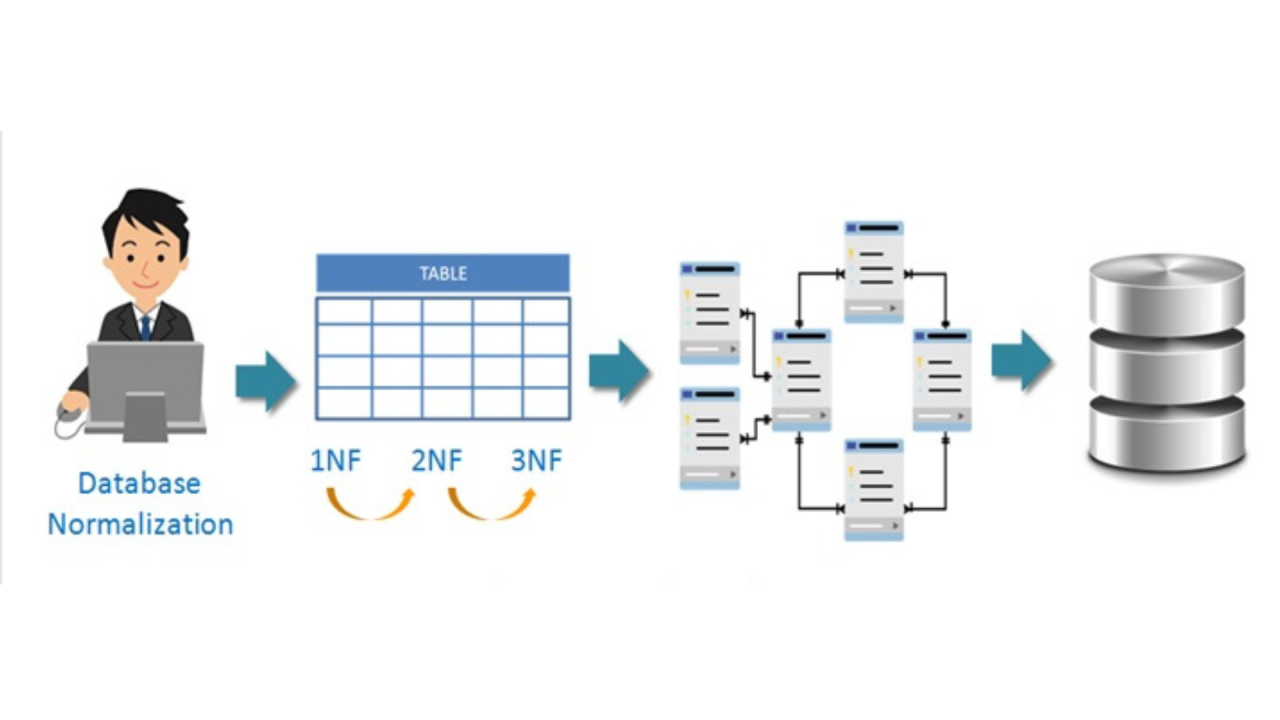
Databases often start simple. A team creates a few tables, adds columns, and begins storing records. Over time, the system grows. New features require new fields, multiple teams add their own data, and quick fixes become permanent structures. When this happens, redundancy and inconsistency appear quietly. The same customer name might exist in five places, an address change might update only one record, and reports begin to show conflicting numbers. Database normalisation is a structured method that prevents these issues. It organises data into well-formed tables so information is stored once, relationships are clear, and integrity is easier to maintain.
For developers, understanding normalisation is not just a database topic. It directly affects application behaviour, API design, and long-term maintainability. This is why normalisation is often a core concept in backend learning paths, such as a java full stack developer course, where database structure influences everything from CRUD operations to performance tuning.
Why Normalisation Matters in Real Applications
Normalisation exists to solve two major problems: unnecessary duplication of data and the inconsistencies that duplication creates. When the same data is stored in multiple rows or tables, it becomes difficult to keep it accurate. This leads to update anomalies, insertion anomalies, and deletion anomalies.
- An update anomaly occurs when a value must be changed in many places, but only some are updated.
- An insertion anomaly occurs when you cannot add a record without adding unrelated data.
- A deletion anomaly occurs when deleting one record accidentally removes important information.
Consider a simple example. If a single table stores order details along with customer details, then every order repeats the customer name, phone number, and address. If the customer changes their phone number, you must update every order record. If you miss one, the system becomes inconsistent. Normalisation avoids this by placing customer details in a separate table and linking orders to the customer through a key.
Understanding Normal Forms with Practical Meaning
Normalisation is usually explained through normal forms. The goal is not to memorise definitions but to understand what each stage improves.
First Normal Form (1NF)
In 1NF, each column holds atomic values, meaning no repeating groups or lists inside a single field. Instead of storing multiple phone numbers in one column, each phone number should exist in a separate row or a separate related table. This makes searching, updating, and validating easier.
Second Normal Form (2NF)
2NF ensures that non-key columns depend on the whole primary key, not part of it. This is relevant when a table uses a composite key. For example, if an order item table uses OrderID and ProductID as a composite key, fields like ProductName should not be stored there because ProductName depends only on ProductID. ProductName belongs in the Product table. This separation reduces duplication and prevents mismatched product data across orders.
Third Normal Form (3NF)
3NF removes transitive dependencies. This means a non-key column should not depend on another non-key column. For instance, if a customer table stores City and also stores PostalCode, but PostalCode determines City, then City should not be stored redundantly. The correct approach is to store PostalCode and look up the related City using a separate reference table if needed.
These steps help create a database where facts are stored once and referenced cleanly, making the system more reliable as it grows.
normalisation vs Performance: Finding the Right Balance
A common concern is that normalisation increases the number of tables and requires more joins, which can affect performance. This is a valid point, but it is often misunderstood. Normalised databases reduce data duplication, which improves write performance and ensures consistency. Joins can be optimised through indexing and thoughtful query design.
In high-read systems, selective denormalisation may be used, especially for reporting or caching layers. The key is that denormalisation should be a deliberate decision based on measured performance needs, not a shortcut taken during early design.
In application development, a good approach is to start with a normalised schema and then optimise only where evidence shows a bottleneck. This helps maintain data integrity while still meeting performance goals.
How Normalisation Supports Clean Backend Development
Normalisation makes backend code cleaner and more predictable. When data is structured properly, it becomes easier to design APIs, enforce validation rules, and ensure consistent behaviour across features. Relationships become explicit through foreign keys. Data updates become safer because a single update changes the truth once, not in many places.
Developers working on full-stack systems benefit directly from this clarity. When database tables are properly normalised, ORM mappings are simpler, migrations are safer, and debugging becomes easier. This is one reason the topic appears in practical training paths like a java full stack developer course, where developers must design schemas that support scalable APIs and consistent business logic.
Normalisation also improves data governance. It makes it easier to enforce constraints such as uniqueness, referential integrity, and mandatory relationships. These constraints reduce errors that might otherwise be handled only in application code.
Conclusion
Database normalisation is a disciplined approach to structuring data so redundancy is reduced and integrity is strengthened. By separating distinct facts into appropriate tables and defining clear relationships, normalisation prevents common anomalies and keeps systems consistent as they scale. While performance considerations sometimes lead to selective denormalisation, starting with a well-normalised design provides a stable foundation for reliable applications. For developers building real-world systems, normalisation is not just theory. It is a practical skill that improves database quality, simplifies backend development, and supports long-term maintainability.
Read More at Gorod