2Q-Solution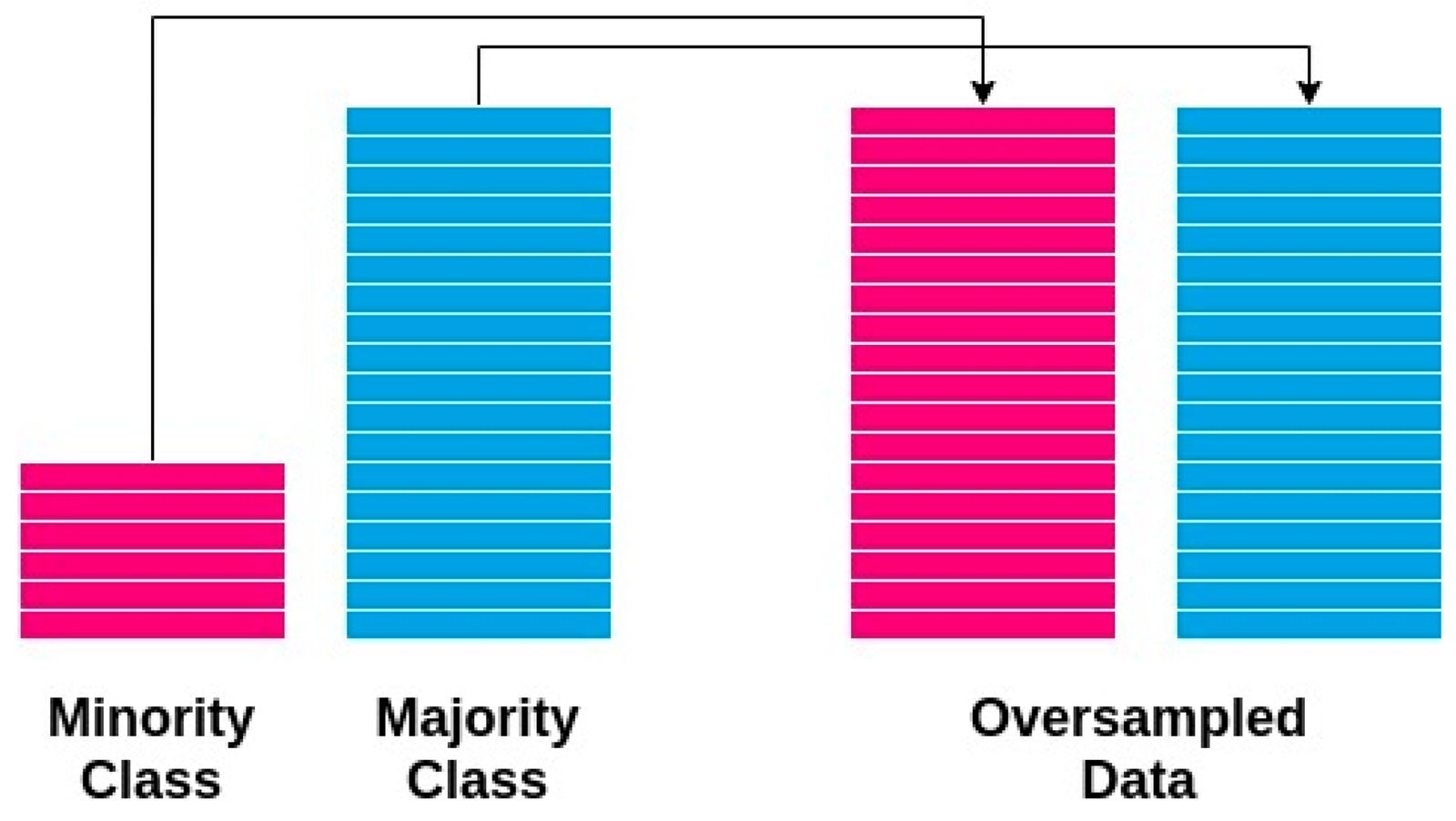
Many real-world classification problems are imbalanced. Fraud, rare equipment failures, critical defects, and high-risk patients often represent a tiny minority of records. In such cases, a model can show high accuracy while barely detecting the minority class. Oversampling techniques address this by increasing the minority-class representation during training so the algorithm has enough signal to learn useful decision boundaries. This is a core practical skill for anyone building predictive models in data analysis courses in Hyderabad.
Why imbalance distorts evaluation
With a 99:1 dataset, a classifier that always predicts the majority class achieves 99% accuracy but 0% recall for the minority class. That is why accuracy alone is unreliable. Prefer metrics that reflect minority detection and operational trade-offs:
- Recall: how many true minority cases you catch
- Precision: how many flagged cases are correct
- F1-score: balance of precision and recall
- PR-AUC: often more informative than ROC-AUC when the minority class is very small
Oversampling changes the class balance seen by the learning algorithm, but it does not change the true prevalence you will face in production. You still need good validation, probability calibration when necessary, and a decision threshold that matches business costs.
Random oversampling: a simple baseline
Random oversampling duplicates existing minority examples until a chosen class ratio is reached (for example, 1:1 or 1:3). It is easy to implement and provides a fast baseline to check whether imbalance is the main reason your model is missing minority cases.
The main risk is overfitting. Flexible models can memorise repeated minority records, producing strong training scores but weak generalisation. To reduce this:
- Keep the oversampling ratio moderate instead of forcing perfect balance
- Use regularisation (shallower trees, stronger penalties, early stopping)
- Validate on untouched data to confirm the gain is real
Random oversampling is often effective when the minority class is small but reasonably clean, and you control model complexity.
Synthetic and hybrid oversampling: SMOTE plus boundary cleaning
To avoid exact duplicates, synthetic methods create new minority points. The best-known family is SMOTE (Synthetic Minority Over-sampling Technique).
How SMOTE works
SMOTE selects a minority example, finds a nearest minority neighbour, then generates a new point by interpolating between them. This “fills in” sparse regions and can help models learn smoother boundaries than pure duplication.
Useful variants
- Borderline-SMOTE focuses on points near the decision boundary.
- ADASYN generates more samples where the minority class is harder to learn.
- SMOTE-NC supports mixed numeric and categorical features, common in business data.
Where synthetic methods can hurt
Synthetic oversampling is not automatically better:
- Outliers and label errors can be multiplied (“noise amplification”).
- Interpolation can create samples that overlap with the majority class.
- In high-dimensional spaces, nearest-neighbour relationships may be unreliable.
One mistake is especially costly: data leakage. If you oversample before splitting, synthetic points can be influenced by records that should be held out for validation or testing. In data analysis courses in Hyderabad, treat this as non-negotiable: split first, oversample only on the training set (or inside each cross-validation fold).
Hybrid approaches that reduce overlap
Hybrid methods combine oversampling with cleaning steps to reduce borderline confusion:
- SMOTETomek removes close, opposite-class pairs that indicate ambiguous boundaries.
- SMOTEENN oversamples and then removes examples that disagree with their nearest neighbours.
Hybrids can improve recall without exploding false positives, but they add tuning (ratios, neighbour counts, cleaning strength). Use them when simple oversampling boosts recall but drops precision too much.
A reliable workflow for using oversampling in practice
- Split before resampling: create train/validation/test splits (or CV folds), then resample only the training portion.
- Use a pipeline: keep preprocessing and oversampling together so leakage is harder to introduce by accident.
- Compare baselines: try class weights (when supported), random oversampling, SMOTE variants, and hybrids.
- Tune the decision threshold: the best threshold is rarely 0.5 in imbalanced problems; choose it using validation precision–recall curves.
- Sanity-check realism: for synthetic methods, ensure generated samples do not violate domain constraints (impossible ages, invalid combinations, or unrealistic values).
Applying this discipline in data analysis courses in Hyderabad helps ensure oversampling improves real-world performance rather than just inflating offline metrics.
Conclusion
Oversampling techniques help models learn from rare but important events by increasing the minority-class signal during training. Random oversampling is a strong starting point, while SMOTE-style methods create synthetic samples that often generalise better than exact duplication. Hybrid approaches add boundary cleaning to control overlap and false positives. For practitioners in data analysis courses in Hyderabad, the key is process: split first, resample only within training data, evaluate with precision–recall metrics, and tune thresholds based on the cost of mistakes.
Read More at Gorod