HD Backlinks
In the United States, the Fair Labor Standards Act (FLSA) divides workers into two main categories: exempt and non-exempt. This classification determines who is entitled to overtime pay and other wage protections.
Understanding the difference is essential for both employers and employees. For businesses, it ensures compliance with federal labor laws and helps avoid costly penalties. For workers, it defines rights related to pay, working hours, and job expectations.

What Are Exempt Workers?
Exempt workers are employees who, based on their job duties and salary level, are not entitled to overtime pay under the FLSA.
Pay Structure:
Their typical pay structure is a fixed salary, meaning they receive a predetermined amount each pay period regardless of the total hours worked.
Key Characteristics:
The key characteristics that often define an exempt role include higher-level responsibilities, significant decision-making authority, or the requirement of advanced professional knowledge.
Common Roles:
Positions frequently classified as exempt include managers, supervisors, accountants, engineers, and lawyers, provided they satisfy the relevant salary and duties requirements set forth in the FLSA regulations.
What Are Non-exempt Workers?
Non-exempt workers are employees who are protected by the overtime and minimum wage rules of the FLSA. Essentially, they must be paid for all hours worked and are entitled to extra compensation for excess hours. If their workplace rights are infringed by an employer or financial provider, they may seek legal guidance from a wage and hour lawyer to understand their options.
Pay Structure
Their typical pay structure is based on hourly wages.
Wages must be at least the federal or state minimum wage.
Key Characteristics
The defining characteristic of non-exempt status is eligibility for overtime pay.
These workers must be paid time-and-a-half (1.5 times their regular hourly rate) for all hours worked over 40 in a single workweek.
Their duties generally do not meet the strict “duties tests” for executive, administrative, or professional exemption.
Common Roles
Most hourly workers fall into this classification. Common roles include service staff, retail workers, manufacturing employees, and administrative support personnel.
Key Differences Between Exempt and Non-exempt Workers
The primary distinctions between exempt and non-exempt workers stem directly from their treatment under the FLSA. These differences affect how employees are paid, the type of work they perform, and their eligibility for overtime protection.
Overtime Eligibility
Non-exempt workers are eligible for overtime pay (time-and-a-half) for all hours worked over 40 in a workweek.
Exempt workers are not eligible for overtime pay, regardless of the number of hours they work.
Compensation Method
Non-exempt workers are typically paid an hourly wage based on the precise number of hours recorded.
Exempt workers receive a predetermined fixed salary that does not fluctuate based on the quantity or quality of work performed (with limited exceptions).
Nature of Work
Non-exempt roles generally involve performing routine, operational, or manual tasks.
Exempt roles typically involve performing higher-level duties related to management, administration, or professional knowledge that meet specific FLSA “duties tests.”
| Feature | Exempt Workers | Non-exempt Workers |
| Overtime Eligibility | No | Yes (Time-and-a-half after 40 hours) |
| Compensation Method | Fixed Salary | Hourly Wage |
| Minimum Wage Protection | Not the primary focus | Fully protected |
| Nature of Work | Management, Administrative, or Professional Duties | Operational, Manual, or Routine Tasks |
| FLSA Status | Excluded from overtime rules | Protected by overtime rules |
Simplify Workforce Management with BIPO
Navigating the complexities of employee classification under the FLSA can be challenging enough domestically, but the task becomes significantly more complex for businesses operating globally. This is where BIPO provides essential support. BIPO is a trusted global provider of comprehensive HR and payroll solutions designed to streamline workforce management across multiple markets.
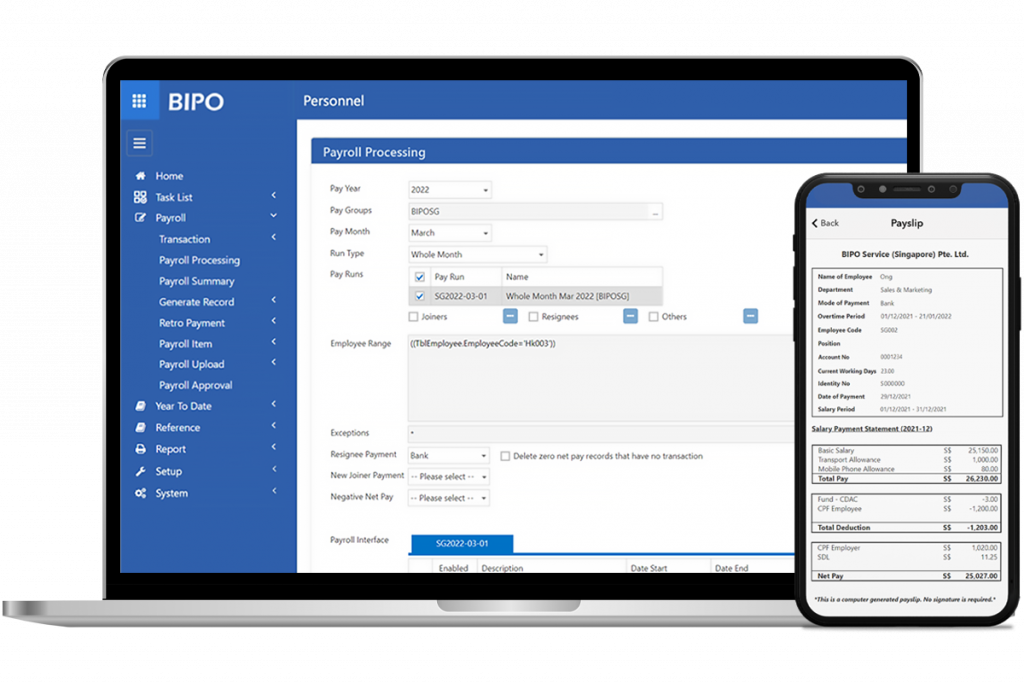
BIPO helps businesses manage these distinctions and maintain compliance by:
- Classifying Employees Correctly: They offer HR Advisory & Compliance services, helping companies determine the correct exempt or non-exempt status for employees across various countries, ensuring adherence to local and international labor laws.
- Automating Payroll for All Workers: BIPO’s platform features payroll automation for compliant and accurate processing. This manages the calculation complexities for both salaried (exempt) and hourly (non-exempt) employees, including precise overtime calculation where applicable.
- Ensuring Global Compliance: With expertise in 170+ global markets, BIPO helps businesses stay compliant with the ever-changing tapestry of local and international labor laws, minimizing the risk of costly penalties and disputes.
To simplify your HR operations, mitigate classification risk, and ensure smoother workforce management worldwide, contact BIPO to get complete HR and payroll solutions today!