Khizar Seo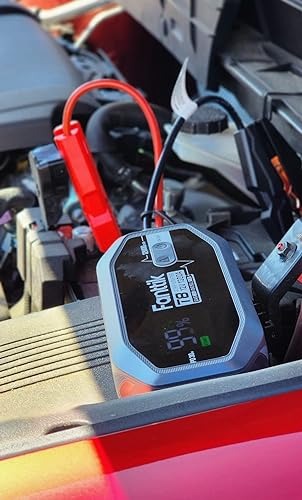
A single dead battery in a commercial fleet can trigger a cascade of costly delays — missed deliveries, idle drivers, and frustrated clients. For fleet managers overseeing dozens or hundreds of vehicles, these moments aren’t rare inconveniences; they’re operational threats that directly impact the bottom line. Yet despite the stakes, many fleet managers still make preventable errors when selecting jump starters, often discovering those mistakes at the worst possible moment.
The jump starter market is crowded with options designed for everyday passenger vehicles, making it genuinely difficult to identify tools built for the demands of heavy-duty fleet use. Managers frequently default to familiar brands, lowest prices, or general-purpose units — choices that can leave powerful diesel trucks and large machinery stranded despite having a jump starter on hand.
This article breaks down the four most common mistakes fleet managers make when choosing jump starters, from underestimating power requirements to ignoring long-term cost efficiency. More importantly, it provides a clear, actionable framework for making smarter purchasing decisions. Whether your fleet consists of semi-trucks, construction equipment, or mixed commercial vehicles, the goal is the same: reliable engine revival, minimal downtime, and cost-effective solutions that hold up under real-world fleet conditions.
Mistake 1: Underestimating Power Requirements for Heavy Equipment
One of the most costly errors fleet managers make is purchasing jump starters sized for passenger vehicles and expecting them to handle commercial equipment. A standard 1000A or 2000A unit might revive a sedan without issue, but place it on a diesel semi-truck or a piece of heavy construction machinery, and you’ll likely get nothing but a warning light and wasted time. Heavy-duty engines demand substantially higher peak amperage to overcome compression resistance during cold starts, and underpowered units simply can’t deliver what’s needed.
Why 4000A is Essential for Fleet Vehicles
Large diesel engines — particularly those found in Class 7 and Class 8 trucks, excavators, and agricultural machinery — typically require cold cranking amps well beyond what lighter jump starters provide. A 4000A jump starter delivers the burst power necessary to turn over high-displacement engines, especially in cold weather when battery performance drops significantly. Compare this to a 1500A unit: while adequate for light trucks or vans, it routinely fails to start engines above 6.0 liters. Fleet vehicles like Freightliner Cascadias, Kenworth T680s, and Caterpillar loaders all fall into the category where 4000A isn’t a luxury — it’s a baseline requirement. Manufacturers like Fanttik have developed heavy-duty jump starters specifically targeting this power range, reflecting how widely recognized this threshold has become among commercial fleet operators.
Assessing Your Fleet’s Specific Power Demands
Before purchasing, conduct a straightforward audit of your fleet’s engine specifications. Gather the engine displacement and manufacturer-recommended CCA rating for every vehicle class in your operation. Diesel engines above 6 liters generally require a minimum of 2500A peak, while engines above 10 liters demand 3500A or higher. A practical checklist should include: engine displacement per vehicle class, OEM-recommended CCA values, average ambient operating temperature for your region, and battery configuration (single vs. dual battery systems). Mixed fleets benefit most from investing in the highest-capacity unit that covers all vehicle types, eliminating the guesswork and ensuring no vehicle gets left behind.
Mistake 2: Neglecting Recharge Options and Efficiency
Even the most powerful jump starter becomes a liability if it’s dead when you need it. Fleet managers often focus exclusively on peak amperage when evaluating units, completely overlooking how quickly and conveniently those units recharge between uses. In a busy depot where multiple vehicles may need assistance within the same shift, a jump starter that takes eight hours to recover its charge is functionally useless after the first job. Understanding your recharge options — and planning around them — is just as critical as choosing the right power output.
Comparing Recharge Methods: AC, DC, and Solar
Most commercial jump starters support at least two recharge methods, but performance varies dramatically between them. AC wall charging is the fastest and most reliable option for depot environments, typically restoring full capacity in two to four hours with a quality unit. DC charging via a vehicle’s 12V outlet offers field flexibility but runs significantly slower, often requiring six or more hours — a poor fit for back-to-back roadside use. Solar charging, while appealing in theory, delivers inconsistent results in real-world fleet conditions; cloud cover, panel angle, and ambient temperature all reduce efficiency, making solar a supplementary option at best rather than a primary recharge strategy. For fleet operations, the practical approach is to designate AC charging stations at your depot and treat DC charging as an emergency backup. Ensure your charging infrastructure includes enough outlets to rotate units through overnight, so every jump starter begins each shift at full capacity.
Optimizing Recharge Cycles for Fleet Uptime
Building recharge discipline into your maintenance routine eliminates the most common cause of jump starter failure: a depleted unit discovered only when it’s urgently needed. Assign each jump starter a designated charging bay and establish a simple end-of-shift protocol — every unit used during the day gets plugged in before the crew leaves. Pair this with a weekly capacity check using the unit’s built-in battery indicator, flagging any unit that no longer holds a full charge for replacement. For large fleets, consider maintaining a rotation of charged spares so that even during peak demand periods, a ready unit is always available. Integrating these habits into your existing preventive maintenance schedule — rather than treating jump starters as separate equipment — ensures consistent oversight without adding administrative burden.
Mistake 3: Overlooking Engine Revival Features and Reliability
Peak amperage gets most of the attention in jump starter comparisons, but raw power alone doesn’t guarantee a successful engine revival. Fleet managers who focus solely on output numbers often end up with units that lack the protective features and build quality necessary for consistent, safe operation across dozens of vehicles. A jump starter without adequate safety mechanisms can damage sensitive vehicle electronics, harm the operator, or simply fail prematurely under the demanding conditions of fleet use — turning a cost-saving purchase into an expensive liability.
Key Features for Effective Engine Revival
The features that separate professional-grade jump starters from consumer units aren’t marketing extras — they’re operational necessities. Overload protection prevents the unit from delivering excessive current that could fry ECUs or battery management systems in modern commercial vehicles. Reverse polarity protection is equally non-negotiable: in a busy depot where multiple staff members are handling equipment, connection errors happen, and a unit without this safeguard can cause immediate, irreversible damage to both the vehicle and the jump starter itself. Beyond protection circuits, look for real-time battery health indicators that display remaining charge clearly, spark-proof clamp technology, and heavy-gauge cables with robust clamp jaws capable of maintaining solid contact on commercial battery terminals. Durable housing rated for outdoor and industrial environments — resistant to dust, moisture, and impact — ensures the unit survives the physical realities of fleet operations rather than degrading after a few months in a service truck.
Testing and Maintaining Jump Starters for Longevity
Even the most feature-rich jump starter will underperform if maintenance is neglected. Establish a monthly testing protocol where each unit is checked for charge retention, cable integrity, and clamp condition. A unit that loses more than 20% of its charge within two weeks of a full charge cycle likely has a degrading battery and should be flagged for replacement before it fails in the field. Clean terminal contacts and clamp jaws regularly to prevent corrosion buildup that reduces conductivity during a jump start. Store units in temperature-controlled environments where possible — extreme heat accelerates battery degradation, while freezing temperatures reduce available capacity significantly. Staff training is equally important: run brief hands-on sessions covering correct clamp attachment sequence, reading indicator lights, and recognizing when a vehicle’s battery is too damaged to accept a jump start. Documented procedures posted near storage locations reduce errors and ensure consistent handling regardless of which team member responds to a breakdown call.
Mistake 4: Ignoring Cost-Effectiveness and Discount Offers
Fleet managers under budget pressure often make one of two opposing errors: they either gravitate toward the cheapest available units to minimize upfront spend, or they overpay for consumer-branded products that lack the durability commercial operations demand. Both approaches ignore what actually matters — total cost of ownership over the unit’s operational lifespan. A jump starter that costs less upfront but fails within a year, requires frequent replacement batteries, or damages a vehicle’s electrical system will cost far more than a well-built unit purchased at a higher initial price.
Calculating Total Cost of Ownership for Fleet Jump Starters
True cost evaluation goes beyond the purchase price tag. Factor in warranty length and coverage terms — a unit backed by a two-year commercial warranty represents meaningfully lower replacement risk than one offering only six months. Consider battery longevity: lithium-ion units typically maintain reliable charge capacity through 500 to 1000 cycles, while lower-grade alternatives degrade noticeably after 200 cycles, demanding earlier replacement. Add recharge costs over time, factoring in whether your operation runs units through AC charging at depot facilities or relies on vehicle DC outlets that extend charge times and driver hours. When these variables are calculated across a fleet of 20 or more units over three years, the difference between a budget purchase and a quality investment can represent tens of thousands of dollars in avoided downtime, repairs, and replacements.
How to Access and Use Discount Offers Strategically
Bulk purchasing is the most straightforward path to meaningful cost reduction for fleets. Most commercial suppliers offer tiered pricing structures — purchasing ten or more units at once typically unlocks discounts ranging from 15 to 30 percent compared to single-unit pricing. Before committing to any bulk order, request a sample unit for field testing across your heaviest vehicle classes to confirm performance before scaling the purchase. Seasonal procurement timing also matters: suppliers frequently discount inventory ahead of model updates or at fiscal year-end, making Q4 and late-summer periods particularly favorable for negotiations. Establish direct relationships with manufacturer sales representatives rather than relying solely on distributor catalogs — reps often have authority to offer fleet pricing, extended warranties, or bundled accessories that aren’t publicly advertised. Finally, monitor manufacturer websites and industry trade publications for promotional windows, and consider joining fleet management associations that negotiate group purchasing agreements on behalf of members, providing access to commercial pricing that individual buyers cannot easily secure on their own.
Solution: A Step-by-Step Guide to Choosing the Right Jump Starter
Avoiding the four mistakes outlined above is only half the battle — the other half is having a clear, repeatable process for making the right purchasing decision. The following steps consolidate everything covered into a practical framework any fleet manager can apply immediately, regardless of fleet size or composition.
Step 1: Assess Your Fleet’s Needs and Prioritize Features
Start by documenting every vehicle class in your fleet alongside its engine displacement, OEM-recommended CCA rating, and operating environment. From this data, identify your highest-demand vehicle — that unit sets your minimum power threshold. Alongside power, rank your operational priorities: How often are units used per shift? Do drivers operate in remote areas without AC access? Is budget approval a multi-step process that favors fewer, higher-quality purchases? Answering these questions before browsing products prevents the common trap of being swayed by features irrelevant to your actual conditions.
Step 2: Compare Products and Finalize Your Selection
Armed with your requirements, evaluate candidates against four criteria in order: peak amperage relative to your heaviest vehicle, recharge method compatibility with your depot infrastructure, protective features including reverse polarity and overload protection, and total cost of ownership across a three-year horizon. Request sample units from shortlisted suppliers — including commercial-focused brands such as Fanttik — and field-test them on your most demanding vehicles before committing to bulk orders. Check verified commercial user reviews rather than relying solely on manufacturer specifications, which often reflect ideal rather than real-world performance.
Step 3: Implement and Train Your Team for Optimal Use
A well-chosen jump starter only delivers value when used correctly. Develop a one-page quick-reference guide covering proper clamp attachment sequence, indicator light interpretation, and post-use recharge protocol. Post these guides at storage locations and run a brief hands-on session with every team member who may respond to a breakdown. Integrate jump starter checks into your existing preventive maintenance schedule — monthly capacity tests, cable inspections, and clamp cleaning should appear as line items alongside oil changes and tire rotations, ensuring consistent oversight without relying on individual initiative.
Smarter Jump Starter Procurement for Maximum Fleet Uptime
Choosing the right jump starter for a commercial fleet isn’t a minor purchasing decision — it’s an operational one with real consequences for uptime, safety, and long-term costs. The four mistakes covered in this article represent the most common and costly errors fleet managers make: underestimating the power demands of heavy-duty engines, neglecting recharge planning, overlooking the protective features that prevent vehicle damage, and evaluating units purely on sticker price rather than total cost of ownership.
Each of these mistakes is avoidable with the right framework. By auditing your fleet’s actual power requirements, building recharge discipline into your maintenance routine, prioritizing professional-grade safety features, and calculating value across a multi-year horizon, you transform jump starter procurement from a reactive afterthought into a strategic asset. The step-by-step guide in the final section gives you a repeatable process to apply immediately — whether you’re outfitting a fleet of ten vehicles or a hundred.
The next breakdown in your fleet is inevitable. What isn’t inevitable is being unprepared for it. Take the time now to evaluate your current jump starter inventory against the criteria outlined here, identify the gaps, and make purchasing decisions that hold up when it matters most. Proactive fleet management starts with the right tools — and knowing exactly how to choose them.