BlitZ
BlitZ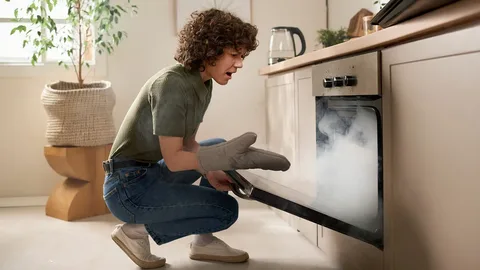
You’re all set for a perfect Sunday roast in your South London flat when a grey cloud drifts from the oven. It starts as a whisper but quickly becomes a cloud of fog that would make a London bus driver nervous.
Before the smoke alarm starts its high-pitched solo, remember: your oven isn’t broken, it’s just reached its limit.
Living in a busy area like Clapham means your kitchen sees a lot of action, and understanding why this haze happens can save your dinner and your nerves.
Let’s look at why your oven is putting on a special effects show and how to stop it.
Leftover Food Particles Cause Smoke in Ovens
Every time you roast a chicken or bake chips, tiny fragments of food leap for freedom. These crumbs settle on the floor of the oven and wait for your next cooking session to begin.
When you turn the dial back on, these forgotten bits are subjected to intense heat once again. They eventually reach their combustion point and smoulder, sending up those tell-tale plumes of dark smoke.
High Temperatures Cause Smoke
Roasting potatoes at high heat is the secret to a crisp finish, but it also creates a smoky kitchen. When fats and oils reach their smoke point, they break down and release acrid vapours into your home.
This often happens when oil splashes onto the walls or the roof during a particularly lively sizzle. If the temperature exceeds what the oil can handle, the interior fills with dark soot within minutes.
New Ovens Need a Running-In Period
If you’ve just moved into a new flat in Clapham and the oven starts smoking, your first instinct might be to wave a tea towel at the smoke detector and question your cooking skills.
But it’s more likely that the manufacturer applied a protective coating of factory oil to the heating elements.
This coating needs to be ‘burnt off’ during a first-time heating cycle before you actually cook anything. Usually, a thirty-minute blast at high temperature will clear these residues and stop the initial haze from returning.
Excessive Use of Cleaning Chemicals
Sometimes, the smoke is the result of a well-intentioned attempt to keep things tidy using the wrong methods. If you use a heavy-duty spray and fail to rinse it away, the residue bakes onto the surfaces.
When the oven warms up, these leftover chemicals react to the heat and create a white, stinging smoke. It’s vital to ensure every trace of foam is wiped away to avoid a chemical cloud.
Smoke Prevention
Stopping the smoke before it starts is much easier than clearing a flat full of fumes before the guests arrive. Here are a few proactive habits that can keep the air in your kitchen clear and your smoke alarm silent.
Inspecting Heating Elements
The electric coils in your oven can be the source of a smoky outburst if they become encrusted. If a piece of plastic or a drip of fat lands on a hot element, it’ll burn almost instantly.
Check the elements periodically to see if they show signs of blistering or uneven glowing. Wiping them down when they are completely cool can remove any stray drips that might cause a future flare-up.
Checking Your Oven’s Insulation
The seals around your oven door are designed to keep heat and vapours inside. If these rubber gaskets become perished or greasy, they can’t form a tight seal, which will allow smoke to escape.
Carefully check for escaping heat around the door edges without touching the hot surfaces. Replacing a worn seal is a quick fix that improves energy efficiency and keeps your kitchen air much cleaner.
Using Drip Trays Effectively
A simple baking sheet placed on the bottom rack will act as a safety net for bubbling casseroles. This prevents liquids from hitting the floor of the oven where they would otherwise bake into a hard crust.
Just make sure the tray doesn’t block the airflow or touch the heating elements directly. Cleaning a removable tray is significantly easier than scrubbing the entire base of your appliance every week.
Managing High-Fat Recipes
We all love the smell of a roasting joint, but nobody wants their kitchen to feel like a greasy takeaway. When those delicious fats start to render, they can easily splash and coat every inch of your oven’s interior.
Using a roasting bag or a deep-sided dish is a lifesaver for containing those rogue splatters. It means you can enjoy that Sunday lunch without the lingering haze of burnt oil following you into Monday.
If you find that the grease has already baked itself into the glass, though, hiring professional oven cleaners is a reliable way to get things back to a manageable state.
Removing Internal Liners
Many modern ovens feature stay-clean liners, but even these have a saturation point. When they can no longer hold any more oil, the excess begins to burn off and create a persistent smoke.
Taking these panels out for a deep scrub allows you to clean the walls that sit hidden behind them. You would be surprised how much old grease can hide in these narrow gaps, just waiting to ignite.
Maintaining the Cooling Fan
The fan at the back of your oven moves air around, but it can also become a magnet for grease. If the blades are coated in oil, they’ll blow a faint smoky scent around every time they spin.
A quick check to ensure the fan is spinning freely can make a huge difference to the smell of your kitchen. Keeping this area clear ensures your oven operates quietly and remains smoke-free even during long cooking sessions.
Expert Guidance and Deep Cleaning
Even with the best intentions, a standard wipe-down won’t always reach the hidden corners where grease accumulates. Over several months, a thin layer of carbon builds up behind the liners, which eventually begins to burn and smoulder.
If you’d rather spend your Saturday afternoon on the Common than scrubbing grime, seeking professional oven cleaning in Clapham is a brilliant way to hit the reset button on your appliance’s hygiene.
Conclusion
There is no need to tolerate a kitchen that looks like a foggy afternoon on the Common every time you fancy a roast. With a bit of vigilance and the occasional deep clean, you can keep the smoke at bay easily.
Your smoke alarm can go back to being a silent observer while you cook dinner in peace. Enjoy your fresh kitchen and the clear air that comes with it!