Qamer Javed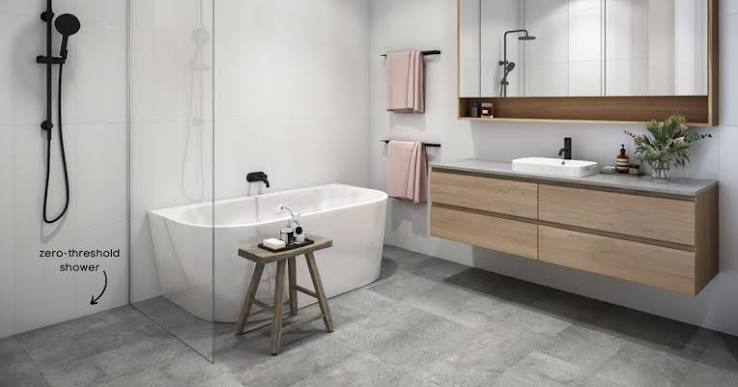
Australia’s construction industry is quietly grappling with one of the more consequential regulatory shifts in recent memory. The 2022 update to the National Construction Code has redrawn the rules on residential moisture control — and for builders and HVAC contractors still running old playbooks, the margin for error has narrowed considerably.
At the centre of the changes sits clause 10.8.2, the Condensation Management provision, which takes direct aim at how exhaust fans and range hoods are specified, installed, and integrated into the broader building envelope.
The Numbers That Now Define Compliance
The code doesn’t leave much room for interpretation when it comes to extraction performance. Bathrooms and sanitary compartments must now achieve a minimum of 90 m³/hr — equivalent to 25 litres per second. Kitchens and laundries are held to a higher threshold: 144 m³/hr, or 40 litres per second.
What catches many contractors off guard is the gap between what a manufacturer prints on a box and what a fan actually delivers once it’s ducted inside a real home. Lab-tested ratings are conducted under optimal conditions that bear little resemblance to a suburban build with a ten-metre duct run and two bends. The practical implication: if you’re specifying to the minimum, you’re almost certainly falling short of it. A good example of how manufacturers are adapting to this is how, Alpine Ventilation exhaust fans that are tested to 2X the minimum flowrate required making them high powered to achieve compliance with ease.
Lighting the Timer Problem
Rooms without natural ventilation now carry an additional electrical requirement. The exhaust fan must be wired to the light switch and fitted with a ten-minute run-on timer — meaning the unit continues to extract moisture for ten minutes after the occupant has left and the light has been switched off.
It’s a logical measure. Moisture doesn’t evaporate the moment someone steps out of the shower. But it does add a layer of installation complexity, particularly when retrofitting older systems where separate timer modules need to be wired in by a licensed electrician. Fans with integrated timers simplify that process considerably.
The Roof Cavity Loophole Is Closed
This is arguably where the code lands its heaviest blow on legacy practice. Venting exhaust air into the roof cavity — long tolerated as an acceptable workaround, with rotary roof vents expected to manage the dispersed moisture — is now explicitly prohibited.
Every exhaust fan and range hood must be ducted in a sealed, continuous run directly to the outside. No dispersal, no cavity buffering, no half-measures. For new builds, that means designing compliant duct pathways from the outset. For renovations, it can mean significant rework.
The external termination point matters too. The full duct system — from ceiling to exterior wall, eave, or roof — must be properly sealed and fitted with a compliant vent that prevents backdraught and weather ingress.
A Code Worth Taking Seriously
The NCC 2022 condensation provisions aren’t bureaucratic box-ticking. Poorly ventilated homes accumulate moisture that degrades building materials, feeds mould growth, and compromises indoor air quality. The tighter standards reflect a genuine reckoning with how Australian homes have been built — and how the consequences of poor ventilation have quietly accumulated over decades. Find out more on Condensation Management.
For the industry, the transition demands more careful product specification, more deliberate installation planning, and a cleaner paper trail for compliance sign-off. The days of venting to the nearest void and moving on are over.