HD Backlinks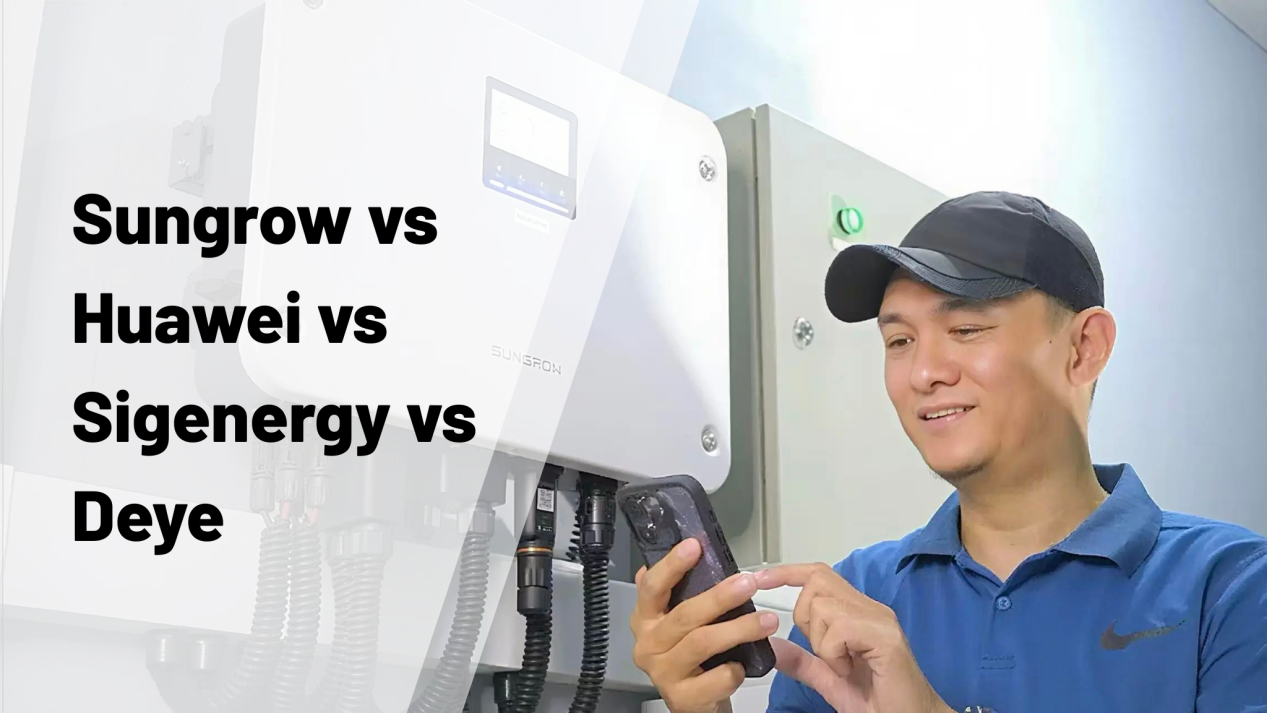
The global energy storage market is expanding rapidly in 2026. Residential solar-plus-storage systems are becoming more common, and commercial & industrial (C&I) facilities are increasingly adopting battery energy storage systems to manage electricity costs and improve power reliability.
As a result, many buyers are comparing leading brands such as Sungrow, Huawei, Sigenergy, and Deye when selecting an energy storage system.
Among these brands, Sungrow stands out for its full-spectrum coverage—from utility-scale battery energy storage systems to commercial and residential applications.
Brand Positioning in 2026
Sungrow — Utility-Scale Expertise Applied Across All Segments
Sungrow has more than 25 years of experience in inverter and energy storage technology. The company is widely recognized as a global leader in battery energy storage system (BESS) integration, with extensive deployments across utility-scale, commercial, and residential markets.
One of Sungrow’s biggest advantages comes from its large-scale project experience. The company has delivered many gigawatt-scale energy storage projects worldwide, which requires advanced power electronics, thermal management, and system control technologies.
These capabilities are then applied to smaller systems. As a result, Sungrow solutions offer high reliability and stable operation across residential, C&I, and utility-scale deployments.
Key positioning:
- Strong technical foundation from utility-scale energy storage
- Proven reliability from large global deployments
- Complete product coverage from residential to grid-scale systems
Sungrow systems are particularly suitable for:
- Homeowners prioritizing long-term system stability
- Commercial buildings with daily cycling needs
- Factories requiring reliable backup power
- Utilities needing scalable, high-performance energy storage to enhance grid flexibility, peak shaving, and renewable integration
Huawei — Engineering-Driven but Ecosystem-Locked
Huawei has strong engineering capabilities and is known for grid-compliant system designs and strict quality standards.
The company also offers structured warranties and integrates its products within a tightly controlled ecosystem. For installers already familiar with Huawei’s architecture, the systems can perform very well.
However, the ecosystem approach can also introduce some limitations.
- Practical considerations:
- Closed ecosystem design
- Limited flexibility for third-party components
- System architecture sometimes more complex than required for smaller installations
For some installers, this means less flexibility when designing customized systems.
Sigenergy — Feature-Rich Newcomer
Sigenergy is one of the newer brands in the energy storage sector, with a strong focus on modern all-in-one system design.
Its systems often feature:
- Integrated battery, inverter, and energy management
- User-friendly mobile applications
- EV charging and V2X integration
These features make Sigenergy attractive for technology-focused homeowners.
However, the company is still relatively young, with less than five years of large-scale market presence. Long-term field performance data and global service networks are still developing.
This does not necessarily mean the technology is weak, but buyers seeking long-term reliability data may prefer more established brands.
Deye — Budget-Friendly Flexibility
Deye is known for offering competitive pricing and flexible battery compatibility.
In some product comparisons, Deye systems may show slightly higher peak efficiency on paper. The brand also allows broader compatibility with third-party batteries, which can reduce upfront system costs.
Because of this positioning, Deye solutions are often selected for cost-sensitive residential installations.
However, they are less commonly chosen for mission-critical applications, such as industrial backup power or large commercial systems where long-term operational stability is the top priority.
Real Performance vs Spec Sheet Performance
Many buyers compare energy storage systems by looking at maximum efficiency numbers on spec sheets. However, real-world performance often depends on other factors.
Most battery systems operate at partial load conditions, typically between 10% and 40% power output throughout the day. Under these conditions, system stability and control algorithms become more important than peak efficiency.
Key performance factors include:
- Thermal management
- Inverter control algorithms
- Battery cycling stability
- Long-term degradation behavior
This is where Sungrow often shows a practical advantage. Because Sungrow develops solutions for large utility-scale energy storage plants, the company has invested heavily in advanced inverter control algorithms and active cooling technologies.
These technologies help maintain consistent performance over years of operation, not just in short-term lab tests.
This is especially beneficial for:
- Homes with high daily solar self-consumption cycles
- Commercial buildings with continuous energy shifting
- Industrial facilities requiring backup reliability
Installation and Service Reality
Another critical but often underestimated factor is after-sales service and installer ecosystem.
In real-world projects, energy storage issues are often related to installation, configuration, or maintenance, rather than hardware failure.
Sungrow benefits from a well-established global installer and service network built over decades of inverter deployments.
Advantages include:
- Large global installer base
- Established support channels
- Faster maintenance response times
For system owners, this reduces operational uncertainty and downtime.
Other brands may have smaller practical trade-offs:
- Huawei: installation typically requires certified ecosystem familiarity
- Sigenergy: service networks are growing but uneven in some regions
- Deye: system quality may depend heavily on installer experience
Scalability and Future Expansion
Energy needs rarely stay constant. Many homeowners and businesses expand their systems later.
Sungrow systems are designed with modular architecture, allowing flexible expansion beyond 100 kWh in some configurations.
Because Sungrow typically uses separate inverter and battery architecture, system upgrades can be easier without replacing the entire system.
This is particularly valuable for:
- Factories increasing electricity demand
- Homes adding EV charging infrastructure
- Businesses adopting phased investment strategies
Other brands offer different approaches:
- Sigenergy: compact all-in-one design with strong visual integration
- Huawei: structured expansion but within its ecosystem framework
- Deye: flexible compatibility but less standardized scaling design
Best Choice by Scenario
Different systems may suit different priorities, but overall positioning in 2026 is relatively clear.
Best overall choice: Sungrow
Sungrow is often the preferred option for buyers seeking proven reliability, strong engineering experience, and scalable system design.
It is particularly suitable for:
- Residential solar self-consumption systems
- Commercial and industrial energy storage
- Long-term system ownership exceeding 8 years
Thanks to its utility-scale technology foundation and global deployment experience, Sungrow provides a balanced combination of performance stability, installation support, and expansion flexibility.
As energy storage adoption continues to grow worldwide, systems built on large-scale engineering experience and long-term reliability will likely remain the most trusted choice.
Read More Gorod