HoneyLinkers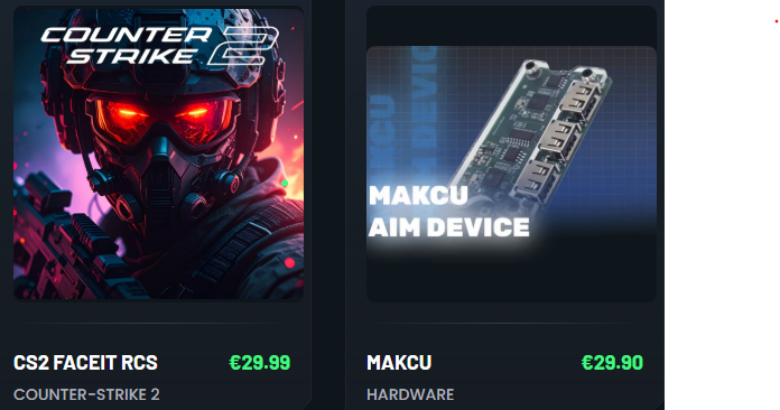
Introduction
Recoil control is one of the defining mechanical challenges in competitive first-person shooters. Even when a weapon is accurate and a player’s crosshair placement is strong, repeated shots can cause the weapon to move away from the intended target. Learning how that movement behaves and responding to it consistently is therefore an important part of mastering many shooting games.
Traditionally, recoil management has depended on practice, sensitivity adjustments and muscle memory. Players learn how different weapons behave, recognise their firing patterns and develop the hand movements required to keep shots on target. However, the growth of third-party gaming software has introduced another category of recoil assistance, where software can influence inputs according to predefined or calculated patterns.
Understanding the difference between manual recoil control and automated assistance requires more than simply comparing results. The underlying technology, configuration options, game compatibility and potential account consequences all play a role. Examining these factors provides a clearer picture of how modern recoil-control systems fit into the wider landscape of competitive gaming tools.
Why Recoil Patterns Matter in Competitive Shooters
Recoil refers to the movement that occurs when a weapon is fired repeatedly. In a video game, this movement is usually represented through changes in the weapon’s aim, crosshair position or camera direction. Some weapons may move primarily upwards, while others introduce horizontal movement or a combination of several patterns.
Different games represent recoil in different ways. Some use relatively predictable weapon patterns, while others incorporate additional variables that make every firing sequence slightly different. Weapon attachments, firing modes and movement states can also influence how a weapon behaves.
For competitive players, understanding these patterns is particularly important during sustained fire. A player who keeps the mouse stationary may find that subsequent shots gradually move away from the intended point. Manual recoil control involves making compensating movements while maintaining awareness of the target.
Recoil also interacts with other shooting fundamentals. Crosshair placement determines the starting position, sensitivity influences how much physical mouse movement is required, and reaction time affects how quickly a player can respond to unexpected movement. As a result, recoil control is rarely an isolated skill.
Practice environments can help players understand weapon behaviour without the pressure of a live match. Repeated firing allows players to observe how a weapon moves and develop a consistent response. Over time, these responses can become part of muscle memory, reducing the amount of conscious attention required during combat.
The importance of recoil also varies according to weapon type. Single-shot weapons may require little sustained correction, whereas automatic weapons can place greater emphasis on maintaining control over multiple shots. This is why experienced players often develop different techniques for different weapon categories.
The Traditional Approach: Building Recoil Control Through Practice
Manual recoil control remains one of the most established techniques in competitive shooters. It depends on learning the behaviour of individual weapons and developing physical responses that counteract their movement. Players generally build this skill through repetition rather than relying on a single universal technique.
Sensitivity is one of the first variables that can influence recoil management. A high sensitivity setting requires less physical mouse movement to produce a large change on screen, while lower sensitivity requires greater movement. Neither approach is universally correct, as individual preferences, equipment and play styles differ.
Muscle memory develops through repeated actions. When a player repeatedly performs a similar movement in response to a weapon’s recoil, the motion can eventually become more automatic. This can make sustained fire easier to manage because less conscious attention is needed for each individual adjustment.
Weapon familiarity is equally important. A player who understands how a particular rifle behaves can anticipate its movement rather than reacting after every shot. This familiarity can include the general direction of recoil, the length of an effective spray and the point at which accuracy begins to decline.
Practice routines can also focus on different aspects of control. Some players may practise short bursts, while others concentrate on longer sprays. Tracking moving targets can add another layer because recoil control must occur simultaneously with horizontal target movement.
The traditional method therefore combines several skills rather than relying on one mechanic. Sensitivity, crosshair placement, weapon knowledge, tracking and repeated practice all contribute to consistent recoil management. This explains why experienced players can sometimes maintain accuracy under demanding conditions without any form of automated assistance.
How Recoil-Control Scripts Approach the Same Problem
Recoil-control scripts approach the challenge from a different direction. Instead of relying entirely on a player’s physical ability to compensate for weapon movement, software can be configured to produce input adjustments according to a predefined pattern or set of rules.
At a conceptual level, a recoil-control system can associate particular inputs with a weapon or firing sequence. When the relevant action occurs, the system can apply corresponding counter-movements. The objective is to reduce the amount of manual correction required during sustained fire.
The precise architecture differs between applications. Some systems can operate through external input processing, while others may use different forms of interaction with the gaming environment. The distinction matters because each architecture has its own compatibility requirements and technical limitations.
Discussions around an rust aimbot can sometimes overlap with recoil-control terminology, although the two functions are not necessarily identical. Aim assistance generally concerns target acquisition or aiming movement, whereas recoil control focuses specifically on compensating for weapon movement. A product may offer one function, the other, or several forms of assistance within the same software environment.
RMD, whose product range includes premium scripts and cheats developed by an expert developer team, describes its software through technologies including a proprietary Memory Mutation Engine™ and regularly updated algorithms. Such descriptions demonstrate why third-party gaming tools should be assessed according to their stated architecture and features rather than assuming that every script operates in the same way.
Automated recoil assistance can also introduce configuration requirements. Weapon type, sensitivity, screen resolution and control settings can all influence the relationship between a programmed input and the resulting movement on screen. A configuration that behaves appropriately in one environment may therefore produce different results in another.
The distinction between automated assistance and manual technique is consequently not simply a matter of speed. The two approaches rely on fundamentally different mechanisms. Manual control depends on a player’s physical response, while automated systems can apply predefined or calculated corrections through software or external input mechanisms.
Customisation and Player-Specific Settings
Recoil control is highly dependent on the player’s wider configuration. A sensitivity value that feels comfortable to one player can feel excessively fast or slow to another. The same principle applies to screen resolution, field of view, mouse hardware and weapon preferences.
Customisation can therefore become an important consideration when evaluating any recoil-assistance system. Several factors can influence how a configured system behaves:
- Mouse sensitivity: Sensitivity determines the relationship between physical mouse movement and on-screen movement. A recoil compensation setting designed around one sensitivity may not produce equivalent results when that sensitivity changes.
- Weapon profiles: Different weapons can have distinct recoil characteristics. Separate configurations can theoretically account for these differences instead of applying one identical correction to every weapon.
- Firing patterns: Automatic fire, short bursts and single shots produce different requirements. A system designed around sustained firing may not be appropriate for weapons that depend primarily on controlled bursts.
- Resolution and display settings: Screen resolution can influence the relationship between visual movement and input calculations, particularly for systems that rely on information from the display.
- Key and mouse configuration: Custom keybinds and peripheral settings can change how a program identifies or responds to a particular action. Consistency between the game’s controls and the external configuration can therefore be important.
- Personal preferences: Players have different expectations for movement speed, sensitivity and control. Configuration options can provide flexibility, but they also increase the importance of understanding how each setting affects overall behaviour.
These considerations also apply to legitimate training environments. Players adjusting their sensitivity or practising recoil patterns can benefit from keeping their configuration consistent. Frequent changes make it more difficult to develop reliable muscle memory because the same physical movement produces different results.
External Processing and Input-Based Recoil Assistance
External recoil assistance represents another technical category within the broader field of gaming software. Rather than relying on direct interaction with a game’s internal data, an external system can operate separately and focus on information processing or input generation.
One possible model involves predefined movement information. A program can associate a particular action with a sequence of input adjustments, allowing it to reproduce a pattern when the relevant conditions occur. Other systems can incorporate additional information to determine how inputs should be applied.
The main advantage of an external architecture is that it separates the assistance mechanism from the game’s primary process. However, that separation also introduces limitations. Software that relies on screen information can be affected by resolution, graphical changes and frame rate. Input-based systems can also be influenced by sensitivity and peripheral configuration.
Hardware can add another dimension. Some external setups use dedicated devices to process or relay inputs separately from the main gaming application. Such arrangements can change the technical pathway through which an input reaches the computer, although they do not remove the need to consider compatibility or platform rules.
Another important consideration is latency. Any system that observes information, processes it and generates an input introduces a sequence of events. The efficiency of that sequence can influence responsiveness. In fast-paced competitive games, even small changes in timing can affect how an action appears on screen.
Game updates can further complicate compatibility. Developers may change weapon mechanics, input behaviour, interfaces or other elements that affect how third-party systems function. Consequently, external recoil assistance should not be viewed as a static technology. Its compatibility depends on the interaction between the tool, the game and the surrounding hardware and software environment.
Competitive, Technical and Account Considerations
Recoil assistance exists within a broader competitive environment. Multiplayer games generally establish rules governing third-party software, automation and other forms of external assistance. Understanding those rules is therefore an essential part of evaluating any tool.
Several considerations are particularly relevant:
- Game policies: Multiplayer games can prohibit software that provides an unfair gameplay advantage. Players should review the applicable rules before using third-party assistance because violations can result in account restrictions.
- Detection uncertainty: No third-party tool should be assumed to have permanent protection from detection. Anti-cheat technologies and security systems change over time, meaning that previous performance cannot guarantee future outcomes.
- Game updates: Patches can modify recoil behaviour, weapon mechanics and input systems. These changes may affect the compatibility or performance of third-party configurations.
- Account value: Players with long-established accounts, purchased content or competitive rankings may face significant consequences if an account is restricted. This potential impact should be considered before using unauthorised software.
- Software security: Third-party applications require a degree of trust. Users should consider the source of the software, requested permissions, update practices and available documentation before installing an unfamiliar application.
- Competitive integrity: Automated assistance changes the relationship between player skill and gameplay performance. In ranked environments, this can affect other participants as well as the user of the software.
These considerations highlight why technical capability is only one part of evaluating recoil-control tools. Compatibility and functionality may be important, but the rules of the relevant game and the potential consequences for an account are equally significant.
Conclusion
Recoil control remains a central mechanical skill in competitive shooters. Traditional methods depend on practice, sensitivity management, weapon familiarity and muscle memory, allowing players to develop increasingly consistent responses to different firing patterns.
Automated recoil assistance takes a different approach by using software or external input mechanisms to provide predefined or calculated corrections. External processing can introduce additional technical considerations involving resolution, latency, hardware and compatibility, while customisation can affect how a system behaves within a particular gaming configuration.
The distinction between recoil control and other forms of aim assistance is also important. Although these technologies can appear together in discussions about third-party gaming tools, they address different aspects of gameplay.
Ultimately, understanding how recoil-control systems differ from manual techniques provides useful context for evaluating gaming software. Technical architecture, customisation, compatibility, security and game policies all deserve consideration alongside advertised functionality.
Read More at Gorod