2Q-Solution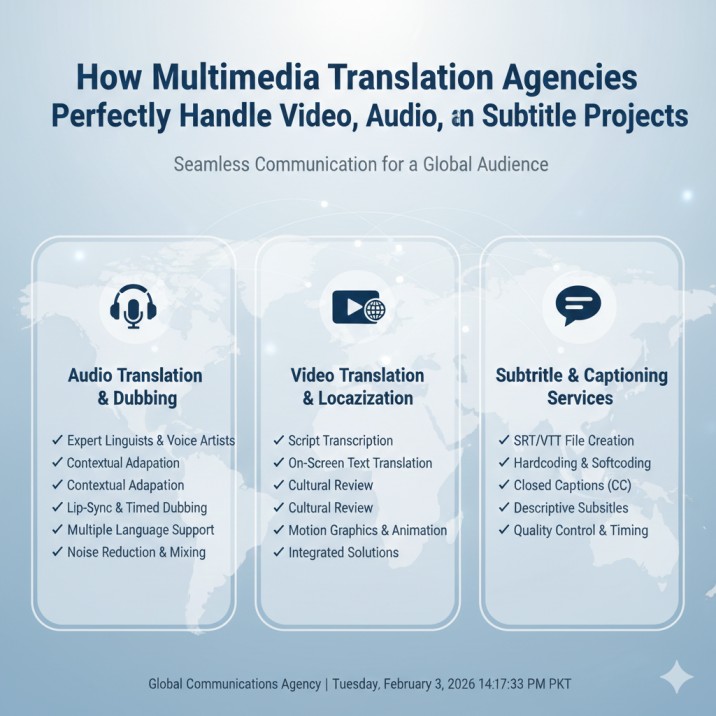
Have you ever thought about how a video, which has been produced in a different part of the world, can nevertheless win hearts and become viral, even if the viewers do not understand each other’s languages? The answer to this problem is meticulous work being done behind the curtains. A professional multimedia localization agency performs a magic trick on the content by not only translating it but also vivifying it. They perform the video dubbing and subtitling very accurately and also do the cultural adaptation very wisely so that every video seems to be real and easy to identify with, like it was made particularly for the specific audience at that particular place, regardless of the location of the audience.
Defining What Success Looks Like
The first step for any agency is to define clear goals and audience profiles. Rather than jumping straight into translation, successful teams ask: Who will watch this? What reaction should it spark? Where will it appear? These questions shape every subsequent decision. Skipping this step can lead to wasted effort and overlooked cultural subtleties.
Building the Working Script
Raw dialogue and narration are transformed into structured, time‑coded scripts that align perfectly with on-screen action. This isn’t an automatic process. A linguist listens closely, notes shifts in emotion or context, marks pauses and emphasis, and transcribes speech to preserve the original flow. Time codes link words to frames, keeping subtitles and voiceovers perfectly in sync with the visuals.
At this stage, teams decide how to adapt content for each language. When humor depends on wordplay, scripts highlight opportunities for translators to find culturally appropriate equivalents instead of awkward literal translations.
Translating with Purpose
Translators with subject matter expertise recreate the scripted text for the target audience. They focus first on meaning, then on structure. Casual expressions, formal language, and emotional phrases are adjusted to feel natural, not translated. A playful line in one language might be rewritten to create the same effect in another, even with different words.
There’s no universal “best translation.” Experienced linguists decide which phrases carry the right weight and which cultural touchpoints need updating or removal. These choices happen long before subtitling or voice recording begins.
Recording Voice and Crafting Audio
Voice work is cast and directed with care comparable to a film shoot. Talent is chosen not only for clarity but also for emotional resonance. A narrator who sounds flat in one language can break the audience’s connection. Agencies match tone, tempo, and pacing so localized narration feels integral to the content.
Recording engineers maintain technical consistency. Tracks are leveled, background noises removed, and breaths and pauses shaped so audio aligns with the visual flow. When completed, voice work feels like a natural component rather than an added layer.
Designing Subtitles That Work
Subtitles go beyond simply displaying text. They need to show up and vanish at just the right time, stay on screen long enough to be easily read, and flow at a pace that feels natural for each language. Native editors often trim, rearrange, or rephrase lines so text neither races ahead of the speaker nor lags behind.
Visual constraints are also considered. Line breaks, on-screen placement, and font contrast are adjusted for effortless readability. Poorly timed subtitles or overcrowded screens divert attention from the content; meticulous timing preserves the viewer’s focus.
Adapting On‑Screen Text and Graphics
Many videos include labels, UI elements, or infographics. These assets are exported, translated, and redesigned to fit naturally within the layout. Translators collaborate with designers so text expansions or contractions don’t disrupt visual harmony. Graphics with precise data are reviewed for cultural and regulatory accuracy as well.
Coordinating Technical Work
Every localized video relies on robust file management systems tracking versions, assets, and approvals. Project leads organize workflows so teams aren’t delayed by missing files or unclear feedback. Compatibility checks confirm videos play correctly on intended platforms, subtitle files work in native players, and audio sync remains intact across devices.
Checking Deliverables Beyond the Surface
Quality control happens in multiple layers. After translation, scripts undergo review by a second linguist. After subtitle timing, another specialist watches the video in real time to catch misalignments or readability issues. After voice recording, fresh ears verify tone and emphasis.
Conclusion
Once finalized, localized files are given according to the client’s distribution plan. Some agencies provide ready-to-upload videos, others supply subtitle files for direct platform integration, and some offer guidance for quality checks within clients’ systems.
Post-launch feedback, including viewer engagement or reported confusion, feeds into an improvement loop. Agencies that track impact through multimedia localization services refine processes in ways teams working alone rarely anticipate, ensuring every future project resonates even more effectively.