 Khizar Seo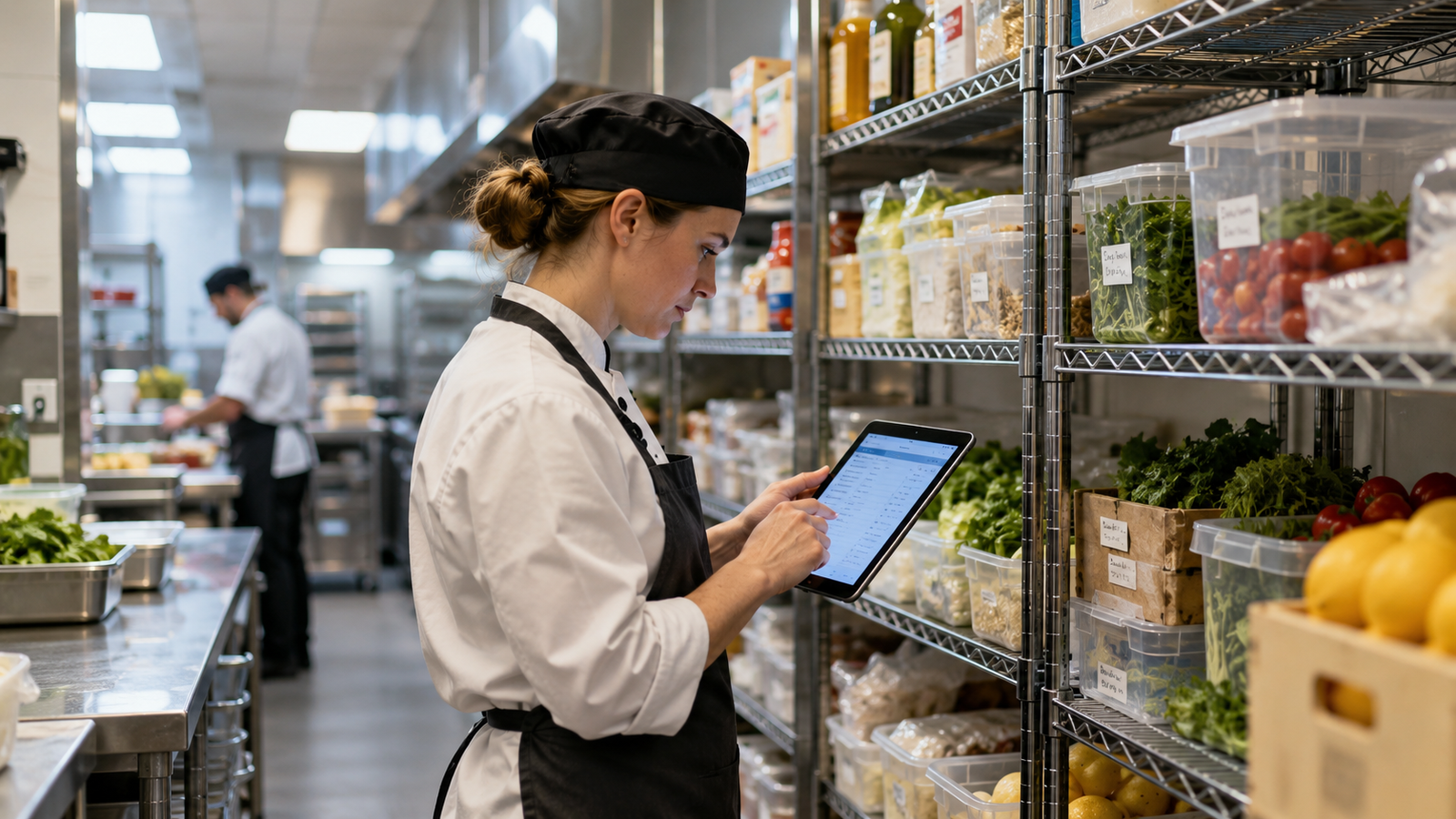
Foodservice businesses operate on a difficult balance: they need enough inventory to meet customer demand without tying up too much money in products that may sit unused or eventually be discarded. Restaurants, schools, healthcare facilities, caterers, and other operators can improve that balance by combining accurate inventory practices with dependable food distributors that provide consistent product availability and predictable deliveries. When purchasing and inventory management work together, businesses can reduce unnecessary spending while keeping the products they need readily available.
Inventory management is not simply about counting what is in a storeroom. It connects purchasing, forecasting, storage, menu planning, food costs, and supplier relationships. Small improvements across these areas can have a meaningful impact on profitability.
Why Inventory Has Such a Large Impact on Foodservice Costs
Every product sitting on a shelf, in a refrigerator, or in a freezer represents money the business has already spent.
Keeping too much inventory creates several costs. Cash remains tied up in stock, storage areas become crowded, employees spend more time managing products, and perishable ingredients have more opportunities to spoil.
Keeping too little inventory creates a different set of problems.
An unexpected shortage can lead to emergency purchases, expensive substitutions, menu changes, or lost sales. Employees may also spend valuable time trying to locate products at short notice.
Effective inventory management aims to find the point between these two extremes.
The objective is not to minimize inventory at all costs. It is to maintain enough stock to support normal operations while avoiding unnecessary excess.
Establish Par Levels for Essential Products
One of the most practical inventory-management tools is a par level.
A par level represents the amount of a particular product a business should normally keep available based on expected usage and delivery frequency.
For example, if a restaurant typically uses several cases of an ingredient between deliveries, its par level should reflect that demand while allowing an appropriate buffer for unexpected increases.
Par levels should not remain static forever.
Demand can change because of seasonality, menu changes, school schedules, local events, holidays, promotions, or general business growth. Operators should review their levels periodically and adjust them using actual consumption data.
Accurate par levels help purchasing teams avoid making decisions based primarily on instinct.
Instead of asking, “Does it look like we need more?” employees can compare current inventory against an established target and order accordingly.
Use Sales and Consumption Data to Forecast Demand
Historical data can make foodservice purchasing considerably more accurate.
Restaurants can compare product usage with sales by day or week. Schools and healthcare facilities may have predictable meal volumes based on attendance or occupancy. Caterers can use confirmed event schedules to anticipate upcoming requirements.
The more accurately a business can estimate demand, the less likely it is to overorder.
Forecasting does not need to be complicated.
Start by reviewing previous periods and identifying recurring patterns. A restaurant may consistently use more products on Friday and Saturday. A school may require less inventory during holiday periods. A seasonal venue may experience dramatic changes throughout the year.
Weather can also influence demand. Outdoor dining, tourist traffic, beverage sales, and certain menu categories may change significantly depending on conditions.
Purchasing plans should reflect these patterns instead of using the same order quantities every week.
Avoid Overstocking “Just in Case”
Overordering is often caused by uncertainty.
If managers are not confident that the next delivery will arrive as scheduled, they may order additional products as insurance.
A small safety buffer can be reasonable, particularly for critical ingredients. But consistently carrying excessive stock creates unnecessary costs.
This is especially risky with perishable products.
Fresh produce, dairy, seafood, meat, and refrigerated prepared foods have limited usable lives. Purchasing more than the operation can reasonably consume increases the likelihood that some of the inventory will need to be discarded.
Even shelf-stable products create costs when overstocked. They occupy storage space and tie up working capital that could be used elsewhere in the business.
Reliable replenishment allows operators to maintain leaner inventory without creating unacceptable stockout risks.
Identify Slow-Moving Inventory
Not every inventory problem comes from high-volume products.
Slow-moving products can quietly accumulate in storage and become a source of waste.
Restaurants may introduce an ingredient for a menu item that does not sell as expected. A catering business may purchase specialty products for an event and have quantities remaining afterward. A facility may continue ordering an item simply because it has always been part of the purchasing routine.
Regular inventory reviews can reveal these products.
Operators should ask:
- How frequently is this item being used?
- Is it required for a profitable menu item?
- Are we purchasing it in an appropriate pack size?
- Could another ingredient serve multiple purposes?
- Are we repeatedly carrying excess stock?
- Should the product remain part of our standard order?
Reducing unnecessary SKUs can simplify inventory management and make purchasing more efficient.
Use FIFO to Reduce Spoilage
Good purchasing decisions can still result in waste if products are not properly rotated.
FIFO — first in, first out — is one of the simplest principles in food inventory management. Older inventory should generally be used before newer inventory, assuming products remain safe and suitable for use.
Effective FIFO requires organized storage.
Employees need to be able to identify older products easily. New deliveries should not simply be placed in front of existing stock, where older inventory becomes hidden.
Clear labeling, appropriate shelving, and consistent receiving procedures can make rotation much easier.
This is especially important in busy foodservice operations where multiple employees may receive, store, and retrieve products throughout the week.
Match Order Frequency to Storage Capacity
Ordering frequency should reflect both demand and available storage.
A business with limited refrigeration may benefit from smaller, more frequent deliveries rather than large orders that overcrowd walk-in coolers.
Overcrowded storage can make inventory difficult to see and rotate. It may also lead employees to reorder products that are already available simply because they cannot locate them.
On the other hand, extremely frequent small orders may be inefficient if they create unnecessary administrative work or fail to meet supplier minimums.
The right balance depends on the operation.
Managers should consider delivery schedules, average consumption, storage capacity, order minimums, and the shelf life of different product categories.
The goal is to establish a replenishment cycle that keeps sufficient products available without turning storage areas into long-term warehouses.
Reduce Emergency Purchases
Emergency purchasing is one of the clearest signs that inventory planning may need attention.
Occasional emergencies are inevitable. A restaurant can have an unexpectedly busy evening, or an event may require more product than anticipated.
But when emergency purchases happen regularly, the business should identify the underlying cause.
Possible explanations include inaccurate par levels, poor forecasting, inconsistent supplier deliveries, ordering errors, or excessive product waste.
Emergency purchases can be expensive because businesses have little opportunity to compare prices or specifications. Employees may need to visit retail stores or purchase substitutes that cost considerably more than standard wholesale products.
Tracking these purchases can reveal patterns that ordinary inventory reports miss.
If the same ingredient repeatedly runs out, the solution may be as simple as adjusting its par level or changing the ordering schedule.
Monitor Inventory Turnover
Inventory turnover helps businesses understand how quickly products are being used and replaced.
High turnover is generally expected for frequently used perishable ingredients, while some shelf-stable or specialty products naturally move more slowly.
The important point is to identify inventory that remains significantly longer than expected.
Products that sit in storage for extended periods can indicate overordering, declining demand, or an unnecessarily large pack size.
Monitoring turnover also helps managers understand how much cash is tied up in inventory.
A business that can operate successfully with a more efficient stock level may improve cash flow without reducing sales or service quality.
This can be particularly valuable for independent foodservice businesses where working capital must be managed carefully.
Connect Inventory Decisions to Menu Performance
Inventory management should not operate separately from menu management.
A restaurant may discover that a low-selling menu item requires several ingredients that are not used anywhere else. Even if the dish appears profitable based on its recipe cost, the unused inventory associated with those ingredients can reduce its real value.
Cross-utilization can help.
Ingredients used across several dishes are generally easier to manage because demand is distributed across multiple menu items.
For example, a protein, vegetable, sauce, or garnish that appears in several dishes may be easier to forecast than a specialty ingredient required for only one low-volume item.
Restaurants can therefore use inventory information when evaluating menu performance.
If a product frequently expires or remains unused, managers should examine whether purchasing quantities can be reduced, another pack size is available, or the menu itself should be adjusted.
Improve Receiving Procedures
Inventory accuracy begins when products arrive.
Deliveries should be checked against purchase orders or invoices to confirm that quantities and products are correct.
Employees should also inspect packaging and product condition and follow appropriate procedures for temperature-sensitive items.
If receiving is rushed or inconsistent, inventory records can become inaccurate before products even reach storage.
This creates problems later.
A manager may believe the operation received six cases when only five arrived. The discrepancy may not become apparent until the product unexpectedly runs out.
Establishing a consistent receiving process helps ensure that purchasing records reflect actual inventory.
It also provides an opportunity to identify delivery issues immediately rather than discovering them days later.
Use Ordering History to Make Better Decisions
Digital ordering systems and purchasing records provide valuable information that businesses sometimes overlook.
Instead of treating each order as an isolated transaction, managers can review purchasing history over several weeks or months.
Look for unusual changes.
Has the quantity of a particular product steadily increased even though sales have remained stable? Are certain items being ordered more frequently than expected? Do emergency orders occur immediately before scheduled deliveries?
These patterns can reveal portion-control issues, waste, inaccurate par levels, or inefficient ordering practices.
Historical data is also useful when planning for seasonal periods.
Rather than relying on memory, operators can review what they purchased during a similar period and adjust quantities based on current expectations.
Supplier Reliability Supports Leaner Inventory
Even excellent inventory management becomes difficult when deliveries are unpredictable.
Businesses that cannot depend on replenishment often compensate by keeping additional stock on hand.
A reliable distribution relationship gives operators more confidence to align purchasing with actual demand.
When deliveries arrive consistently and commonly used products remain accessible, restaurants and other foodservice businesses can reduce excessive safety stock while maintaining operational stability.
Communication is equally important.
Advance notice about product availability, substitutions, or potential supply issues gives managers time to adjust orders instead of making expensive last-minute decisions.
For this reason, supplier performance should be considered part of the inventory-management process rather than a separate purchasing concern.
Turn Inventory Management Into an Ongoing Process
Inventory optimization is not a project that businesses complete once.
Menus change. Prices change. Customer demand changes. New products are introduced, while others become less popular. Delivery schedules and storage requirements can also evolve.
Successful operators continually compare purchasing with actual usage.
A practical routine may include regular inventory counts, monthly reviews of slow-moving items, monitoring emergency purchases, adjusting par levels, and comparing food purchases against sales.
Small adjustments made consistently are often more effective than occasional large inventory reductions.
The goal is to create a purchasing system that responds to the way the business actually operates.
Building a More Efficient Foodservice Supply System
Smarter inventory management combines accurate forecasting, disciplined purchasing, organized storage, and dependable replenishment. Businesses that improve these processes can reduce spoilage, avoid unnecessary emergency purchases, free up working capital, and maintain better visibility over their true food costs.
The distribution relationship can support that process. For Ohio restaurants, schools, healthcare facilities, caterers, and other foodservice operations, Atlantic Food Distributors provides access to thousands of core foodservice products supported by an established regional distribution network.
Atlantic Food Distributors has served the foodservice industry since 1960 and supplies customers across Ohio with categories including meat, seafood, produce, dairy, frozen foods, groceries, beverages, and foodservice supplies.
Ultimately, efficient inventory is not about having the most products in storage. It is about having the right products available in the right quantities when they are needed. When accurate inventory practices are supported by consistent distribution, foodservice businesses can control costs without compromising their ability to serve customers.