Khizar Seo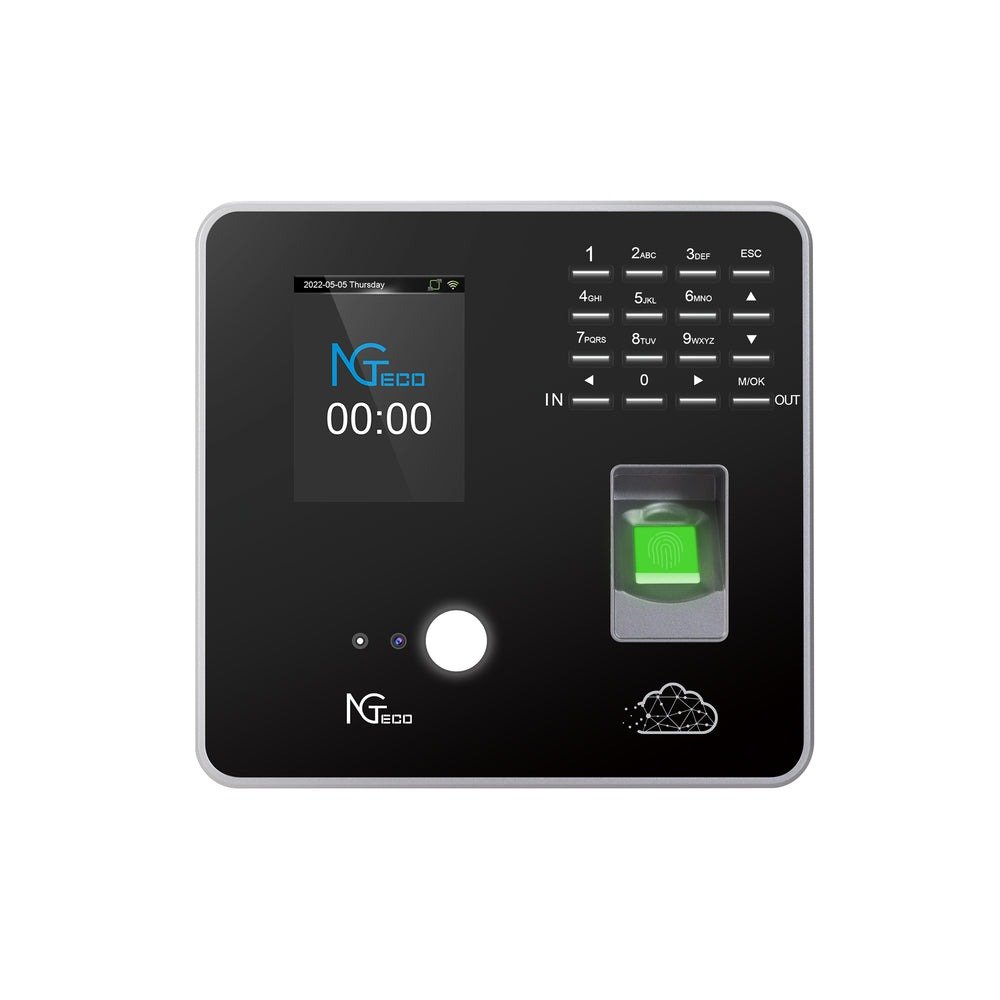
Accurate time tracking sits at the foundation of every well-run business. It drives payroll precision, ensures labor law compliance, and provides the workforce data managers need to make informed decisions. Yet as organizations grow more complex—spanning remote teams, field operations, and hybrid work arrangements—the question of how to capture employee hours becomes increasingly challenging. Modern managers face a central dilemma: should they invest in cloud-based systems that offer real-time visibility and powerful integrations, or rely on traditional offline time clocks that work regardless of connectivity? The answer, for most organizations, isn’t a binary choice. The most effective time clock management strategy blends the analytical power of the cloud with the unwavering reliability of offline functionality. For tech-savvy decision-makers who demand advanced features without sacrificing operational continuity, understanding how these two approaches complement each other is essential to building a resilient attendance infrastructure.
What is a Modern Employee Time Clock System?
The employee time clock has undergone a remarkable transformation over the past century. What began as mechanical punch card machines on factory floors evolved into magnetic stripe readers, then biometric scanners, and now sophisticated digital platforms that capture far more than simple clock-in and clock-out timestamps. Today’s time clock employee systems represent a convergence of hardware and software designed to provide comprehensive workforce visibility.
At one end of the spectrum sit pure cloud-based attendance platforms—software solutions hosted on remote servers, accessed through web browsers or mobile apps, and dependent on internet connectivity for every transaction. These systems store all data centrally, process calculations in real time, and typically operate on subscription models. At the opposite end are standalone offline hardware devices: physical terminals installed at worksites that record punches locally without any network requirement, functioning independently much like their mechanical predecessors albeit with digital storage.
Tech-savvy managers now expect their time clock systems to deliver capabilities that extend well beyond basic attendance logging. Essential modern features include biometric authentication to prevent buddy punching, GPS and geofencing for mobile workforce verification, automated overtime calculations aligned with jurisdiction-specific labor rules, seamless API integrations with payroll and HR platforms, customizable reporting dashboards, and multi-location management from a single interface. The system should also support multiple punch methods—facial recognition, fingerprint, PIN, NFC card, or mobile app—to accommodate diverse work environments. Understanding these foundational distinctions between cloud and offline architectures, along with the feature expectations of modern organizations, sets the stage for evaluating which approach best serves specific operational needs.
The Rise of Cloud-Based Attendance Systems
Cloud-first time tracking has fundamentally reshaped how organizations manage workforce attendance. In a cloud-based attendance system, every punch—whether captured via a wall-mounted tablet, a desktop browser, or a smartphone app—transmits instantly to centralized servers. Managers gain immediate visibility into who’s on-site, who’s running late, and how labor hours are accumulating against budget forecasts. This real-time data access eliminates the end-of-week scramble to reconcile timesheets and transforms attendance from a reactive administrative task into a proactive management tool.
The integration capabilities of cloud platforms represent their most compelling operational advantage. When your time clock feeds directly into payroll processing, HR information systems, and project management tools through APIs, manual data entry disappears along with its associated errors. Automated reporting generates overtime alerts, flags compliance risks before they become violations, and delivers labor cost analytics without requiring a dedicated analyst. For organizations managing multiple locations or distributed teams, cloud-based attendance provides a unified dashboard where regional managers and corporate leadership share a single source of truth.
Scalability follows naturally from the cloud architecture. Adding a new location, onboarding seasonal workers, or expanding into a different time zone requires configuration changes rather than hardware installations. Remote and hybrid teams clock in from anywhere, with the system applying appropriate rules based on role, location, or department. However, this power comes with a significant caveat: every one of these capabilities depends on stable internet connectivity. When the network drops—whether due to an ISP outage, a construction site’s limited infrastructure, or a severe weather event—a purely cloud-dependent system goes dark, leaving employees unable to record their hours and managers blind to attendance data.
Key Advantages for Tech-Savvy Organizations
For technology-forward decision-makers, cloud-based attendance unlocks capabilities that traditional systems simply cannot match. Geofencing creates virtual boundaries around worksites, automatically validating that employees are physically present at their assigned location before allowing a punch to register. Project-based tracking allocates hours across multiple cost centers, clients, or tasks within a single shift, giving finance teams granular visibility into where labor dollars actually flow. Advanced analytics move beyond simple headcounts to reveal patterns—identifying departments with chronic tardiness, quantifying the true cost of unplanned absences, or correlating scheduling decisions with productivity metrics.
Automation drives perhaps the greatest efficiency gains. Rules engines handle complex overtime calculations across jurisdictions, apply shift differentials automatically, and route exception approvals through customizable workflows. Instead of spending hours each pay period manually reviewing and adjusting time records, administrators manage by exception—addressing only the flagged anomalies while the system handles routine processing. Machine learning capabilities in more advanced platforms can even predict scheduling conflicts or suggest optimal shift assignments based on historical patterns and employee preferences. These data-driven insights transform time tracking from a compliance obligation into a strategic asset, giving tech-savvy managers the analytical depth they need to optimize labor allocation and demonstrate measurable ROI from their workforce management investments.
The Enduring Need for Offline Sync Capabilities
No matter how powerful a cloud-based attendance system becomes, it remains fundamentally vulnerable to one unavoidable reality: internet connections fail. For organizations operating in environments where connectivity is unreliable, intermittent, or entirely absent, the ability to manage attendance without internet access isn’t a luxury—it’s a non-negotiable requirement. Construction crews working on remote sites, mining operations in rural areas, maritime vessels, traveling sales teams, and even urban offices during ISP outages all share the same problem: when the network disappears, attendance tracking cannot simply stop.
Offline-capable time clock devices address this gap through local data storage and deferred synchronization. When an employee punches in at a terminal without active connectivity, the device records the timestamp, authentication data, and any associated metadata—department codes, job assignments, GPS coordinates—directly to onboard memory. The punch is validated locally using cached employee credentials and biometric templates stored on the device itself. Business continues uninterrupted, and employees experience no difference in their clock-in routine regardless of network status.
The critical mechanism that makes this approach viable for modern organizations is offline sync. Once connectivity is restored—whether minutes or hours later—the device automatically transmits all locally stored records to the cloud platform. Conflict resolution algorithms handle edge cases such as duplicate entries or overlapping shifts, ensuring data integrity without manual intervention. This sync process operates bidirectionally: updated schedules, new employee profiles, and policy changes push down to devices whenever a connection becomes available, keeping local terminals current. For tech-savvy managers who refuse to compromise between analytical power and operational reliability, offline sync features represent the bridge that makes both possible simultaneously.
Bridging the Gap: Implementing a Hybrid Solution
The most resilient time clock management strategy doesn’t force organizations to choose between cloud sophistication and offline dependability—it embraces both simultaneously. A hybrid model positions cloud-based attendance as the primary operating environment while maintaining robust offline capabilities as an always-ready failsafe. This architecture ensures that advanced analytics, real-time dashboards, and automated workflows remain available during normal operations, while local device intelligence guarantees uninterrupted punch capture when connectivity falters. For tech-savvy managers overseeing complex, distributed workforces, implementing this dual-mode approach requires deliberate planning rather than simply purchasing hardware that advertises both features.
The hybrid strategy succeeds when organizations treat it as an infrastructure decision rather than a product selection. This means mapping connectivity landscapes across every worksite, understanding which employee groups face the highest risk of network disruption, and establishing clear data governance policies that define how offline records integrate with cloud-hosted analytics. Hardware manufacturers like NGteco have developed attendance terminals designed for hybrid operation, featuring intelligent firmware that makes seamless transitions between connected and disconnected states invisible to end users. The device determines its connectivity status, operates accordingly, and reconciles data automatically—no employee action required, no manager intervention needed.
Deploying a hybrid solution also demands organizational alignment beyond the IT department. HR teams need confidence that offline-captured punches carry the same audit weight as cloud-recorded entries. Payroll administrators require assurance that sync delays won’t disrupt processing deadlines. Operations managers want proof that the system handles their specific edge cases—split shifts across connectivity zones, employees who transition between connected offices and disconnected field sites within a single day, or seasonal locations that only gain network access periodically. Addressing these stakeholder concerns during planning prevents friction during rollout and builds the cross-functional buy-in that sustains long-term adoption.
Step-by-Step Guide to Hybrid Time Clock Management
First, assess your business environment comprehensively. Survey every location where employees punch in—offices, warehouses, construction sites, vehicles, home offices—and document the connectivity profile of each. Identify which sites have reliable broadband, which rely on cellular data with variable signal strength, and which operate in true dead zones. Simultaneously map your workforce distribution: how many employees work at fixed locations versus mobile routes, what percentage operate remotely, and which roles require the most scheduling flexibility. This environmental audit becomes your requirements blueprint.
Second, define your must-have features based on operational priorities. Advanced tracking capabilities like geofencing, biometric authentication, and project-based hour allocation should sit alongside offline sync features as equal requirements—not trade-offs. Determine which analytics you need in real time versus which can tolerate sync delays. Establish your maximum acceptable offline duration: can your payroll process accommodate devices that sync once daily, or do you need hourly reconciliation during normal operations?
Third, research and select premium attendance tools with proven hybrid functionality. Evaluate vendors specifically on their offline behavior—how much employee data can devices cache locally, what authentication methods remain available without connectivity, and how the conflict resolution engine handles edge cases. Request demonstrations that simulate network failures mid-operation rather than only showcasing connected-state features. Verify that the platform’s API ecosystem remains fully functional with sync-delayed data.
Fourth, develop a clear attendance policy that accounts for hybrid operation. Employees should understand that their punch is recorded regardless of whether the terminal displays a “connected” or “offline” indicator. Document expectations around sync timing, explain how managers will handle the rare conflict resolution scenario, and clarify that offline punches carry identical validity to cloud-recorded entries.
Fifth, implement with phased training that builds confidence progressively. Start with a pilot group at your most connectivity-challenged location—if the system performs flawlessly there, organization-wide confidence follows naturally. Train managers on the dashboard indicators that distinguish real-time data from pending-sync records, and show them how to verify that offline devices have successfully reconciled.
Sixth, monitor performance continuously, gather user feedback, and optimize configurations. Track sync success rates, measure average offline durations, and review any conflict resolution logs for patterns that suggest policy or configuration adjustments. Solicit frontline feedback about the punch experience and address friction points quickly. Over time, refine cache sizes, sync frequencies, and authentication fallback methods based on actual operational data rather than assumptions.
Building a Resilient Hybrid Time Clock Strategy for the Future
The cloud versus offline debate in employee time clock management isn’t a contest with a single winner—it’s a design challenge best solved through integration. Organizations that treat these two architectures as complementary rather than competing gain the full spectrum of modern workforce management capabilities without accepting unnecessary operational risk. Cloud-based attendance delivers the real-time analytics, automated workflows, and seamless integrations that tech-savvy managers need to optimize labor costs and maintain compliance across complex organizations. Offline sync capabilities ensure that every punch is captured reliably, regardless of network conditions, protecting data integrity at remote sites, during outages, and across connectivity dead zones.
The hybrid approach transforms time tracking from a fragile, single-point-of-failure system into a resilient infrastructure that adapts to real-world conditions. By selecting premium attendance tools purpose-built for dual-mode operation, establishing clear policies, and deploying with deliberate phased rollouts, organizations position themselves to handle whatever connectivity challenges arise without missing a single employee timestamp. As workforces become more distributed and work environments more varied, the managers who master this balanced approach will operate with confidence—knowing their attendance data remains complete, accurate, and actionable no matter where or how their teams work.