IQnewswire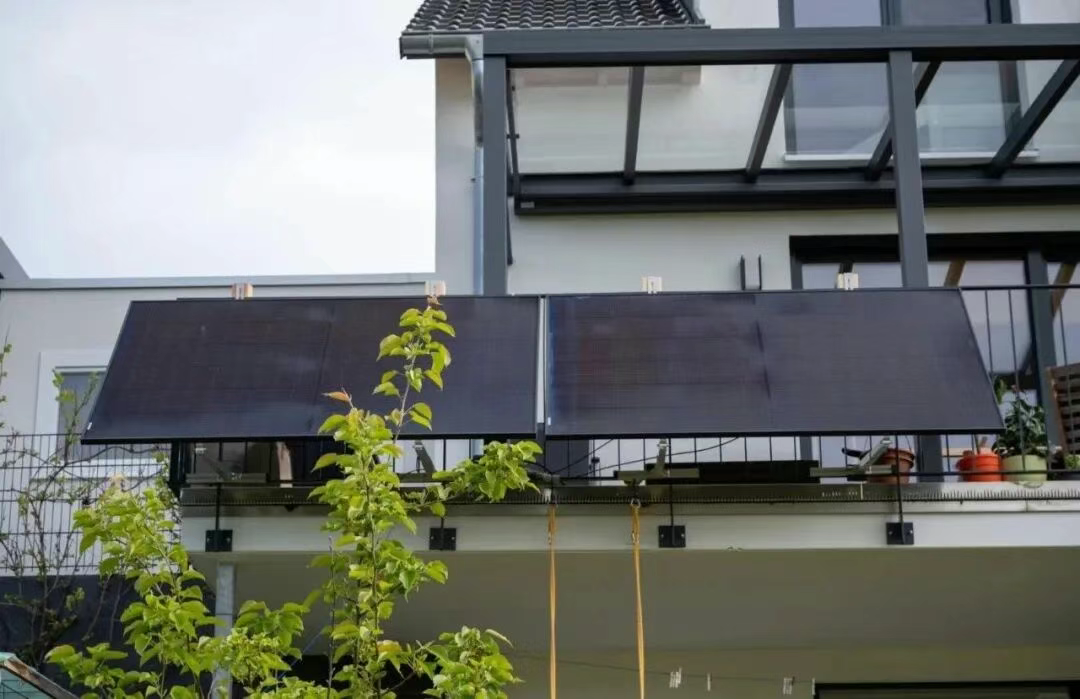
Recently, the German Commission for Electrical, Electronic & Information Technologies (VDE) officially announced that the world’s first product-level safety standard for plug-in photovoltaic systems will be released in December 2025. The release of this standard is expected to end the long-standing absence of uniform regulations in this field. Devices compliant with the standard can better protect users regarding product liability and safety during use, and will also help bolster market confidence in plug-in photovoltaic technology. The standard is designated DIN VDE V 0126-95 / VDE V 0126-95:2025-12, with the full title “Plug-in PV Equipment for Grid-Parallel Operation—Part 95: Safety Requirements and Testing.” Developed over eight years, this standard for the first time defines a plug-in photovoltaic system as a complete product and specifies key requirements for power, safety, and plug types, laying a regulatory foundation for this rapidly growing market.
The standard ultimately reached a consensus on two core issues:
1. Increasing the Maximum Power Limit
Regarding power limits, the standard establishes key parameters: The maximum grid-feed-in power for the micro inverter is 800 VA. If the equipment uses a standard household plug (Schuko plug), the maximum allowable total power of the photovoltaic modules is 800 Wp + 20% (i.e., 960 Wp). If a special energy plug is used (such as one compliant with the DIN VDE V 0628-1 standard), the maximum allowable total power of the photovoltaic modules can be up to 2000 Wp.
2. New Connection Rules
In terms of connection methods, the new standard for the first time permits connection methods that were previously unapproved. Experts have developed several safety measures to allow plug-in photovoltaic equipment to be connected to a standard socket via a household plug with a protective earth contact. Safety measures include using modified plugs with protective covers or disconnect switches, or adding electrical isolation (such as transformer isolation) within the inverter. The traditional special energy plug (DIN VDE V 0628-1) can still be used.
3. Innovations of the Standard
The standard’s key innovation is successfully balancing safety and convenience, allowing for simplified grid connection while increasing the maximum power limit, addressing long-standing controversy over overly strict power limitations. Another highlight is its system-level integration. It treats the plug-in photovoltaic system as a complete product, rather than just a combination of independent components. This provides clear production guidelines for manufacturers and a clear basis for testing by certification bodies.
According to data from the German Solar Association (BSW-Solar), approximately 1.15 million plug-in photovoltaic devices are currently registered with Germany’s Federal Network Agency (Bundesnetzagentur), with a total installed capacity of about 1.14 GW.
To promote the adoption of balcony solar system, the German Federal Network Agency revised its registration rules in 2024 to reduce administrative burdens and encourage adoption.
Notably, this standard does not currently cover plug-in photovoltaic systems with energy storage functions. The DKE/K 373 committee has initiated planning for subsequent sections, which will separately establish safety and performance requirements for energy storage systems.
Additionally, DKE will release an interpretation document and an FAQ guide in mid-December to help manufacturers and users correctly understand and apply the standard.
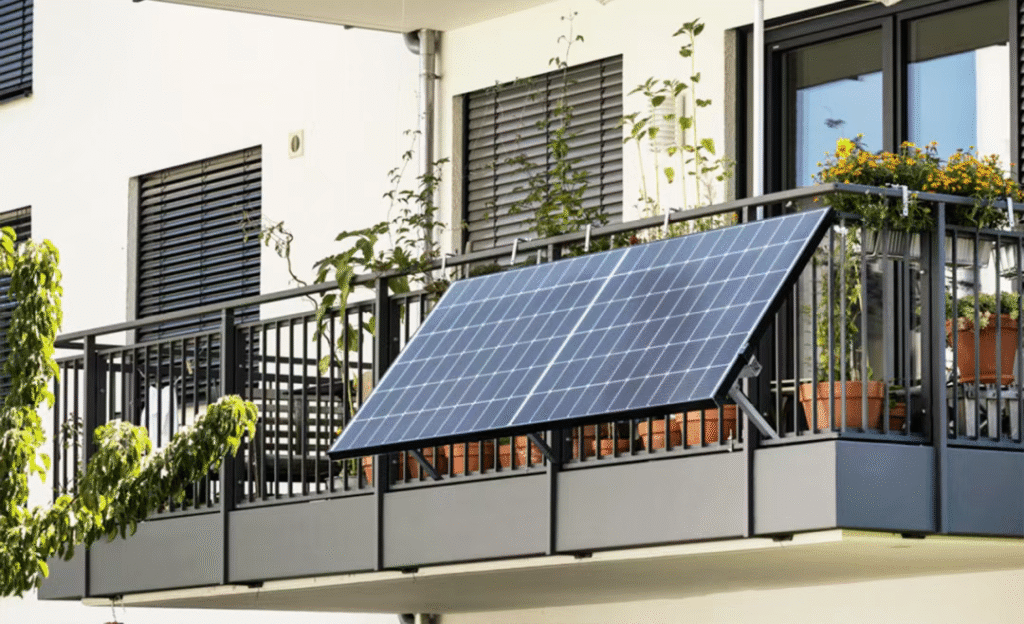
This German national standard has attracted significant attention from the International Electrotechnical Commission (IEC/TC 82 “Solar Photovoltaic Energy Systems”).
Alexander Nollau, Head of the Energy Sector at the German Commission for Electrical, Electronic & Information Technologies (DKE), stated: “The parts of the standard that are not related to grid connection are expected to be incorporated into the international standards system. These technical requirements are of practical significance for all countries. DIN VDE V 0126-95 is very likely to become the foundation for future international plug-in photovoltaic standards.”
4. The New Blue Ocean of Balcony Photovoltaics:Developing a Market Worth Hundreds of Billions
As of the end of June 2025, the cumulative number of registered balcony solar systems in Germany has surpassed 1 million units, a significant increase from the 275,000 units in 2023, showcasing the market’s rapid growth. Currently, the domestic balcony solar market in China also continues to be active. Against this backdrop, Germany’s practical experience in related fields and its upcoming technical standards can offer valuable insights and serve as a key reference for the market’s development in our country.