Khizar Seo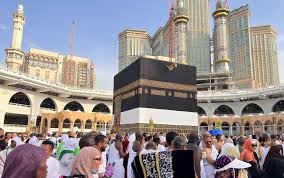
Sitting in a travel agent’s office in Manchester a few years back, a first-time pilgrim asked a simple question: “Can I not just book everything myself and save a bit of money?” The agent smiled, leaned back, and said — “You can. But by the time you’re done, you’ll wish you hadn’t.”
That exchange stuck around because it captures something real. Something a lot of UK Muslims have quietly discovered after trying the DIY route.
It Starts With the Best of Intentions
The logic seems sound at first. Book your own flights on a comparison site, find a hotel near the Haram on a booking platform, handle the visa separately. You feel in control. You feel like you’re being smart with your money.
Then the flight changes its schedule. The hotel you booked shows a different address on arrival. The visa documentation has a gap nobody told you about. And you’re dealing with all of this while also trying to emotionally prepare for one of the most significant journeys of your life.
It is not a holiday. That is the part people underestimate. Umrah carries a spiritual weight that makes logistical chaos feel ten times heavier than it would on a regular trip to Spain or Turkey. When something goes wrong in Makkah, it does not just cost you money or time — it costs you peace of mind during days you wanted to spend entirely focused on worship.
That is why the shift has happened. That is why more UK Muslims are arriving at the decision that an all inclusive package is not the lazy option — it is the sensible one.
So What Does “All Inclusive” Actually Mean?
Worth asking, because the phrase gets thrown around loosely.
A genuinely comprehensive Umrah package covers your return flights from a UK departure airport, accommodation in both Makkah and Madinah, transfers between the two cities, airport pickups on arrival and departure, and full visa processing handled on your behalf. The better providers also include a pre-departure briefing — a session that walks you through the rituals, the correct sequence, what to expect when you land. For someone performing Umrah for the first time, that alone is worth more than people realise.
Aqdas Travel is one of the UK-based ATOL-licensed providers offering this kind of complete, end-to-end service — where you are not left piecing things together or chasing confirmations from three different companies.
ATOL matters, by the way. It is not a bureaucratic detail. It means that if anything were to happen to the travel company — and it has happened to smaller operators before — your money is protected. You will not be stranded. That peace of mind has a real value, even if it is invisible until you need it.
The Cost Conversation — Because Everyone Has It
Most people assume booking separately will be cheaper. It rarely is.
Add up the actual numbers. Return flights from Manchester or Birmingham, hotel in Makkah — and the proximity question matters here, because “Makkah hotel” can mean anywhere from five minutes to forty-five minutes from the Haram — then a hotel in Madinah, the transfer between the two cities, airport pickups, and visa fees. Laid out honestly, the total usually lands close to or above what a well-priced package costs. The difference is that with a package, you see one number. There are no surprises appearing at checkout.
For families, the gap gets wider. A group booking through an experienced agent almost always comes out cheaper per person than the same trip built piece by piece.
And if cost genuinely is tight, the answer is not to avoid packages — it is to travel outside of Ramadan or peak periods, and to ask about payment plans. Most reputable UK agents offer monthly instalments, which spreads the cost in a way that makes the journey accessible without rushing the decision.
Browse through available Umrah packages from the UK to get a realistic sense of what different budgets and departure cities look like right now.
How to Tell a Good Agent From a Not-So-Good One
The UK Umrah market has grown a lot. More agents, more options, more variation in quality. A low price in an advertisement does not tell you much on its own.
Ask for the ATOL number and check it yourself on the Civil Aviation Authority website. That takes about thirty seconds and tells you immediately whether the agent is operating legitimately.
Ask specifically how far the hotel is from Masjid al-Haram. Not “is it close” — ask for the actual walking distance in minutes. For elderly travellers or anyone with joint problems, the difference between eight minutes and twenty-five minutes is enormous across multiple days of prayer.
Ask what happens if the outbound flight is delayed. A confident, clear answer is a good sign. Hesitation or vagueness is not.
And honestly — ask around your community. Mosque networks, local WhatsApp groups, families who have travelled recently. The UK Muslim community talks, and a travel agent’s reputation in those conversations is far more telling than any five-star review on their own website.
The Part That Actually Matters Most
All the comparison and planning and budget-checking — it is necessary. But it should not become the entire focus of the weeks before you travel.
Umrah is not a logistics exercise. It is an act of worship, and the preparation for it should reflect that. Learning the rituals properly, understanding what you are doing and why at each step, making dua in the days before departure, entering the ihram with a clear intention — these things matter more than which airline you fly with.
When the practical side is handled by someone you trust, that mental space opens up. You are not triple-checking flight times or chasing a visa confirmation email at midnight. You can actually prepare spiritually, which is the whole point.
One Last Thought
If you are at the stage of considering Umrah but have not yet started the booking process, the best thing you can do is have a proper conversation with an experienced, ATOL-licensed agent. Not just browse a website — actually speak with someone, ask your questions, get clarity on what is included.
The journey to Makkah is not something to rush into carelessly, and it is not something to leave half-planned either. It deserves proper attention from the start — because once you are standing in front of the Kaaba, you want your mind to be entirely present.
Everything else should already be taken care of.