2Q-Solution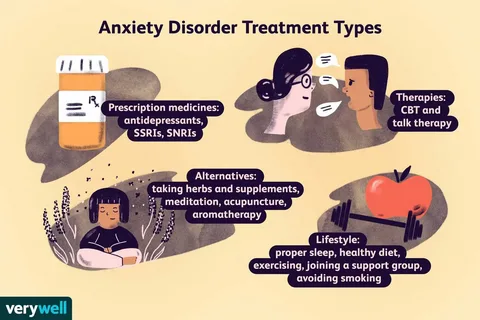
Anxiety can be understood as a troublesome loan shark. It approaches you, offering both preparation and protection. However, it forces you to sacrifice present peace for future worries that may never even materialize.
In your imagination, you become a time-traveler, a wandering soul in a world where your past self pays the price in fatigue, rapid thoughts are a sign of mental exhaustion, and inner peace turns into restlessness, leaving your body unable to find rest.
What Anxiety Actually Does?
Anxiety uses your mental energy on the future, where you throw yourself into scenarios that may or may not be real but are just possibilities.
According to experts, anxiety is “an emotional response to a perceived future threat,” “perceived” here is the keyword. These threats exist mainly in our minds.
Just try to imagine yourself: You have an interview next week. You attend the rehearsals of the failure script because anxiety compels you. The fumbling of the words and the silence. The rejection letter. Each of these is simply the figment of your mind. Nevertheless, your body kicks in as though it’s real.
Your brain can’t differentiate between the illusion of a dangerous situation and the true one. Brain scans show the same areas are illuminated regardless of whether someone is dealing with an actual risk or just meditating about it.
You are not to be blamed. Evolution has made us this way. Anxious cavemen did better in terms of survival than the carefree ones did. However, now we are using the survival application in modern life. Job interviews aren’t saber-tooth tigers, so please don’t get obsessed.
Signs You’re Living in Tomorrow’s Problems
How can you know that anxiety is the one that has taken control of your time machine? Check for the following symptoms:
Mental Signs:
- Constant “what if” question thinking
- Playing out disaster movies in your mind
- Feeling very tired even before the beginning of the events
- Having backup plans for the backup plans
- Avoiding decisions because you think that if you don’t decide, then there is no potential of regretting that decision
Physical Signs:
- Your heart beats fast sometimes, even if you are not alarmed
- You often find it hard to fall asleep before major events
- You get stomach problems even when thinking about the future
- You have taut muscles, as if you are stressed about nothing
- Headaches from overthinking
Behavioral Signs:
- Delaying tasks that you might need to do
- Being overly prepared for simple situations
- Never being satiated, you go to others in need of absolute assurance
- Avoiding the risk that comes with opportunities, whether they are good or bad
- Using a substance to make yourself feel better
Why Your Brain Loves Future Drama?
Studies show that someone who is concerned about something bad happening in the future is using brainpower to be overactive.
To worry paths, like trails in grassy fields. (It is basically the same as walking along the same path every day to make a track in the grass.) Your brain can make permanent “worry highways” the same way it makes the permanent “grass trails”.
However, here’s another reason your mind likes to travel in time to the calamities of your future. It tells you that it is being productive. Worry is a wolf in sheep’s clothing. “If I pretend every one of these could go the wrong way, I will be safe against them,” anxiety reassures.
This is a lie. True readiness comes through acting. Worry is just a thought chasing its own tail.
Some people get addicted to anxiety. It seems safer than uncertainty. Better off being prepared for the worst than being caught off guard by it. When you do that, you are not living in the present.
The Time-Travel Check-In: Your Return Ticket
The Time-Travel Check-In keeps you from catching your mind as it prematurely transports itself to future disasters. It is a very simple but very powerful tool.
Step 1: Notice the Jump:
Where is my mind right now? Ask that as you start the exercise.
Is it planning a dinner, or is it already here and now, thinking of the things that may happen next week? Are you reading this article, or are you still thinking of your problems that will happen next week?
Don’t get mad at your mind. Just focus on the exact moment that you realize where you are. “Oh, I’m in next Tuesday’s meeting again.”
Step 2: Name What’s Actually Here:
Get back to the earth with your five senses:
- What is the first thing you see?
- What sounds are there currently?
- Name one thing you can touch right now.
- What kind of smell do you have?
- What about the taste? How does it feel to taste that?
This is not just meditation fluff. It is neuroscience. Using your senses awakens the parts of your brain that are concerned with the here and now, thus making mindfulness effective.
Step 3: Gentle Return:
Data shows that you should never fight anxious thoughts because fighting them will just empower them to become stronger in your brain. Instead, acknowledge them like uninvited guests.
“I think I’m worried that the presentation might not turn out well. It is okay, everybody sometimes worries”, can be an example of how you can talk kindly to the anxious mind.
Then, concentrate on what you can control at that moment, namely, this time. This breath. This task.
Step 4: Reality Check:
Put these questions to yourself:
- Is this thing that I’m worried about now real, or is it just a story in my head?
- What proof is there that goes against my pessimistic prediction?
- What facts are there that indicate that I can cope with the situation?
- What would I tell a friend in the same situation?
Most of the things that we worry about never come true. When grave events happen, people usually manage the challenges better than anticipated.
Solutions That Actually Work:
Establish a morning routine. Form a habit of doing these daily routines to keep you in the moment:
- Morning routine without having to use a phone
- Regular exercise to release anxiety from your system
- Described and structured time to worry
- Activities like cooking and gardening.
Turn Anxiety Into Action
Once in a while, anxiety brings you useful information. The pull comes when trying to distinguish valid signals from nonsense.
If you are anxious about the job interview, which is a reality, identify the steps that can be done immediately instead of postponing them. Look the company up. Rehearse the answers. Pick your outfit. Then, just relax. More preparation becomes procrastination.
Question the validity of your Anxiety’s Future Predictions
Your worries are like a fortune teller who claims to know the future. Show your anxiety that it is nothing but a lie, and these strategies can help you to do that:
- “What is my area of knowledge that tells me that this bad situation really exists?”
- “What other aspects are also possible besides the negative one?”
- “Let’s say this came to be true, then what is the next step and what possibilities that I still have?”
Create Stability Amidst the Unknown
Uncertainty gives anxiety a sour taste. Therefore, when transitions or stressful periods come, set up plans:
- Regular sleep time
- Constant mealtime
- Every day, physical exercises for some minutes
- Social contacts
- Use the technique of 5-4-3-2-1
When to Seek Professional Help?
Sometimes anxiety becomes too big a burden for one person to lift by themselves. Only fools would think that this fact makes them weak. It is what the wise do.
Think about the following questions:
- Anxiety interferes with your everyday life
- You refrain from something because of anxiety
- You have panic feelings
- You are not able to relax because of your thoughts that you are anxious about
- You use substances to cope with anxiety
- You are feeling sad and hopeless
An online psychiatrist can help you identify the triggers that hinder your healing and teach you specific coping tools that can be useful in those situations.
The Takeaway
Anxiety makes you think you’re preparing for the future. However, in reality, you’re wasting today to try and secure tomorrow. The present moment is the only place where the real world exists. It’s where action can be taken. It’s where peace can be found. Stop using the power of tomorrow today. When your mind wanders, use the time-travel check-out method.
The Time-Travel Check-In isn’t magic. It’s just plain consciousness. When your mind fast-forwards to next week’s issues, simply ground it and take it back to the present moment.
Begin small. Be aware of the times you moved to a bumpy ride. The future will come. Nothing can stop it. You do not have to go there early.