Sky Bloom IT
The selection of a suitable gimbal motor is a vital decision for everyone who is either designing or utilizing stabilization, whether in professional cameras, drones, or autonomous robotic platforms. A Gimbal Motor is an extremely crucial element in the smooth and stable movement, coupled with good control of the angle of the mounted device. In order to make an informed choice, a person should know essential technical specifications, compatibility requirements, and the application requirements.
Understanding the Role of a Gimbal Motor
Gimbal motors are a type of brushless motor that is used to offer fine rotational control and stabilization. In comparison to traditional motors, they have to keep a smooth movement with minimal vibrations and provide compensation for sudden movement or external disturbance. In professional imaging systems, the gimbal motor should be of high quality so that when the cameras are used in dynamic situations, the results will be consistent footage. They are used in robotic systems to precisely move sensors, manipulators, or other equipment, which directly affects the autonomy of the autonomous platforms.
Torque and Load Capacity
The torque and the load capacity of a gimbal motor are two of the most significant factors to take into consideration when choosing it. Torque defines how the motor can oppose the external forces and push the weight mounted on it with accuracy. A motor, which lacks enough torque, can have difficulties stabilizing heavier equipment, and its movements will be jerky or slow. On the other hand, the selection of a motor that has too high a torque can cause inefficiencies and power wastage. This is crucial to determine the weight of the payload and the nature of movements needed so that the motor would be able to sustain stability without putting the system in a state of overloading.
Cogging Torque and Smoothness
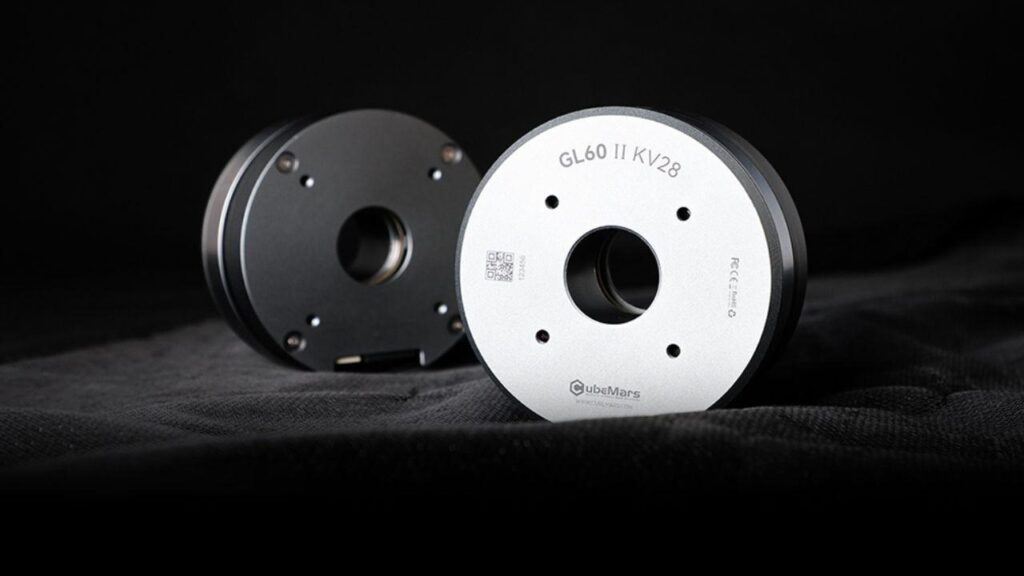
The natural resistance, which a motor has as a result of its magnetic design, is called cogging torque, also known as detent torque. In gimbal use, low cogging torque is very preferable since the motor can move more fluidly without causing any unwanted vibration and judder. High cogging torque motors have the potential to destabilize the image and lower the overall accuracy of robotic movement. Highly designed designs, including those available in the CubeMars GL and G series, have optimized electromagnetic structures with an aim of reducing cogging torque and enhancing efficiency.
Size, Weight, and Mechanical Design
The size and mass of a gimbal motor can have a serious impact on the work design of the stabilization system. Smaller and smaller motors are used in situations where space is constrained, or the overall weight of the payload is a vital consideration (e.g., in drones or handheld gimbals). Designs of hollow shafts allow more flexibility in that cables or sensor wiring can be internally routed, and therefore reduce clutter and enhance system reliability. Designing a motor with a balance between mechanical design and the required performance is such that the stabilization system is efficient and simple to integrate.
Control Modes and Compatibility
Gimbal motors also frequently include more than two control modes, such as speed-only, position-speed, and MIT (motion input tracking) modes. Both modes provide various ways for the motor to react to commands and external disturbances. The choice of a motor with the right control options will guarantee the ability to work with the gimbal controller and ensure the future functioning of the system in conditions of high efficiency. Also, one should take into account the communications protocols that the motor will run (CAN bus or PWM) to have a smooth integration with the already available hardware.
Sensor Integration
Hall effect sensors and temperature sensors, which are part of integrated sensors, are important in giving critical feedback to the motor. The rotor position is detected by Hall sensors, which aid in keeping the motor in the right position. Temperature sensors also prevent the motor from overheating when using it for a long period of time. Motors that have built-in encoder support can be positioned with great accuracy, particularly when it is necessary to perform the task of a robotic arm or a camera that needs the exact framing and centering. The assessment of the nature and quality of sensor integration is the key to the attainment of consistent and reliable performance.
Power Consumption and Efficiency
Another factor that should be considered when choosing a gimbal motor is efficiency. Motors that are highly efficient use less power, produce less heat, and give extended working time in battery-operated systems. Electromagnetic designs that are optimized for their use not only conserve energy but also minimize noise that, in imaging, can be essential in robots. Knowing the energy needs of the motor against the overall system can be used to select a motor that offers a compromise between performance and the ability to sustain operations.
Environmental Considerations
Selection also has to be affected in the operating environment of the gimbal motor. Outdoor motors or those in an industrial environment might require a waterproof and dustproof case to ensure that they are reliable in the long run. Hard-environment motors like the CubeMars G-series motors also offer resistance against moisture and PM, which guarantees that the performance of the motor remains uniform under harsh conditions. The selection process can also take into account the environmental factors so as to minimize the possibility of failure and increase the lifespan of the gimbal system.
Application-Specific Requirements
Lastly, the gimbal motor must be selected based on the application it is intended to be used in. Smoothness and low cogging torque are the most important parameters to use in professional camera stabilization. Load capacity, sensor integration, and precision control are more important in robotics. Self-driving cars and drones can demand the use of lightweight motors that have high power efficiency and high environmental safety. The sensitivity to the needs of the application would make sure that the selected motor is appropriate to the functional and operational expectations.
Conclusion
The selection of a gimbal motor is a complicated issue, in which one should take into consideration the technical characteristics, the mechanical design, control opportunities, and the environment. Some factors that should be considered in ensuring a motor gives optimum performance include torque, cogging torque, size, control modes, sensor integration, efficiency, and application-specific considerations. All this has contributed to engineers and designers choosing gimbal motors with consistent stabilization, high motion control precision, and reliability in the long run.