HoneyLinkers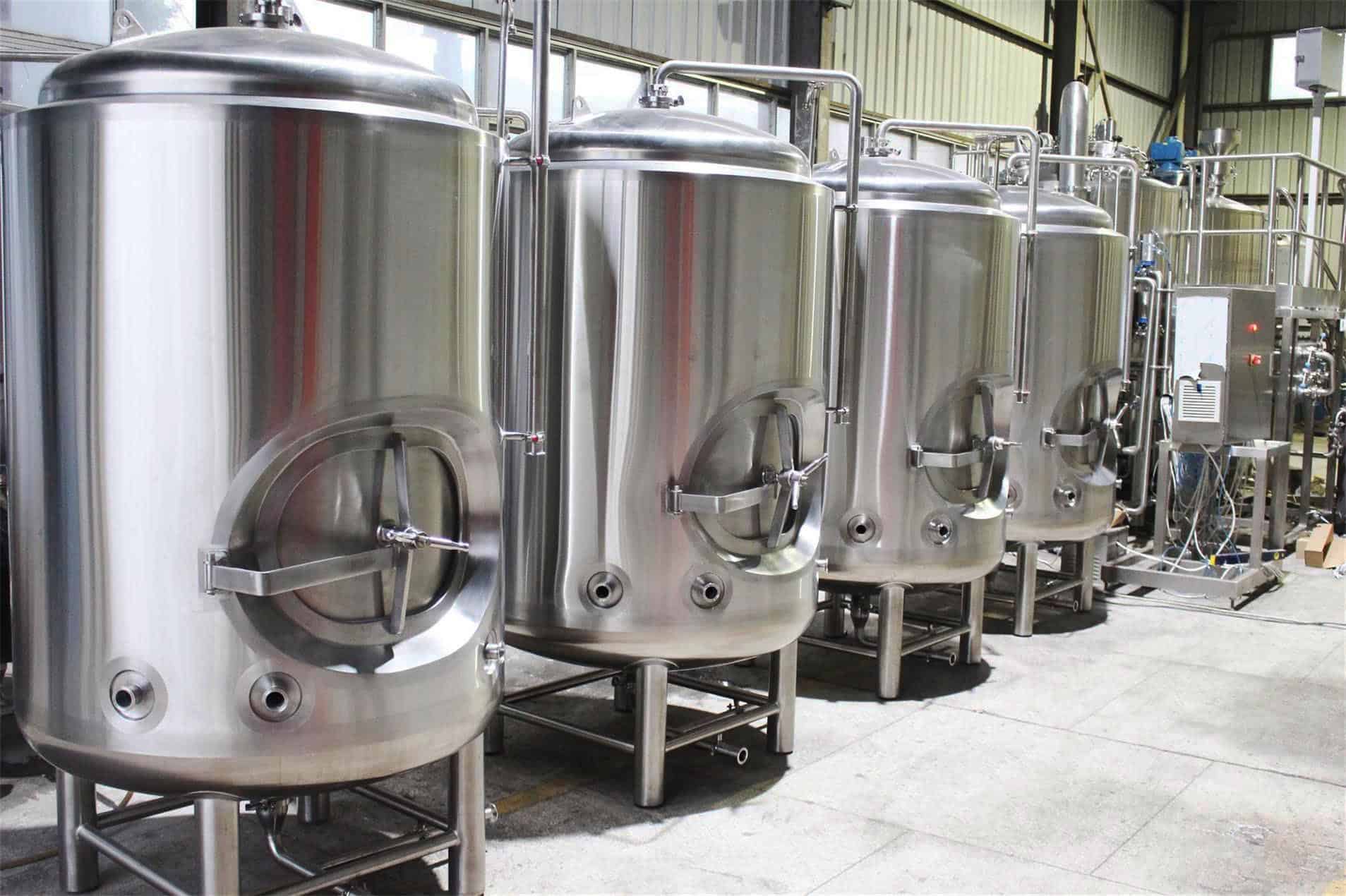
In the intricate world of commercial brewing, every piece of equipment serves a specific, calculated purpose. Among the rows of stainless steel vessels that populate a brewery, the bright beer tank—often referred to as a “brite tank” or BBT—stands as one of the most critical stages in the journey from raw wort to a crisp, refreshing pint. While the fermenter is where the “magic” of alcohol production happens, the bright beer tank is where that beer is polished, carbonated, and perfected for the consumer.
Understanding what a bright beer tank is used for requires looking at the final 20% of the brewing process, where quality control and aesthetic appeal become the primary focus. This vessel is essentially the “waiting room” where beer transforms from a cloudy, raw product into the “bright,” clear liquid that drinkers expect.
The Definition of “Bright” Beer
To understand the tank, one must first understand the term “bright beer.” In brewing terminology, beer is considered “bright” when it has been rendered clear and transparent through the removal of suspended yeast, proteins, and other particulates.
During the primary fermentation phase, yeast cells are in a state of high activity, floating throughout the liquid as they consume sugars. Even after fermentation is complete, millions of these cells remain in suspension, along with hop particles and grain proteins, giving the beer a turbid or hazy appearance. A bright beer tank provides the controlled environment necessary to drop these solids out of the liquid, resulting in a product that shines in the glass.
Primary Functions of a Bright Beer Tank
A bright beer tank is not just a storage container; it is a multi-functional tool designed to handle several distinct finishing tasks.
1. Clarification and Secondary Conditioning
The most visible role of a bright tank is clarification. Once primary fermentation is finished in a conical fermenter, the beer is transferred (or “racked”) into the bright tank. Because these tanks typically have a flat or slightly dished bottom rather than a sharp cone, they allow the remaining yeast and sediment to settle evenly across a larger surface area.
Over a period of several days at cold temperatures—a process often called “cold crashing”—the remaining solids fall to the bottom. The brewer can then draw the clear beer from a racking arm located above the sediment layer, ensuring that only the cleanest liquid moves on to packaging.
2. Precise Carbonation
While some carbonation occurs naturally during fermentation, most modern breweries require precise, consistent CO2 levels for commercial distribution. Bright beer tanks are pressure-rated vessels equipped with a “carbonation stone” (or carb stone).
A carbonation stone is a porous piece of stainless steel that allows CO2 to be forced into the beer in the form of millions of tiny “micro-bubbles.” These small bubbles have a much larger surface area than large bubbles, allowing the gas to dissolve into the liquid much more efficiently. In a bright tank, a brewer can achieve the exact volumes of CO2 required for a specific style—whether it’s the light effervescence of a stout or the high-pressure snap of a German Pilsner—in a matter of hours.
3. Flavor Maturation and Infusion
The bright tank serves as the final opportunity for a brewer to “tweak” the flavor profile. This stage is often used for:
- Dry Hopping: Adding hops to the bright tank can provide a fresh, floral aroma without the bitterness extracted during the boil.
- Flavor Additions: Ingredients that might be “scrubbed” away by the vigorous CO2 production of primary fermentation—such as fruit extracts, coffee, or honey—are often added in the bright tank to preserve their delicate aromatics.
- Blending: If a brewery wants to ensure consistency between different batches, they may blend multiple brews in a large bright tank to create a uniform final product.
Why Breweries Use Bright Tanks Instead of Fermenters
A common question among those new to brewing is: “Why can’t I just finish the beer in the fermenter?” While “unitanks” (vessels designed for both fermentation and conditioning) exist, dedicated bright tanks offer several operational advantages.
Increasing Production Throughput
In a commercial setting, the fermenter is the most expensive and specialized piece of equipment. If a beer stays in a fermenter for three weeks—two weeks for fermentation and one week for clarification and carbonation—that tank is “tied up” for twenty-one days.
By moving the beer to a bright tank after the first fourteen days, the brewer can immediately clean the fermenter and start a new batch. This “tank turnover” can increase a brewery’s total output by 30% to 50% without requiring additional expensive fermenters.
Maintaining Consistent Carbonation
In a conical fermenter, the height of the liquid column creates significant hydrostatic pressure at the bottom. This makes it difficult to measure and maintain a consistent carbonation level throughout the entire volume. Bright tanks are typically wider and shorter, or designed specifically to maintain a steady pressure environment, allowing for more uniform gas absorption.
Avoiding “Yeast Bite”
If beer sits on a large mass of dead yeast (autolysis) for too long, it can develop unpleasant, rubbery, or savory off-flavors known as “yeast bite.” Transferring the beer to a bright tank leaves the bulk of the yeast behind in the fermenter, protecting the beer’s flavor profile during the maturation stage.
Technical Components of a Bright Beer Tank
To perform these tasks, a high-quality bright beer tank is equipped with several specialized components:
- Pressure Rating: Unlike some basic fermentation vessels, all bright tanks must be pressure-rated (usually to 15–30 PSI) to hold carbonation without deforming or failing.
- Cooling Jackets: Bright tanks are almost always “jacketed,” meaning they have an outer layer where glycol or chilled water circulates. This allows the brewer to keep the beer at near-freezing temperatures ($0^{\circ}C$ to $2^{\circ}C$), which is essential for both carbonation and clarification.
- Sight Glass: This is a transparent tube on the side of the tank that allows the brewer to see the level and the clarity of the beer inside.
- Sample Valve: A specialized valve that allows the brewer to pull a small amount of beer for testing (gravity, carbonation levels, or taste) without depressurizing the entire tank.
- CIP (Clean-In-Place) System: A spray ball located at the top of the tank that allows for automated cleaning and sanitizing, ensuring the vessel is sterile before the next batch arrives.
The Role of Bright Tanks in Different Brewing Environments
Production Breweries
In large-scale operations, bright tanks are strictly “staging areas.” Beer is moved in, carbonated overnight, and moved out to a canning or bottling line the next morning. The goal here is speed and efficiency.
Brewpubs and Taprooms
In many brewpubs, the bright beer tank actually doubles as a serving tank. The beer is carbonated in the tank, and lines are run directly from the tank to the taps at the bar. This eliminates the labor and expense of cleaning and filling individual kegs, and ensures the freshest possible beer for the customer.
Choosing the Right Bright Beer Tank
When a brewery scales up, choosing the right size and type of bright tank is a strategic decision. Usually, breweries match their bright tank capacity to their fermenter size. If you have a 10-barrel (BBL) brewhouse, you will typically want 10-BBL or 20-BBL bright tanks.
Vertical tanks are the industry standard because they occupy less floor space. However, some traditional lager breweries prefer horizontal bright tanks. Horizontal tanks provide a massive surface area relative to the depth of the beer, which allows yeast to settle much faster, significantly shortening the clarification time.
Conclusion
The bright beer tank is the unsung hero of the brewery. While it doesn’t get the glory of the copper kettle or the activity of the fermenter, it is the vessel that ensures the final product is professional, shelf-stable, and visually stunning. By providing a controlled environment for clarification, carbonation, and maturation, it allows brewers to deliver a consistent experience to every customer.
Elevate Your Brewery with Micet Equipment
If you are looking to enhance your brewery’s efficiency and product quality, Micet offers world-class brewing solutions. Micet’s bright beer tanks are engineered from premium 304 or 316 stainless steel, featuring precision-dimpled cooling jackets and high-porosity carbonation stones. Whether you are a small startup or a large-scale production facility, Micet provides customizable, pressure-tested vessels that ensure your beer is always “bright” and ready for the glass.
Frequently Asked Questions
1. How long does beer typically stay in a bright tank?
In most commercial settings, beer stays in a bright tank for 24 to 48 hours. This is enough time to “cold crash” the liquid for clarity and achieve full carbonation using a carb stone. However, for certain styles like lagers, beer may be conditioned in the tank for several weeks.
2. Is a bright tank necessary for homebrewing?
While not strictly necessary, many advanced homebrewers use small-scale bright tanks or “brite kegs” to achieve professional-level clarity. Most homebrewers, however, perform these functions directly in a pressure-rated fermenter or a standard Corny keg.
3. What is the difference between a bright tank and a serving tank?
The terms are often used interchangeably. A bright tank is the technical name for the vessel used for clarification and carbonation. A serving tank is a bright tank that has been connected directly to the draft lines of a bar or taproom for dispensing.