BlitZ
BlitZ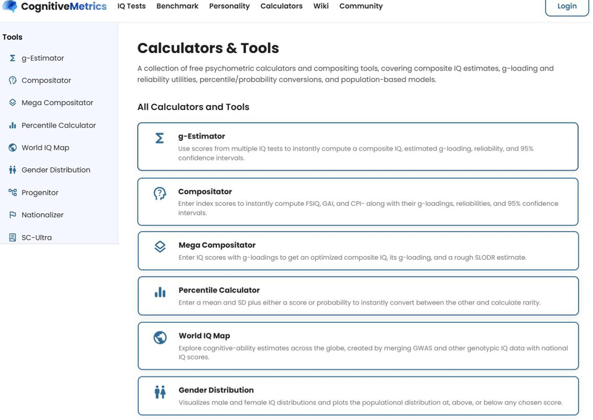
Introduction
Intelligence scores are often misunderstood because they are treated as judgments about a person. In reality, intelligence scores are standardized measurements designed to compare cognitive performance across large and diverse populations. An intelligence score reflects how an individual performed on a specific set of cognitive tasks under controlled conditions. The average score serves as a statistical reference point, allowing for meaningful comparison. To understand intelligence testing properly, one has to shift one’s attention away from the number itself and pay attention to what the number is supposed to represent.
How Intelligence Scores Are Distributed Globally
Modern intelligence tests are constructed so that scores follow a normal (bell-shaped) distribution, meaning most people score near the center and fewer people appear at the extremes. This distribution reflects natural variation in general cognitive ability and only that. Across countries and populations, the overall shape of the distribution remains consistent, even though average IQ scores may differ slightly. These differences may be influenced by factors such as educational access and quality, health, familiarity with abstract reasoning tasks, and genetics. Keep in mind that the content of the tests themselves is not fixed; it is adapted to particular people and their language to produce accurate scores.
Defining the Statistical Middle of the Population
The statistical middle of an intelligence distribution represents the point around which most test scores cluster. Being near the average means performing similarly to most people on tasks that measure general reasoning ability. This central range includes individuals with widely different strengths, interests, and skills, many of which are not directly assessed by intelligence tests. The average score is a calibration point used to interpret variation. It is purely quantitative and comparative, and any treatment of it as a qualitative judgment per se is quite sorely mistaken.
Why the Average Is Not the Same as “Normal”
Although average and normal are often used interchangeably in everyday language, they describe different concepts in cognitive measurement. An average score is a single numerical midpoint, whereas normal cognitive functioning spans a broad range of scores around that midpoint. People within this range can differ substantially in learning style, reasoning speed, and problem-solving approach while still functioning effectively in daily life. Intelligence testing is designed to measure variation, instead of enforcing some arbitrary standard of acceptable cognition. Confusing average with normal encourages unnecessary comparisons and obscures the diversity that characterizes human intelligence.
Cognitive Strengths Common Within the Average Range
Individuals within the average range of intelligence typically demonstrate reliable reasoning abilities that support everyday problem-solving and decision-making. They are generally capable of understanding instructions, learning new information with practice, and applying knowledge to practical situations. Many develop strong judgment through experience, allowing them to navigate work, relationships, and responsibilities effectively. These skills often manifest in subtle, context-dependent ways that standardized tests do not fully capture. The average range encompasses the majority of people who successfully manage complex real-world demands without exceptional difficulty.
Platforms such as CognitiveMetrics.com provide context for these abilities through professionally developed assessments and comparative data from millions of users. By focusing on patterns and relative positioning within a broad population, these tools highlight multifaceted abilities rather than reducing intelligence to a single score. Recognizing these everyday competencies emphasizes that intelligence is expressed through adaptability, applied knowledge, and consistent performance, reinforcing the limitations of relying solely on standardized test results.
Education, Culture, and Environmental Influences
Intelligence scores don’t only reflect general cognitive ability; they also reflect exposure to learning environments that cultivate skills relevant to test-taking. Formal education improves familiarity with abstract reasoning, symbolic representation, and timed problem solving, all of which influence test performance. Cultural context affects how easily individuals interpret questions and recognize what a task is asking them to do. Early-life conditions such as nutrition, stability, and access to cognitive stimulation also contribute to measured performance. These influences affect average scores across populations without changing the underlying purpose or validity of intelligence testing.
How Intelligence Develops Over Time
General cognitive ability shows substantial stability across the lifespan, but the way intelligence is expressed changes with age and experience. During childhood and adolescence, learning and exposure strongly influence performance, while adulthood comes with more accurate scores and a greater reliance on accumulated knowledge. Some abilities, such as processing speed, decline after middle-age, while others, such as crystallized intelligence, improve. Intelligence tests capture performance at a particular moment, not the full developmental trajectory of an individual. Ultimately, experience shapes how one’s intelligence is applied over time.
Average Scores and Academic Performance
Academic achievement depends on intelligence, but it also depends heavily on motivation, instructional quality, and study behavior. Many students with average intelligence scores perform well academically through consistent effort and effective learning strategies. Educational systems reward persistence and organization in addition to reasoning ability. Differences in academic outcomes among students with similar intelligence scores are common and expected. Intelligence supports learning, and isn’t the single factor that explains academic success.
Workplace Skills Not Captured by IQ Numbers
Job performance is influenced by general cognitive ability, but it also relies on many skills that intelligence tests do not measure directly. For example, communication, reliability, time management, and familiarity with job-specific tasks. Experience and training often reduce the importance of initial differences in abstract reasoning ability. Many occupations reward consistency and applied knowledge more than raw problem-solving speed. As a result, intelligence scores provide only a partial picture of professional competence.
Emotional and Practical Intelligence Beyond Testing
Every day functioning depends heavily on emotional regulation, social understanding, and practical judgment. These abilities influence how people manage stress and conflicts as well as adapt to changing circumstances. They develop largely through lived experience and do not appear on IQ tests, even though they may be distantly related to cognitive ability. Recognizing these forms of competence prevents overreliance on a single numerical measure.
Conclusion
An average intelligence score is best understood as a statistical reference, not as any sort of personal evaluation or limit. It indicates how someone performed relative to others on a standardized set of tasks designed to measure reasoning ability. That information can be useful, but only when it is interpreted within its proper limits. They do not determine one’s potential, character, or life outcomes. IQ scores describe, they don’t evaluate; once they are treated as such, they become easier to understand and harder to misuse.