BlitZ
BlitZ
In today’s fast-paced manufacturing landscape, innovation, speed, and precision are not just advantages — they’re necessities. Engineers, product designers, and manufacturers around the world rely on modern manufacturing technologies to help them go from idea to reality with minimal delay and maximum quality. Among those technologies, CNC rapid prototyping and comprehensive CNC machining service offerings have become fundamental pillars of product development and production.
This article explores what CNC rapid prototyping and CNC machining services are, why they’re essential, how they work, and how manufacturers like Chiheng Hardware are leveraging these capabilities to deliver high-precision parts across industries such as aerospace, medical devices, automotive, and more. Throughout, we’ll highlight key insights into materials, processes, best practices, and strategic considerations for engineers choosing a machining partner.
1. What Is CNC Rapid Prototyping?
At its core, NC rapid prototyping refers to the fast fabrication of a prototype — a working test piece or sample — using CNC (Computer Numerical Control) machinery. Unlike additive methods (such as 3D printing), which build up material layer by layer, CNC is a subtractive manufacturing process — it starts with a solid block of material and removes material with precision cutting tools to create the final shape.
This subtractive approach provides several critical advantages:
- Material fidelity: CNC prototypes are made from the same materials (e.g., aluminum, stainless steel, engineering plastics) that will be used in production, ensuring mechanical performance that’s representative of final products.
- Precision and tolerances: Highly accurate machining enables tolerances as tight as ±0.005 mm or better, which is critical for components that must fit or perform with exacting specifications.
- Functional testing: Since the prototype is made from real production materials and processes, it can be tested under real-world conditions.
- Short lead time: Many CNC rapid prototyping services aim to deliver parts in as little as 5–10 working days, depending on complexity and finish requirements.
This combination of fidelity, precision, and speed makes CNC rapid prototyping indispensable for design validation, functional testing, and early-stage iteration before committing to mass production.
2. The Strategic Role of CNC Rapid Prototyping
So why is rapid prototyping so strategic to modern product development? The answer lies in the product lifecycle.
2.1. Reducing Risk Before Production
Before investing in expensive tooling and production runs, engineers need to ensure their design actually works. Rapid prototypes allow teams to:
- Evaluate mechanical performance
- Verify assembly fit
- Test material behavior under load
- Identify design flaws early in development
This reduces the risk of costly changes later — sometimes saving months of rework and thousands of dollars in tooling.
2.2. Accelerating Time-to-Market
In competitive industries such as medical devices or consumer electronics, speed matters. By enabling engineers to test and iterate quickly, CNC rapid prototyping helps shorten development cycles, accelerating time to market.
2.3. Enabling Innovation and Experimentation
When machining partners like Chiheng Hardware offer low minimum order quantities (starting from one piece), engineers can experiment with bold designs without costly minimum batch commitments — a boon for startups, research teams, and innovation labs.
3. What Is a CNC Machining Service?
A cnc machining service refers to a professional manufacturing offering where a machining provider uses CNC equipment to produce parts — from prototypes to full production runs — according to precise customer specifications. These services cover a wide range of CNC operations, including but not limited to:
- CNC milling: Rotating cutting tools remove material to form complex 3D shapes.
- CNC turning: Rotational cutting of cylindrical parts.
- 5-axis machining: Multi-axis machining for intricate geometries.
- Surface finishes: Polishing, anodizing, bead blasting, passivation, and more for aesthetic and functional requirements.
- Quality control: Dimensional inspections and process traceability ensure parts meet stringent standards.
Essentially, a CNC machining service provides a full suite of capabilities to convert digital designs (from CAD files) or physical samples into finished parts with precision and repeatability.
4. How CNC Machining Works: From Drawing to Part
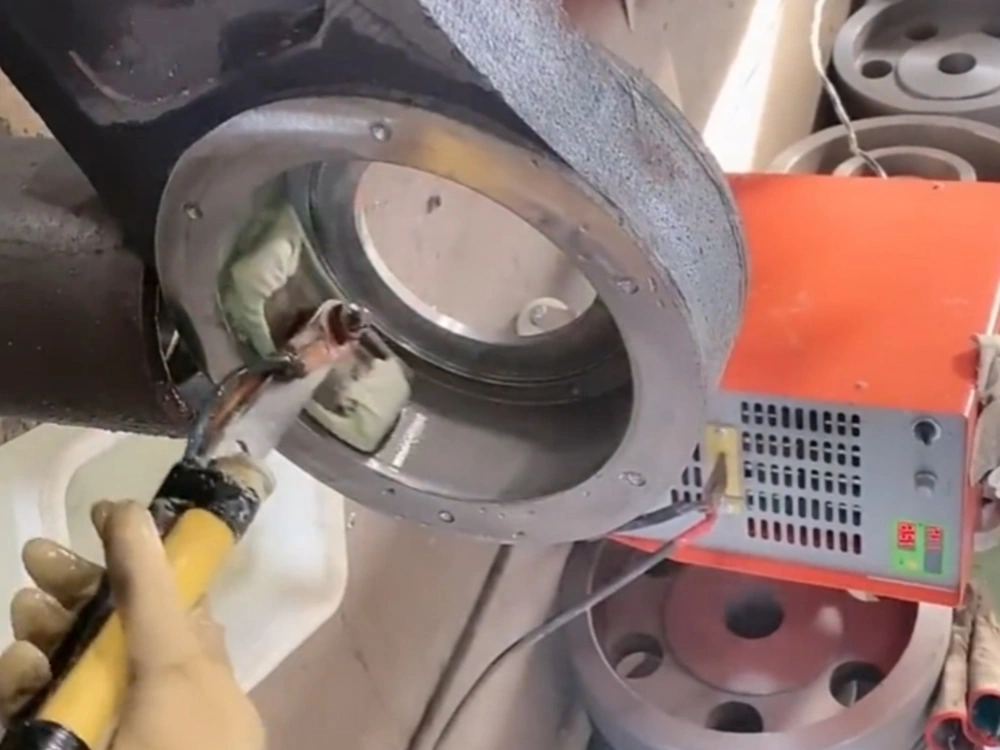
Understanding how a CNC machining service works helps illustrate why it’s so valued by engineers and manufacturers.
4.1. Engineering & Design Review
The process begins with a customer’s technical drawing or 3D CAD file. This could be in formats like STEP, IGES, STL, SolidWorks, or even a physical sample that’s reproduced via reverse engineering.
At this stage, the machining partner will:
- Review design feasibility
- Suggest manufacturability improvements
- Define critical tolerances and material specifications
Chiheng’s engineers assist clients early in this stage to optimize designs for efficient machining.
4.2. Material Selection
Choosing the right material is crucial. Options include:
- Metals: Aluminum, stainless steel (303, 304, 316 and more), titanium, brass, alloy steel, and more.
- Plastics: PEEK, ABS, nylon, PTFE, polycarbonate, acrylics, etc.
Each material has different mechanical properties, corrosion resistance, and machining characteristics — which must align with product requirements.
4.3. CNC Programming and Machining
Once the design and material are finalized:
- CAM software generates cutting paths
- CNC machines execute with high precision
- Multiple processes (milling, turning) may combine to produce complex parts
Modern CNC shops deploy advanced machines capable of 3, 4, and 5-axis operations to handle intricate designs.
4.4. Post-Machining & Finishing
After the primary machining, parts often undergo finishing steps:
- Polishing (mechanical or electropolishing) for mirror-like surfaces
- Passivation to enhance corrosion resistance
- Anodizing or bead blasting for surface quality
These finishes serve both functional and aesthetic purposes and are especially critical in industries like medical devices where surface quality affects safety and sterilization.
4.5. Quality Inspection and Delivery
A CNC machining service doesn’t end at production — comprehensive quality checks ensure parts meet the specified tolerances and standards. ISO 9001 protocols often drive quality control, with detailed inspection reports accompanying orders.
5. Materials in CNC Machining and Prototyping
Selecting the right material is one of the most important decisions in CNC machining and prototyping. Here’s how common materials compare.
5.1. Metals
- Stainless Steel: Excellent corrosion resistance and mechanical strength — often used in aerospace, medical, and food-grade applications.
- Aluminum: Lightweight, excellent machinability, commonly used for housings, fixtures, and prototypes.
- Titanium: High strength-to-weight ratio and corrosion resistance, ideal for aerospace or medical implants.
- Brass/Copper: Good for electrical components, fittings, and decorative parts.
5.2. Plastics
Engineering plastics like PEEK, nylon, ABS, and polycarbonate provide a range of mechanical and thermal properties, making them suitable for:
- Lightweight parts
- Electrical insulators
- Low-friction components
- Functional prototypes
Different plastics machine differently — attention to clamping, heat buildup, and tool selection is key.
6. Tolerances, Precision, and Quality Control
One of the standout advantages of CNC machining is precision. A quality machining service can reliably hold tight tolerances (for example, ±0.005 mm), which is significant for parts requiring interchangeable fit or precision assembly.
Quality control is reinforced through:
- In-house inspection tools (CMM, gauges, surface testers)
- ISO 9001 traceability
- Final inspection reports before delivery
This level of oversight ensures parts match design specifications and perform as intended.
7. Applications Across Industries
CNC rapid prototyping and CNC machining services are not limited to one field — their versatility makes them valuable across diverse sectors.
7.1. Medical Devices
In medical manufacturing, surgically implanted components, surgical instruments, and diagnostic housings require both precision and biocompatibility. CNC machining delivers both, especially with materials like medical-grade stainless steel.
7.2. Aerospace
High-strength lightweight parts with tight tolerances are essential in aircraft assemblies and structural components. CNC machining can handle complex geometries needed for aerospace applications.
7.3. Automotive
From engine prototypes to custom fixtures and tooling, CNC machining provides functional and durable prototypes and parts that withstand demanding environments.
7.4. Robotics and Industrial Automation
Custom gears, sensor housings, and precision mounts often require CNC machining for durability and precise operation.
8. Choosing the Right CNC Machining Service Partner
Selecting a machining partner is a strategic decision that affects product quality, cost, and timing. Here are key factors to consider:
8.1. Technical Expertise
Look for partners with multi-process capabilities — milling, turning, grinding, laser cutting, and finishing — so they can handle complex designs under one roof.
8.2. Material and Finish Options
A broad portfolio of materials and surface finishes allows flexibility as product requirements evolve.
8.3. Quality Standards
ISO certification and documented inspection processes ensure that quality standards are consistently met.
8.4. Fast Turnaround and Communication
Rapid prototyping thrives on speed — partners who provide quick quotes, transparent communication, and reliable delivery timelines help keep projects on track.
9. CNC Rapid Prototyping vs. Additive Prototyping
While CNC rapid prototyping excels in material fidelity and precision, it’s worth comparing it to additive manufacturing (AM):
| Feature | CNC Rapid Prototyping | Additive Prototyping |
| Material Properties | Real production-grade materials | Limited by printer materials |
| Dimensional Accuracy | High | Variable |
| Surface Finish | Excellent | Often requires post-processing |
| Speed (one-off) | Fast | Fast |
| Complex Organic Shapes | Limited | Strong advantage |
In many development workflows, teams use both — rapid prototyping via CNC to validate form and function in final materials, alongside 3D printing for early conceptual models.
10. Future Trends in CNC Rapid Prototyping and Machining Services
Industry trends point toward even faster turnaround, tighter integration with digital workflows, and greater automation:
- Integration with CAD/CAM and PLM systems for more seamless design-to-manufacture cycles
- AI-enhanced toolpath optimization to reduce machining time without sacrificing precision
- High-speed machining for even faster throughput
- Expanded material capabilities including exotic alloys and composites
Conclusion
Both CNC rapid prototyping and an advanced CNC machining service have transformed modern manufacturing by enabling faster innovation cycles, higher product quality, and better risk management during product development. These capabilities — from concept validation to production-ready parts — are integral to industries that demand precision, performance, and repeatability.
By understanding the processes, materials, and strategic use cases associated with CNC machining and rapid prototyping, engineers and product leaders can make informed decisions that accelerate their development timelines, improve product performance, and maintain compliance with stringent industry standards.
Whether you’re engineering medical devices, aerospace components, or custom industrial parts, leveraging the right CNC machining partner will make the difference between a good prototype and a great product — built on precision, delivered with confidence.