2Q-Solution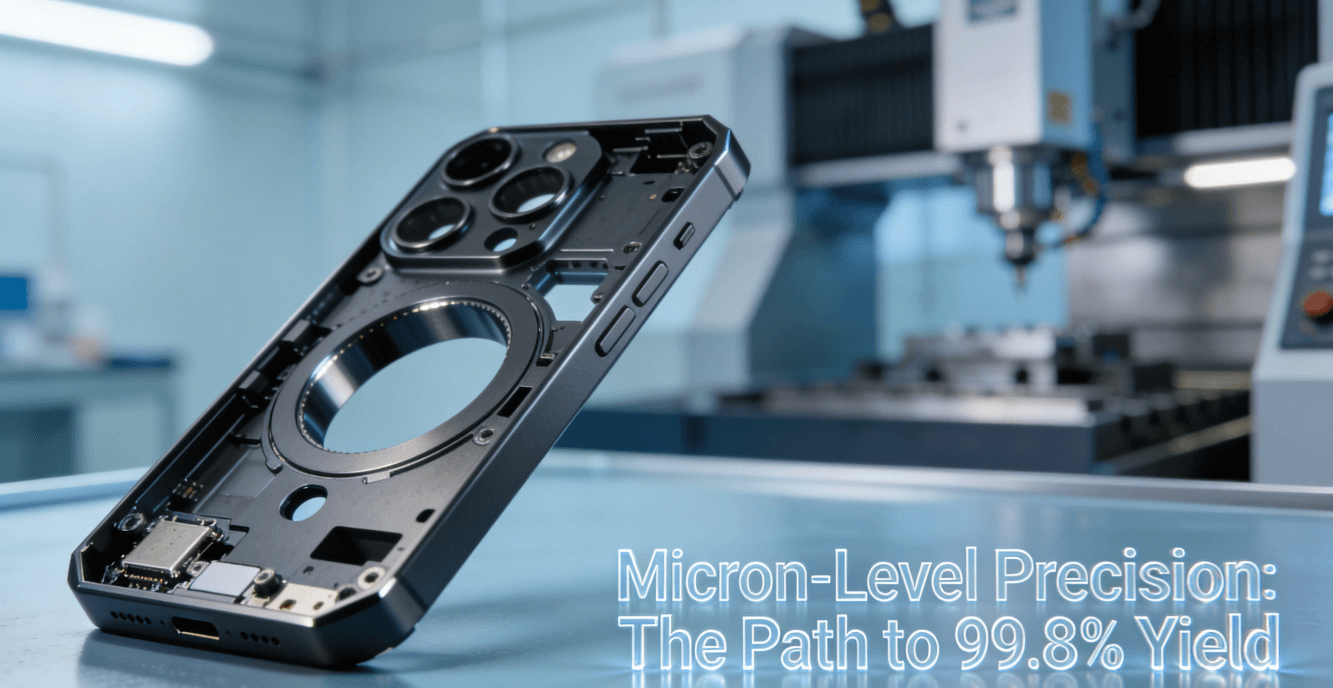
Figure 1: Achieving micron-level tolerances and superior surface finishes on components like this smartphone chassis is critical for yield and performance in consumer electronics.
Introduction
In industries like Consumer Electronics and medical devices, the trend toward miniaturization and integration has pushed the required precision for metal components to the micron level. Any deviation can lead to assembly failures, functional issues, and consequently, soaring costs and delayed deliveries.
This article posits that the key to overcoming micron-level challenges and achieving stable high yields exceeding 99.8% is to elevate precision CNC turning from a standalone technique into a systematic engineering discipline that integrates advanced manufacturing philosophies, automation, and international quality standards. The following five dimensions will detail the implementation path for this systematic approach.
Why is Consumer Electronics Innovation Highly Dependent on Precision CNC Turning Technology?
The rapid iteration of consumer products is underpinned by dual leaps in the complexity and precision of metal parts. Precision CNC turning technology is the core enabler for achieving complex 3D geometries, tight tolerances, and superior surface finishes, thanks to its unparalleled flexibility, accuracy, and repeatability.
Market Drivers and the Challenge of Tolerance Limits
Industry analyses from firms like McKinsey & Company indicate that product development cycles have shrunk to mere months, directly driving part tolerances to their extremes. Typical examples include the metal frames of smartphones and the miniature charging contacts in TWS earphones. These CNC turned parts often feature complex structures, thin walls, and numerous intricate details, with dimensional and geometric tolerances frequently required to be within ±0.01mm or stricter. A single part failure means not just the loss of the component itself, but can halt an entire module or production line, amplifying costs exponentially.
The Systemic Path to Zero-Defect Manufacturing
Managing this complexity demands a systemic, preventive strategy.
- The Value of Design for Manufacturability (DFM)
Early involvement from the manufacturing team during the design phase for DFM analysis is crucial. By optimizing part features and avoiding unnecessarily tight tolerances or hard-to-machine geometries, a significant portion of potential machining risks and costs can be mitigated at the source.
- Precision Machining and Full-Process Monitoring
The foundation for micron-level stability is high-end CNC machine tools with high rigidity, dynamic accuracy, and thermal compensation capabilities. As highlighted by the Society of Manufacturing Engineers (SME), process stability is the cornerstone of manufacturing highly complex components. This requires every aspect of the cutting process to be controlled from the first part to the last. For typical challenges like internal gears or complex shafts, professional precision CNC turning services offer systematic solutions from design support to process validation. For insights into machining complex components like gears, readers can explore this resource on how to make gears.
Beyond the Machine: What Elements Constitute a CNC Turning Process for Ultra-High Precision Stability?
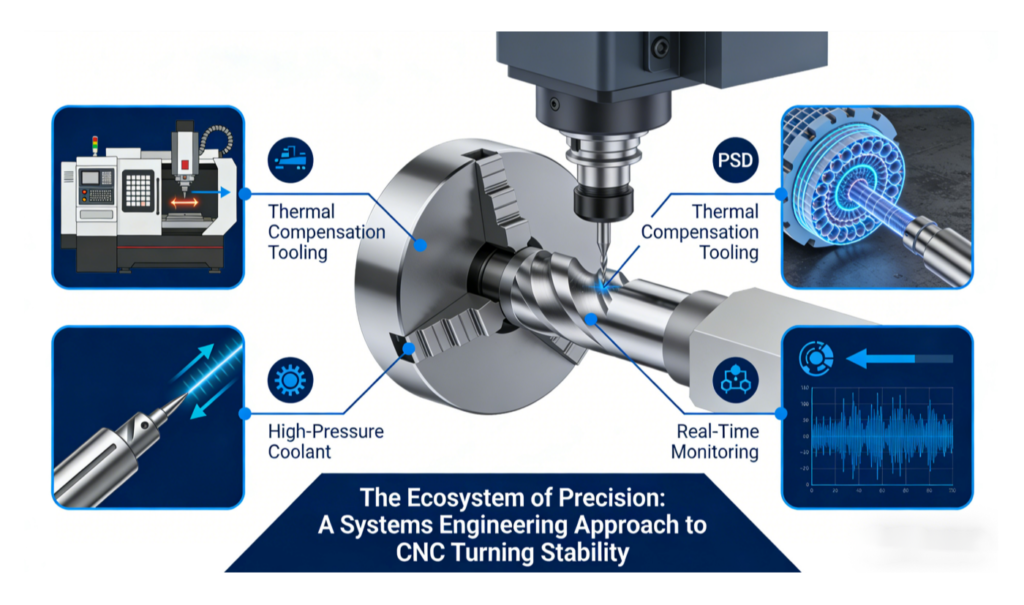
Figure 2: Ultra-high precision stability is a systems achievement, integrating multiple advanced elements beyond the machine tool itself.
Achieving and maintaining micron-level precision is a systemic endeavor far beyond purchasing a high-end machine. The CNC turning process is a chain of interrelated elements: the dynamic accuracy and thermal stability of the machine tool, high-performance cutting tools optimized for the material, cutting parameters refined through extensive databases, precise cooling and lubrication, and real-time monitoring with compensation systems.
Taking precision CNC turning titanium as an example, the material’s difficult-to-machine properties present significant stability challenges. This necessitates specialized processes: employing sharp PCD or specific coated tools, controlling cutting speeds, and applying high-pressure coolant directed precisely at the cutting edge.
By systematically managing these variables and maintaining a Process Capability Index (Cpk) for key dimensions above 1.33 or even 1.67, stability becomes quantifiable. The Precision Machined Products Association (PMPA) emphasizes that in-process measurement and real-time feedback are the bedrock of such Advanced manufacturing, ensuring “right-first-time” production.
How Do International Certifications like ISO 9001 and IATF 16949 Substantially Guarantee Batch Production Consistency?
For a reputable precision turned parts manufacturer, international quality certifications are not mere accolades but a structural guarantee of part-to-part consistency and high yield.
From Credential to Process Framework
These certifications establish a proactive quality management framework. For instance, IATF 16949 mandates Advanced Product Quality Planning (APQP) and Production Part Approval Process (PPAP). This means suppliers must complete comprehensive risk analysis, process design, and capacity studies beforemass production, submitting full sample and documentation packages for customer approval, thereby preventing a chaotic “trial-and-error” approach.
Application of Core Quality Control Tools
- SPC Implementation in Turning:
Statistical Process Control involves sampling of key dimensions and using control charts for analysis. This monitors process stability and predicts potential deviation trends, allowing for adjustments before non-conforming parts are produced. - The Importance of MSA:
The most precise inspection is meaningless if the measurement system is unreliable. Measurement System Analysis quantifies and controls errors in gauges and CMMs, ensuring the credibility of inspection data.
Providing a Reliable Foundation for Tech Innovation
This systematic quality control provides a predictable and reproducible environment for continuous Tech Innovation. It ensures any design change or process improvement is managed under controlled conditions. This end-to-end preventive control is the cornerstone of reliable manufacturing partnerships.
A manufacturer that holds and actively adheres to certifications like ISO 9001, IATF 16949, and AS9100D demonstrates a commitment to consistent quality. For complex components like gears, this systematic approach is critical, as detailed in services such as Precision Gear Machining.
How Does the Integration of Industrial Automation and CNC Machining Cells Reshape Efficiency and Reliability?
Achieving a 99.8% yield target requires breakthroughs in eliminating non-value-added time and human variation. This is the value of deeply integrating Industrial Automation with CNC precision turning cells.By incorporating robotic part loading/unloading, AGVs for material handling, and seamless integration with a Manufacturing Execution System (MES), unattended “lights-out” manufacturing cells can be created. This integration not only increases equipment utilization to near 24/7 but, more importantly, eliminates human-induced errors like inconsistent clamping and fatigue.
From raw material to finished part, the processing parameters, inspection data, and production batch of every CNC turning parts are recorded and traceable via the MES. This significantly enhances delivery reliability and provides a massive, high-quality data foundation for process optimization.
Where Will Artificial Intelligence and Digital Twin Lead the Future of Precision Turning Technology?
Cutting-edge Tech Innovation is ushering in a new era of data-driven and intelligent manufacturing. AI and Digital Twin technologies are set to define the competitive edge of the next generation of precision CNC turned parts manufacturing.
AI algorithms can analyze real-time signals from machines to accurately predict tool wear, enabling a shift from scheduled replacement to condition-based replacement. Furthermore, AI can use machine learning to auto-optimize cutting parameters for adaptive machining.
The Digital Twin technology creates a virtual replica of the physical production line. The entire CNC turning process can be simulated, validated, and optimized countless times in the digital world before any metal is cut, predicting and resolving potential issues like collision or dimensional inaccuracies. This minimizes prototyping time and cost, pushing the “right-first-time” philosophy to new heights.
Conclusion
In summary, excellence in yield and cost control in high-end manufacturing is not accidental. It stems from the deep integration of precision CNC turning technology, international quality standards, and intelligent Industrial Automation. This represents a fundamental shift in manufacturing philosophy from reactive inspection to systemic prevention and data-driven decision-making.
For those facing yield and stability challenges with high-precision, complex metal components, a thorough evaluation of a manufacturing partner’s process depth and systematic control capabilities is paramount. It is advisable to start with a technical feasibility discussion focused on your specific part requirements and yield goals.
Author Bio
This article was contributed by precision manufacturing experts with deep industry knowledge. The team at JS Precision specializes in customized machining solutions for high-complexity, high-precision metal parts, possessing extensive project experience in the consumer electronics, automotive, and aerospace sectors.
FAQs
Q1: What are the core metrics for judging a CNC turning supplier’s precision manufacturing capability?
A: Beyond machine tool brands, key metrics include Cpk reports for critical processes, the accuracy and calibration records of measuring equipment (like CMMs), and a proven track record with challenging materials like titanium alloys.
Q2: What key adjustments are needed in the turning process when transitioning from prototyping to mass production?
A: The focus shifts to process standardization and validation. This involves moving to dedicated fixtures, optimizing parameters for optimal tool life and cycle time balance, and establishing a comprehensive SPC system.
Q3: What is usually the biggest obstacle to Industrial Automation integration?
A: The primary challenge is often data standardization and interface unification. Ensuring seamless real-time data exchange between CNC machines, robots, and MES systems using common protocols is key to true interoperability.
Q4: How are the main technical difficulties of precision turning titanium alloy overcome?
A: The core is controlling heat and minimizing tool wear. This requires specialized sharp tools, lower cutting speeds, high-pressure coolant, and often a multi-stage machining strategy to relieve material stress.
Q5: What is the practical impact of international quality system certifications (e.g., AS9100D) on actual production?
A: They enforce a fully traceable system from material to finished part, strict change management, and a continuous improvement mechanism, ensuring every delivery meets the most stringent standards, which is critical in aerospace.
Read More Gorod