2Q-Solution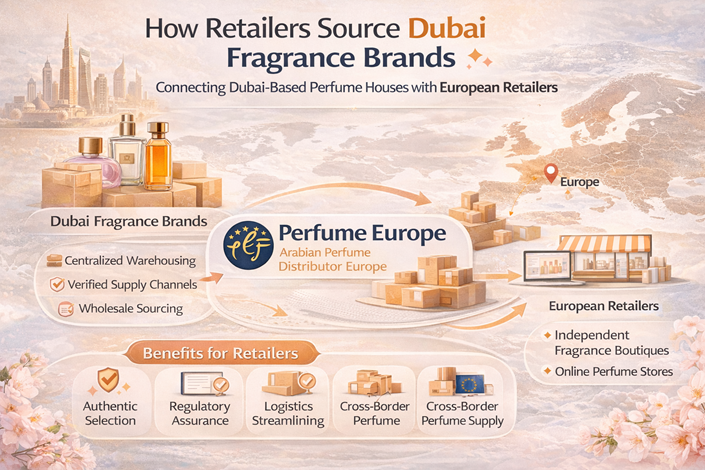
The global fragrance industry has long been associated with European perfume houses, particularly those based in France and Italy. However, in the past decade another region has gained strong international visibility: Dubai. Positioned as a commercial bridge between Europe, Asia, and the Middle East, the city has developed into an influential hub for luxury fragrance retail, niche perfumery, and international perfume distribution.
Dubai’s fragrance ecosystem reflects the intersection of heritage Arabian scent traditions and modern luxury retail strategy. As global consumers increasingly seek distinctive olfactory experiences, perfumes rooted in Middle Eastern traditions have attracted attention far beyond their original regional markets.
Key Takeaways
• Dubai has emerged as a global center for Arabian fragrance production and trade.
• Traditional Middle Eastern scent structures rely heavily on base notes such as oud, amber, and musk.
• European retailers are expanding their fragrance selections to include Arabian perfumes.
• International distributors enable efficient cross‑border fragrance sourcing.
• Specialized suppliers help retailers access authentic Dubai perfume brands.
Why Dubai Has Become a Global Fragrance Hub
Several structural factors explain Dubai’s increasing influence in the fragrance industry. The city has become one of the world’s most prominent luxury retail destinations, attracting millions of international visitors each year.
Dubai also benefits from exceptional logistics infrastructure. Major international airports and ports allow fragrance manufacturers and distributors to move products efficiently across global markets.
The Unique Characteristics of Arabian Perfumes
Arabian perfumes are widely recognized for their intensity and longevity. Unlike many Western perfumes that emphasize fresh citrus openings or light floral structures, Middle Eastern compositions often prioritize powerful base notes.
Oud, one of the most iconic materials in Arabian perfumery, produces deep woody and smoky nuances that serve as the foundation of many luxury fragrances.
Industry Snapshot: Global Fragrance Market Segments
| Segment | Trend | Retail Impact |
| European designer perfumes | Stable demand | Established luxury retail |
| Niche fragrances | Rapid growth | Boutique fragrance retail |
| Arabian perfumes | Growing popularity | New sourcing partnerships |
| Online perfume retail | Accelerating expansion | Cross-border access |
FAQ: Dubai Fragrances in the Global Market
Why are Dubai perfumes gaining popularity?
Consumers increasingly seek distinctive scent experiences and rich fragrance compositions.
Are Arabian perfumes stronger than Western perfumes?
Many Arabian perfumes use concentrated formulations and long‑lasting base notes.
How do retailers ensure authenticity?
Retailers typically source products from verified distributors that provide documentation.
Is demand for Middle Eastern fragrances expected to grow?
Industry analysts anticipate continued expansion as consumers explore diverse scent traditions.
How do European retailers access Dubai fragrance brands efficiently?
Many retailers work with European distribution partners that specialize in Middle Eastern fragrances. For example, wholesalers such as Perfume Europe help connect Dubai perfume brands with independent retailers and online fragrance stores across the European market.
Growing Demand for Middle Eastern Fragrances in Europe
European fragrance enthusiasts increasingly explore scent traditions outside traditional Western perfumery. Online communities, fragrance review channels, and social media discussions have significantly increased awareness of Arabian perfume houses.
How Retailers Source Dubai Fragrance Brands
For retailers seeking to introduce Middle Eastern fragrances into their catalogues, reliable sourcing partners are essential. Authenticity, traceability, and regulatory compliance are critical considerations.
Rather than sourcing directly from multiple perfume houses in the Gulf region, many European retailers rely on regional distribution gateways that specialize in Middle Eastern fragrance portfolios. Companies such as Perfume Europe operate within this ecosystem by connecting Dubai-based fragrance brands with retailers and e-commerce sellers across European markets. Through centralized warehousing and structured wholesale sourcing, these distributors simplify procurement while maintaining verified product supply channels.
As demand grows, many retailers collaborate with specialized Dubai fragrance supplier networks to access authentic Arabian perfume collections and maintain consistent product supply.