10 Industries Using Siemens LOGO Logic Modules for Efficient Automation Solutions

by
January 7, 2026
3 mins read

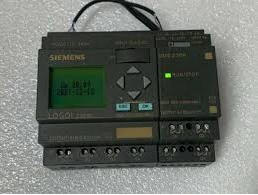
The Siemens LOGO! Logic Modules offer compact, cost-effective, simple, yet powerful automation solutions. Thus, these devices can serve as a great alternative to complex and expensive programmable logic controllers (PLCs) for smaller applications.

From material handling and energy management to agriculture and building automation, simple and efficient automation is in high demand across several industries. By providing reliable, localized control and integrated I/O capabilities, Siemens LOGO! is a great choice for simple, low-investment automation.

Though designed for simpler applications, the Siemens LOGO! Logic Modules is a great choice for several simpler industries.

Siemens LOGO Logic Modules and What They Offer

Compact and user-friendly, the Siemens LOGO! Logic Modules are programmable controllers that support small-scale automation in home/building control, small machines, agriculture, etc. These offers simplified programming through a visual, drag-and-drop interface with predefined function blocks.

Further, it has a compact design with a small footprint (4TE), making it a great choice for tight spaces. Additionally, it connects to several expansion modules (digital/analog I/O, communication), allowing engineers to scale up functionality.

All basic Siemens LOGO! Logic Modules feature a web server and enable data transfer to the cloud (via MQTT), allowing anytime, anywhere access. Combined with the Siemens Power Supplies, these can serve as compact and resilient devices in simple automation.

Top Industrial and Efficient Automation Applications Associated with the Siemens LOGO! Logic Modules

The top 10 applications that involve the Siemens LOGO! Logic Modules include the following:

1. Efficient Automation in Smart Commercial Buildings

Commercial buildings involve certain key functions like lighting systems, sun blinds, shutters, and access control that can be automated. Using the Siemens LOGO! Logic Modules, commercial buildings can manage needs-based lighting control to reduce energy consumption.

Further, they can also deploy integrated astro timers (which switch based on sunrise/sunset) or presence detection to activate/deactivate lights in different zones. This significantly impacts energy consumption, resulting in greener buildings.

2. Water and Wastewater Management

Real-time water level monitoring, automated pump control, and efficient irrigation systems are crucial. In water treatment plants, LOGO! can manage the entire process, including pH adjustment and disinfection, by controlling pumps and valves.

By using communication modules (like the LOGO! CMR), this device can send alarm notifications via SMS or email if parameters are out of spec. Additionally, the use of Siemens Power Supplies can ensure continuous and energy-efficient operations.

3. Standalone Industrial Machine Control

Being a simpler industrial automation device, the Siemens LOGO! Logic Modules are a great fit for controlling small, standalone machines in industrial settings.

For instance, these can be used in applications such as automated cleaning booths for laser-melted metal components. Here, the module controls specific functions and sequences like targeted oscillation and sealing the process chamber.

4. Material Handling and Logistics

In the material handling and logistics industries, the Siemens LOGO! Logic Modules can control conveyor belts, sorting systems, and packaging machines. This can effectively reduce manual effort and operator intervention.

In warehouses, multiple LOGO! units can control a series of interconnected conveyor belts. This ensures products move sequentially and safely between different points in the plant, starting and stopping in a coordinated manner.

5. Small-Scale Food and Beverage Industries

All food and beverage industries require precise control over various processing tasks and acute control over process parameters and timing. However, smaller industries do not require complex, high-end control systems.

The LOGO! Logic Modules, often combined with Siemens Power Supplies, offer continuous operation and precise control. This increases production speed and consistency over manual operation, improving overall quality of product and industrial productivity.

6. Agriculture and Greenhouse Automation

When used in agriculture, the Siemens LOGO! Logic Modules can control environmental factors critical for plant growth, such as irrigation, temperature, humidity, and ventilation systems.

Thus, in greenhouse cultivation, a LOGO! system can be connected to sensors that detect and monitor soil moisture and temperature. This can be used to automatically activate irrigation pumps or ventilation fans as needed to maintain optimal growing conditions for sensitive crops.

7. Heating, Ventilation, and Air Conditioning (HVAC)

A comfortable climate is essential inside residences, commercial buildings, and even industries (warehouses and shopfloors). When connected to Heating, Ventilation, and Air Conditioning (HVAC) systems, the LOGO! systems offer efficient and accurate climate control.

For instance, the Siemens LOGO! Logic Modules can be used to manage the operation of fans, compressors, and heating elements based on temperature readings and user-defined schedules, providing centralized monitoring and control.

8. Renewable Energy Systems

No matter their scale, all renewable energy farms require real-time monitoring. In small-scale green energy projects, like solar power plants and wind farms, the LOGO! Logic Modules can offer efficient control and monitoring.

Taking the example of a solar power setup, the logic module can control the angle of solar panels or manage battery charging processes. This can effectively maximize sunlight exposure and ensure optimal energy storage.

9. Pharmaceuticals and Healthcare (Laboratory Automation)

In small-scale pharmaceutical production and labs, certain repetitive tasks can be automated using the basic yet efficient Siemens LOGOP! Logic Modules.

For instance, these can be used to oversee sample processing equipment and data gathering. This ensures precise control and uniformity across batches.

10. Custom and Specialized Machinery

Full-sized Programmable Logic Controller (PLC) can potentially become oversized or overly complex for customised or highly specialised machinery operations. Here, the Siemens LOGO! Logic Modules serve as versatile solutions with their modular design, ease of programming, and range of expansion options.

They also offer flexible, robust solutions by allowing easy configuration changes via the integrated web server to meet different customer requirements.

Wrapping Up

In industrial applications that involve simple, less-intensive, and straightforward automation, basic yet efficient control devices are essential. Thus, for simpler applications like HVAC, agricultural automation, small-scale energy farms, and water treatment, the Siemens LOGO! Logic Modules are a sound choice.

Ensuring Efficiency in Simple Automation Through Siemens Devices

Ready to implement simple industrial automation on a budget? Opt for Siemens LOGO! Logic Modules and Power Supplies for efficient and reliable automation.

Leave a Reply

Your email address will not be published.

Used OEM vs. aftermarket
Previous Story

Used OEM vs. aftermarket – what really determines repair quality?

BHK Flats
Next Story

How Can You Maximize Space in 3 BHK Flats in Chennai for Modern Living?

Used OEM vs. aftermarket
Previous Story

Used OEM vs. aftermarket – what really determines repair quality?

BHK Flats
Next Story

How Can You Maximize Space in 3 BHK Flats in Chennai for Modern Living?

Latest from Blog

Avoid Downtime with Reliable Cummins Marine Engines In the demanding world of commercial maritime operations, marine engines serve as the heartbeat of every vessel. When an engine fails, the consequences ripple far beyond the engine room—halted operations, missed delivery schedules, dissatisfied customers, and mounting financial losses become immediate realities. For commercial vessel operators, downtime isn't just an inconvenience; it's a direct threat to profitability and reputation. The challenge lies in finding a propulsion solution that delivers unwavering reliability even under the harshest marine conditions. Cummins marine engines have established themselves as the answer to this critical need, offering proven durability that keeps vessels operating when it matters most. With advanced engineering designed specifically for marine environments, superior fuel efficiency that reduces operational costs, and a global support network ensuring help is always within reach, Cummins engines provide commercial operators with the confidence to navigate any waters without fear of unexpected breakdowns compromising their business. Why Cummins Marine Engines Are the Gold Standard for Reliability Cummins has earned its reputation as a reliability benchmark in the marine industry through decades of proven performance across diverse maritime applications. Commercial operators from fishing fleets to cargo vessels consistently report uptimes exceeding 98%, a testament to engineering that prioritizes durability above all else. The foundation of this reliability starts with heavy-duty cast iron construction that withstands constant vibration and thermal stress inherent to marine environments. Advanced cooling systems featuring saltwater-resistant heat exchangers maintain optimal operating temperatures even during extended high-load operations, preventing the overheating issues that plague lesser engines. Unlike competitors who adapt automotive or industrial engines for marine use, Cummins designs purpose-built marine powerplants from the ground up, accounting for corrosion resistance, moisture exposure, and the unique load profiles of vessel propulsion. A Pacific Northwest fishing operator reported running a Cummins QSB6.7 for over 15,000 hours across three seasons without a single unscheduled shutdown, while a Caribbean charter company documented five years of continuous operation with only routine maintenance intervals. Independent reliability studies consistently place Cummins engines at the top for mean time between failures, often outlasting competitors by 30-40% in equivalent operating conditions. The difference becomes most apparent during critical operations—when weather windows close quickly or delivery deadlines loom, Cummins engines deliver the dependability that separates profitable ventures from costly failures. Optimizing Performance for Maximum Operational Efficiency Performance optimization directly impacts a commercial vessel's bottom line through reduced fuel consumption, extended component life, and increased operational capacity. The difference between a properly optimized engine and one running below peak efficiency can translate to thousands of dollars monthly in unnecessary fuel costs and premature repairs. Cummins marine engines incorporate electronic control modules that continuously adjust fuel delivery, timing, and boost pressure to maintain optimal combustion efficiency across varying load conditions, but realizing their full potential requires operator diligence. Establishing rigorous maintenance schedules forms the foundation of performance optimization—oil analysis every 250 hours reveals developing issues before they impact efficiency, while fuel filter replacements at manufacturer-specified intervals prevent injector fouling that reduces power output by up to 15%. Fuel quality management proves equally critical, as contaminated or low-grade diesel creates deposits that compromise combustion chamber efficiency and accelerate wear on precision components. Key Benefits of Choosing Cummins Marine Diesel Engines Selecting Cummins marine diesel engines delivers tangible advantages that directly impact operational profitability and regulatory compliance. Fuel efficiency stands as perhaps the most immediately noticeable benefit, with modern Cummins engines consuming 8-15% less fuel than comparable powerplants through advanced high-pressure common rail injection systems that optimize combustion. For a commercial vessel burning 50 gallons daily, this efficiency translates to savings exceeding $15,000 annually at current diesel prices. The power-to-weight ratio of Cummins engines provides exceptional thrust without sacrificing deck space or payload capacity, with compact designs delivering up to 600 horsepower from units weighing substantially less than competitors. Environmental compliance has become non-negotiable in modern maritime operations, and Cummins engines meet IMO Tier III and EPA standards through selective catalytic reduction technology that reduces nitrogen oxide emissions by 75% while maintaining performance. This compliance protects operators from escalating fines and port access restrictions that increasingly target non-compliant vessels. The global service network supporting Cummins engines eliminates the anxiety of breakdowns in remote locations—over 8,000 authorized service points span six continents, ensuring critical parts and qualified technicians remain accessible whether operating in Alaskan waters or the Mediterranean. Parts availability particularly distinguishes Cummins from boutique manufacturers, with common components stocked at distributors worldwide and expedited shipping delivering specialized parts within 48 hours to most commercial ports. This comprehensive support infrastructure transforms potential multi-week repair delays into manageable interruptions, preserving revenue streams and customer commitments that define successful maritime enterprises. Best Practices for Maintaining Your Cummins Marine Engine Establishing a systematic maintenance routine prevents the majority of engine failures that cause costly downtime in commercial operations. Daily checks should begin with visual inspections of the engine compartment for fluid leaks, loose connections, or unusual debris accumulation, followed by verifying coolant and oil levels before starting operations. During startup, operators should monitor for abnormal sounds, excessive smoke, or irregular idling that signal developing problems. Weekly maintenance expands to include checking belt tension and condition, inspecting fuel filters for water contamination, testing battery voltage and connections, and examining exhaust system components for corrosion or loose fittings. Monthly tasks require more detailed attention—changing engine oil and filters according to operating hours rather than calendar dates, inspecting raw water impellers for wear or damage, testing coolant concentration and pH levels, and examining hose clamps and connections throughout cooling and fuel systems. Common issues like overheating typically stem from restricted raw water flow caused by clogged strainers or failing impellers, preventable through monthly impeller inspections and keeping spare impellers onboard. Hard starting often indicates fuel system air leaks or contaminated filters, resolved by systematically checking fuel line connections and replacing filters at 250-hour intervals regardless of apparent condition. Professional servicing becomes essential at 500-hour intervals when valve adjustments, injector testing, and turbocharger inspections require specialized tools and expertise that exceed typical crew capabilities. Cummins INSITE diagnostic software should be connected quarterly to download fault codes and performance data, revealing trends invisible during routine operation. Many operators also consult with diesel engine specialists like GRT who provide comprehensive maintenance support and technical expertise for commercial marine applications. Maintaining detailed service logs documenting every maintenance task, operating hours, fuel consumption, and performance observations creates invaluable diagnostic history that helps technicians quickly identify patterns when issues arise, transforming maintenance from reactive repairs into proactive protection against downtime. Invest in Proven Marine Propulsion Reliability Reliability in marine propulsion separates thriving commercial operations from those constantly battling costly interruptions and lost revenue. Cummins marine engines deliver the uncompromising dependability that modern vessel operators require, combining purpose-built durability with fuel efficiency that directly improves profitability. The advanced engineering behind every Cummins powerplant—from corrosion-resistant construction to intelligent electronic controls—ensures vessels remain operational through demanding conditions that sideline lesser engines. Environmental compliance, exceptional power-to-weight ratios, and fuel savings reaching 15% provide immediate operational advantages, while the extensive global service network transforms potential disasters into manageable maintenance events. For commercial operators whose livelihoods depend on vessels that perform without fail, choosing Cummins means choosing confidence over uncertainty. The proven track record across fishing fleets, cargo vessels, and charter operations worldwide demonstrates that reliability isn't just a marketing claim—it's a measurable reality reflected in superior uptimes and lower total ownership costs. Whether upgrading aging powerplants or specifying engines for new construction, commercial vessel operators owe it to their business to experience the Cummins difference. Contact an authorized Cummins marine dealer today to discuss how the right engine solution can eliminate downtime concerns and position your operation for sustained success on the water.

Avoid Downtime with Reliable Cummins Marine Engines

In the demanding world of commercial maritime operations, marine engines serve as the heartbeat of every vessel. When an engine fails, the consequences ripple far beyond the engine room—halted operations, missed delivery
Go toTop