2Q-Solution
Brisbane homeowners spend more time outdoors than most Australians. And honestly, when your outdoor living space works right, entertaining stops feeling like a chore.
Indoor-outdoor design blurs the line between your living room and backyard. You end up with one connected area you can use year-round. No more treating them like two separate worlds that never quite talk to each other.
This guide covers the practical stuff for Brisbane’s climate. We’re talking flooring choices, shade structures, and layout decisions. Plus, the mistakes that cost people money down the track.
At Design Martus, we’ve seen what actually delivers results and what doesn’t. So, we’ll show you today the real-world solutions that work.
What Is Outdoor Living Design?
Outdoor living design is an approach that turns your backyard into proper rooms where you cook, eat, and relax just like you do inside. What does this mean for your home, though?
Well, it’s about extending your house into the backyard through thoughtful choices that make outdoor spaces work like actual rooms. You’re looking at patios, decks, outdoor kitchens, dining setups, and lounge areas that function the same way your indoor rooms do.
The focus sits on seamless transitions, weather protection, and creating spaces you’ll use throughout the year in Brisbane. Not just a table and chairs thrown on concrete. We’re talking about outdoor living design in Brisbane that considers how you move between areas, what protection you need from sun and rain, and how to make it all feel like one connected home.
Because when it’s done right, you get year-round comfort instead of a space that only works three months of the year.
The Reason Brisbane Needs Different Outdoor Spaces
What works in Sydney or Melbourne won’t cut it here. Brisbane’s subtropical climate means you’re dealing with humidity, storms, and year-round sun that southern cities never see. So your outdoor living setup needs to be built differently from the ground up.
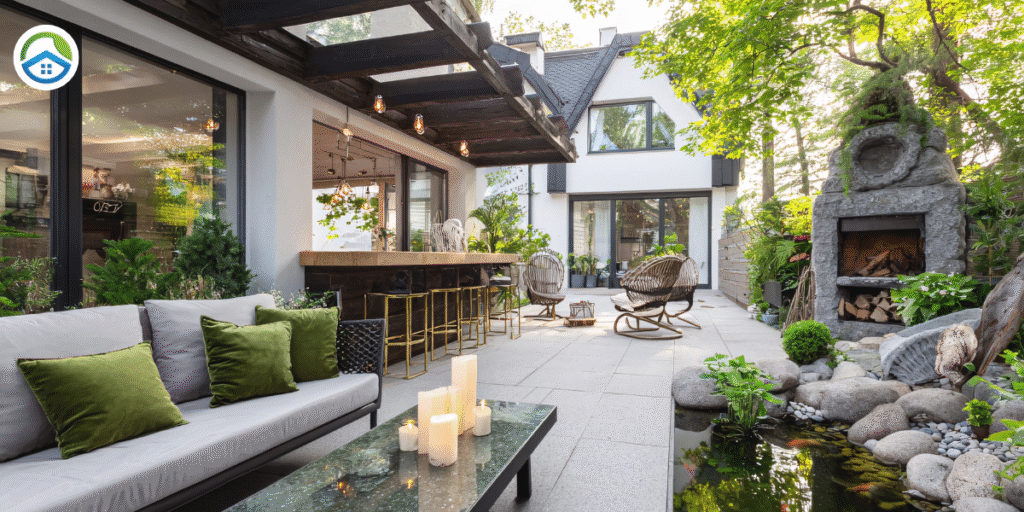
Let’s walk through why.
Humidity and heat
Summer temperatures regularly hit 30°C, with humidity that makes shade and airflow necessary for comfort outdoors. To be honest, stepping outside in January without proper ventilation feels like you’ve walked straight into a sauna.
On top of that, materials need to withstand moisture without warping, fading, or becoming slippery when wet from afternoon storms. What’s more, ceiling fans aren’t just nice to have. They’re essential when you’re entertaining during December through February.
Check Brisbane’s climate data, and you’ll see the local climate demands this kind of thinking.
Storm season prep
November through April brings heavy downpours that can appear within 15 minutes. Drawing from our experience across Brisbane projects, covered areas become your best friend during this period.
Wind protection comes next, especially in exposed spots near the river or on elevated blocks in suburbs like Paddington. These areas cop the full force during storm season.
That’s why proper drainage becomes so important, stopping pooling water that damages your deck and creates mosquito breeding spots after those heavy storms roll through.
Property value increases
Brisbane’s weather lets you use outdoor spaces almost daily. Indoor-outdoor living opens up a whole new world for how you use your property.
Unlike southern states, you’re not storing furniture for six months. Year-round entertaining means your outdoor area becomes as important as your kitchen. Buyers notice this difference when properties hit the market.
Brisbane’s climate shapes every single design choice from the start. Miss this part, and you end up with an expensive outdoor space that nobody uses.
Connecting Your Indoor And Outdoor Areas
The best part about proper door selection is removing the barrier between your living room and outdoor area completely. When you get this right, the two areas start working as one space.
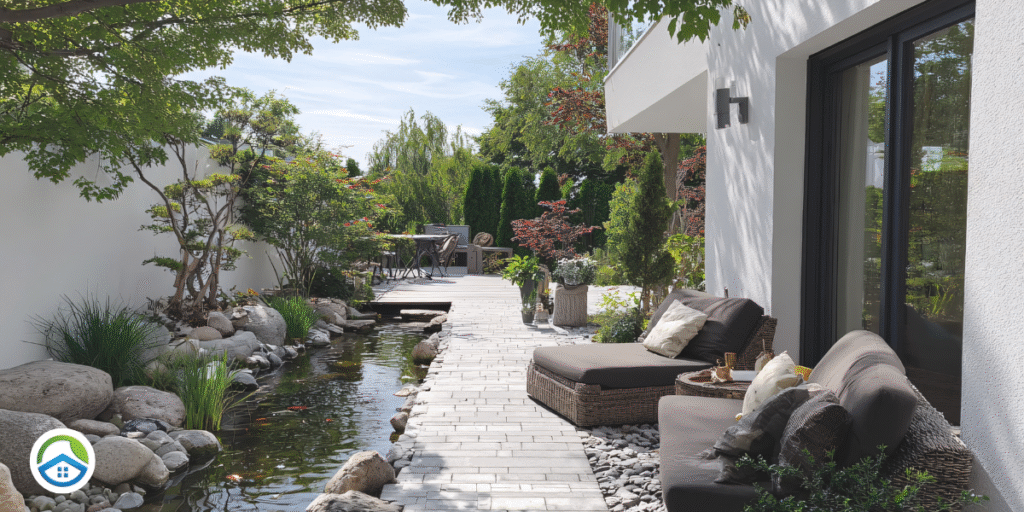
- Bi-fold or sliding doors: These remove the physical wall between inside and outside when opened. Bi-fold doors stack to the side, sliding doors tuck away, both give you that seamless flow you’re after. The opening needs at least 3 metres in width. Anything smaller and you still feel like you’re passing through a doorway rather than moving between connected spaces.
- Flush thresholds: No step between your indoor and outdoor areas means the flooring sits at exactly the same height on both sides. So you’re not watching guests trip while carrying drinks, or second-guessing whether older family members can manage the transition safely. Yes, building costs more upfront to get the levels sorted, but once it’s done, you stop thinking about the threshold completely.
- Glass for sightlines: Glass doors let you see your garden from inside while natural light floods your interior rooms during the day. Even when the doors stay closed in winter or during storms, you keep that visual connection to your outdoor space.
Getting the indoor-outdoor flow right turns two separate areas into one living space. That connection is what makes the whole setup work.
Weather Protection Options
How much protection do you need? Depends on whether you’re using the outdoor space year-round or just during cooler months.
| Structure Type | Best For | Cost Range (AUD) |
|---|---|---|
| Pergola | Partial shade, breezes, climbing plants | $2,500-$15,000 |
| Insulated patio roof | Full weather protection, year-round use | $10,000-$25,000 |
| Retractable awning | Flexible sun control, compact spaces | $500-$7,500 |
Pergolas suit Brisbane when you want dappled shade and airflow for your outdoor room. Though you’ll still get wet during storms (and yes, we’ve watched clients try to barbecue through a summer downpour before). They work great for alfresco living when you’re mainly using the space in dry weather.
Now, if you want year-round coverage, insulated patio roofing changes the game. It blocks that harsh afternoon sun while keeping the space usable during summer downpours. This kind of protection follows passive design principles that help you get the coverage levels right for Brisbane’s climate.
The thing is, your choice depends on how you’ll use the space and whether you need full weather protection or just shade from the sun.
The right roof structure extends your usable months from three to twelve. That’s the difference between an outdoor space and an outdoor room you’ll reach for daily.
Choosing The Right Flooring
Your flooring choice affects comfort, maintenance, and how well your indoor and outdoor spaces connect visually. If you get this wrong, the two areas never quite feel like they belong together.
Here’s what works in Brisbane.
Materials for both spaces
Porcelain tiles stay cool underfoot, handle Brisbane’s humidity without warping, and can match your interior flooring for visual connection. And that’s where things get interesting with composite decking.
Composite resists moisture and doesn’t splinter like timber, though darker colours absorb heat and become uncomfortably hot in summer. Natural stone looks beautiful and stays relatively cool, but costs more upfront and needs sealing every few years.
On the other hand, hardwood timber stands the test of time and ages gracefully. It requires regular oiling and can become slippery when wet after storms.
Dealing with height differences
Flush thresholds mean the flooring sits at the same height on both sides. So you’re not watching guests navigate that awkward step between the two spaces.
Building costs more upfront to get the levels sorted. But once it’s done, you stop thinking about the transition completely. That’s what creates proper indoor outdoor flow.
Getting your flooring right connects the two spaces without that jarring break. When people can move between areas without thinking about it, you know it works.
Getting Your Space Size Right
Think of your outdoor area like planning a house layout. You need separate zones for different activities instead of one space that tries to do everything and ends up doing nothing well.
Start by creating distinct areas for cooking, your dining area, and lounging. The key here is spacing. Aim for a minimum of 3 metres between furniture pieces (we measure this on every single project for good reason). That 3-metre gap allows comfortable movement when you’re entertaining without guests squeezing sideways between chairs.
After that, consider built-in seating around the edges. It maximises capacity without cluttering the centre, which leaves room for kids to play or guests to mingle.
In case of materials, choose weather-resistant options like powder-coated aluminium or all-weather wicker that handle Brisbane’s humidity and storms without constant maintenance.
If you get the size right from the start, your outdoor space becomes somewhere you’ll use daily. That’s why undersizing costs you later, when you realise the patio only fits two people comfortably.
Design Mistakes We See All The Time
Through our practical knowledge from hundreds of Brisbane builds, these design problems come up in nearly every outdoor living project we take on.
Let’s know what we suggest to avoid.
- Homeowners build 3×4 metre patios that barely fit a table. Then they realise they can’t move around or add a lounge area later, which means learning the hard way costs thousands in rebuilds.
- Believe it or not, west-facing outdoor areas become unusable from 2 pm onwards without proper shade structures or screening from the intense afternoon heat Brisbane throws at you.
- Using modern grey pavers with a traditional Queenslander creates a visual disconnect. Choose materials that complement your house style instead of clashing with it.
Pro tip: Visit your outdoor space at different times during the day before finalising your design. You’ll spot sun and shade patterns you’d otherwise miss.
Ready To Build Your Outdoor Space With Design Martus?
We design and build outdoor living spaces across Brisbane that suit your home’s architecture and your lifestyle. Our team handles everything from initial concept through construction and ongoing maintenance.
Long story short: we stay involved with your project from start to finish.
So, contact Design Martus today to discuss your outdoor living plans and get a detailed quote for your property.