BlitZ
BlitZ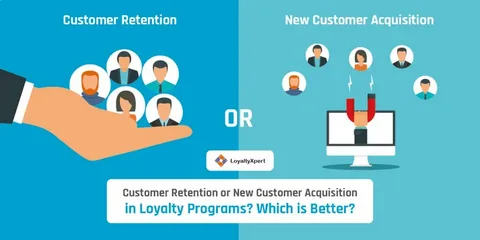
B2B companies face unique challenges in retaining customers due to long sales cycles, multiple stakeholders, and high switching costs. Yet in practice, B2B buyers increasingly mirror B2C behaviors, demanding seamless experiences just like consumers.
A McKinsey & Company study, The B2B Pulse Survey, gathered responses from nearly 4,000 decision-makers across eight industries in 13 countries. It points out that beyond superior solutions, buyers now expect sophisticated purchasing journeys, and they’re willing to walk away if they don’t get them.
A robust loyalty platform addresses these demands with personalized incentives, data-driven insights, and scalable rewards that foster ongoing partnerships. In this article, we’ll explore how combining cutting-edge technology with smart loyalty strategies drives retention, growth, and revenue.
Why Retention Drives B2B Profitability
Retaining B2B customers costs far less than acquiring new ones, often 5 to 7 times cheaper, while significantly boosting profits. A 5% improvement in retention can increase profits by 25% to 95% through repeat business and higher lifetime value.
While some dismiss this as cliché, the data holds firm. It stems from Bain & Company research by none other than Frederick Reichheld, the Net Promoter Score (NPS) inventor, underscoring retention’s outsized impact.
This ties directly to the Pareto Principle, or 80/20 rule, which states that roughly 80% of a company’s profits or revenue typically comes from just 20% of its customers. In B2B contexts, these top clients drive the bulk of value through long-term contracts, upsells, and advocacy, making their retention mission-critical.
Loyalty platforms help identify and prioritize this elite segment with data analytics, delivering tailored incentives that secure revenue stability and amplify growth far beyond chasing volume.
In the newly released Global Customer Loyalty Report 2026, it is noted that companies with effective loyalty programs report an average ROI of 5.3x. Additionally, 44.8% of sales come from loyalty members. Although this is B2C case data, it effectively illustrates the impact of loyalty initiatives and hints at B2B potential.
Core Features of a B2B Loyalty Platform
A loyalty platform must integrate with CRM and ERP systems to track behaviors such as purchases, renewals, and engagement in real time. Key features include tiered rewards, AI-powered personalization, and multi-channel delivery.
These platforms support complex B2B needs:
- Points and tiers: Earn points for volume or certifications, unlocking higher benefits.
- Rebates and bundles: Incentivize share-of-wallet growth without deep discounts.
- Data analytics: Capture zero-party insights for targeted sales actions.
- Training: Trigger rewards for renewals or training completion.
Fielo’s solution, for instance, helps brands engage customers during their purchase journey, reducing cart abandonment and driving self-service adoption.
Proven Strategies for Retention via Loyalty Platforms
B2B firms leverage loyalty platforms to reward high-value actions, turning transactions into strategic relationships. Common tactics include segmenting accounts by size or industry for tailored incentives.
- Tiered programs: Offers escalating perks like co-marketing funds, boosting partner sales.
- Behavioral rewards: Incentivizes training and performance, leading to higher revenue per participant.
- Personalization: Uses AI to predict churn and send proactive offers, improving engagement between cycles.
Platforms enable pilots for testing, ensuring scalability before full rollout. This data-driven approach aligns rewards with goals like product adoption or channel performance.
Real-World Implementation
Leading enterprises use loyalty platforms to protect market share. Loyalty programs also help global brands reward repeat purchases and bundling, accelerating digital adoption without custom code.
One example diversified rewards beyond credits to include electronics and travel, paired with tiered growth and monthly statements, enhancing reorder rates. Another case saw 30% more upsell opportunities from targeted loyalty mechanics.
Successful implementations prioritize business-value rewards like training or support, fostering advocacy and incremental spend.
Overcoming Common Challenges
Many programs falter due to misaligned rewards or data silos, but modern loyalty platforms mitigate this with flexible rules and integrations. Low engagement drops if rewards feel generic; platforms counter this via customization.
Key pitfalls and fixes:
- Complexity: Simplify redemption with instant digital issuance.
- Measurement: Track CLV, retention rate, and NPS natively.
- Scalability: Handle global channels with multi-language support.
B2B retention metrics like Customer Retention Rate (CRR) guide optimizations. Its formula is ((End Customers – New Customers) / Start Customers) × 100 .
Integrating Loyalty Platforms for Maximum ROI
To implement, define goals like retention or upsell, then select a loyalty platform with CRM compatibility. Start small: Pilot with key segments, refine via feedback, and expand. This yields higher share-of-wallet and advocacy, with 50% of firms citing retention as top KPI.
Future-Proofing B2B Retention
As buyers demand personalization, loyalty platforms evolve with AI for predictive engagement. In 2026, expect deeper integrations and ecosystem coalitions for sustained growth. B2B companies that harness loyalty platforms transform retention from a cost center into a profit engine.
By integrating AI-driven personalization, tiered incentives, and seamless CRM connections, these tools not only cut acquisition costs but also unlock higher lifetime value through proactive engagement and data-backed strategies. Leaders who prioritize scalable pilots and business-aligned rewards see measurable lifts in CRR, upsell rates, and advocacy, proving that retention isn’t just a metric, it’s a competitive moat.
Looking ahead, the future of B2B retention belongs to those who act now. As AI evolves and buyer expectations rise, platforms position organizations for sustained growth, ecosystem partnerships, and unbreakable customer loyalty. Investing in the right loyalty solution today means to secure tomorrow’s revenue stability and market dominance.