Admin
Admin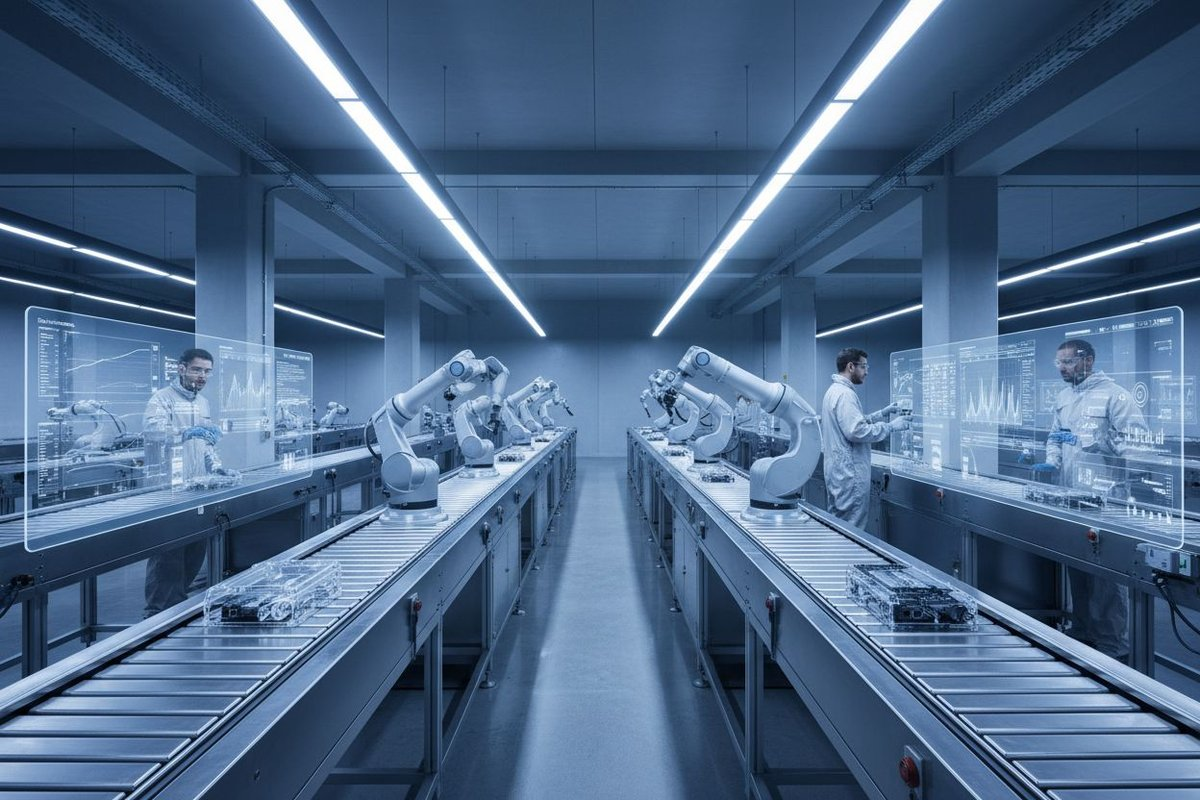
The beverage industry stands at the forefront of a manufacturing revolution. As consumer demands grow increasingly complex and profit margins face constant pressure, producers are turning to interconnected technologies that promise unprecedented levels of efficiency, quality control and operational intelligence. The smart factory is no longer a futuristic concept—it is rapidly becoming the standard for competitive beverage production.
The Foundation of Connected Production
At its core, the smart factory concept relies on the Industrial Internet of Things (IIoT) to create a seamless network of communication between machines, sensors and management systems. In beverage production, this translates to bottling machinery, pasteurisers, labelling equipment and canning machine systems that continuously exchange data, enabling real-time monitoring and autonomous decision-making.
Modern filling lines now incorporate hundreds of sensors that track everything from liquid levels and fill accuracy to cap torque and container integrity. This granular data collection allows operators to identify inefficiencies that would have remained invisible in traditional manufacturing environments. A slight deviation in carbonation levels, for instance, can be detected and corrected within seconds rather than discovered hours later during quality checks.
European manufacturers have been particularly instrumental in advancing these technologies, with companies across Germany, Italy and the Netherlands developing sophisticated automation solutions that combine mechanical precision with digital intelligence. These manufacturers bring decades of engineering expertise to the challenge of creating equipment that meets the exacting standards of beverage production whilst embracing the connectivity demands of modern manufacturing.
Predictive Maintenance and Reduced Downtime
Perhaps no aspect of smart factory technology delivers more immediate return on investment than predictive maintenance. Traditional maintenance schedules operate on fixed intervals, often resulting in either premature component replacement or unexpected breakdowns. Neither outcome serves the bottom line.
IIoT-enabled equipment continuously monitors its own operational parameters, tracking vibration patterns, temperature fluctuations, motor current draw and countless other indicators of component health. Machine learning algorithms analyse this data against historical patterns to predict failures before they occur, allowing maintenance teams to schedule interventions during planned downtime rather than responding to emergencies.
The financial implications are substantial. Unplanned downtime in beverage production can cost thousands of pounds per hour when factoring in lost production, spoiled ingredients and expedited shipping to meet delivery commitments. Smart factories routinely report downtime reductions of 30 to 50 percent following implementation of predictive maintenance systems.
- Continuous monitoring of critical components including pumps, valves and drive systems
- Automated alerts when parameters drift outside optimal ranges
- Historical data analysis enabling increasingly accurate failure predictions
- Integration with spare parts inventory systems for proactive ordering
Quality Assurance Through Data Integration
Beverage producers face stringent quality requirements from both regulatory bodies and increasingly discerning consumers. Smart factory technology transforms quality assurance from a reactive checkpoint process into a continuous, integrated function woven throughout production.
Vision systems powered by artificial intelligence now inspect every container passing through a filling line, identifying defects that human inspectors might miss during high-speed production runs. These systems learn from each inspection, continuously improving their accuracy and adapting to new product variations without extensive reprogramming.
Data integration across the production environment enables complete traceability from raw ingredient receipt through to finished product dispatch. Should a quality issue arise, producers can instantly identify affected batches, trace the source of contamination or deviation, and implement targeted recalls rather than broad product withdrawals. This capability not only protects consumers but significantly reduces the financial and reputational damage associated with quality failures.
Energy Efficiency and Sustainability Gains
Environmental responsibility has moved from corporate nicety to business imperative, and smart factory technology delivers measurable sustainability benefits. Connected systems optimise energy consumption across the production environment, automatically adjusting lighting, heating and equipment operation based on real-time demand.
Beverage production is inherently resource-intensive, requiring significant water and energy inputs. Smart factories monitor consumption at granular levels, identifying waste and enabling continuous improvement initiatives. Compressed air systems, often among the largest energy consumers in packaging operations, can be optimised through leak detection sensors and demand-based pressure management.
Many European equipment manufacturers now design their filling and packaging lines with sustainability as a primary consideration, incorporating energy recovery systems, reduced water consumption features and compatibility with lightweight packaging materials that minimise environmental impact throughout the supply chain.
Implementation Considerations for Beverage Producers
Transitioning to smart factory operations requires careful planning and realistic expectations. Successful implementations typically begin with clearly defined objectives, whether reducing downtime, improving quality metrics or enhancing traceability capabilities. Attempting to transform every aspect of operations simultaneously often leads to disappointing results.
Infrastructure requirements deserve particular attention. Reliable network connectivity throughout the production environment is essential, as is cybersecurity planning to protect increasingly connected systems from external threats. Staff training ensures that operators can effectively utilise new capabilities rather than simply collecting data that never informs decision-making.
The beverage industry’s adoption of smart factory technology continues to accelerate, driven by proven results and increasingly accessible implementation pathways. For producers seeking to remain competitive in a demanding market, the question is no longer whether to embrace these technologies but how quickly and effectively they can be deployed.
Read More Gorod