LinksSphere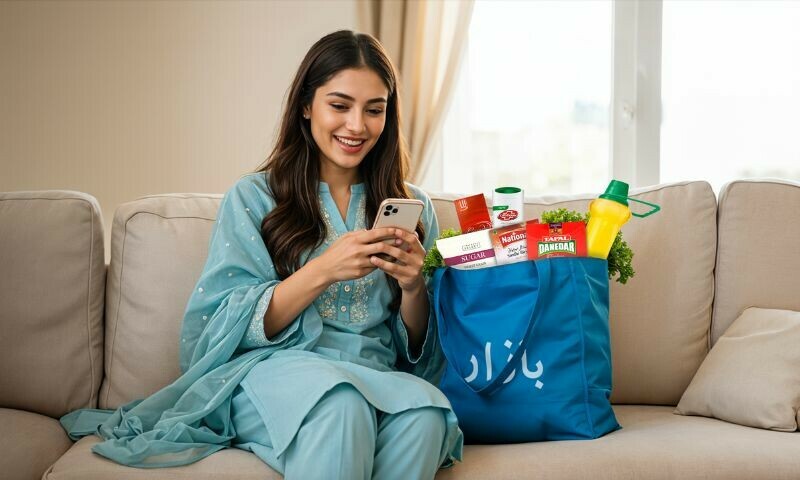
Somewhere between the third trip to the corner store for forgotten coriander and the hour-long traffic jam on Shahrah-e-Faisal, millions of Pakistani families quietly made a decision: the weekly shopping run could no longer look the way it always had. The shift did not happen overnight, and it was not driven by a single app or a flashy marketing campaign. It grew out of practical frustration—and a smartphone that was already in everyone’s hand.
From Bazaar Bags to Browser Carts
Pakistan’s retail landscape has been dominated by open markets, kiryana stores, and neighbourhood pharmacies for decades. These remain important—nobody is replacing the charm of a Sunday morning trip to Empress Market—but the economics of daily life have started tilting the scales. Fuel costs rose sharply through 2024 and 2025, urban congestion worsened, and electricity load-shedding made it harder for small retailers to keep cold-chain items fresh. Against that backdrop, digital platforms offering household staples with same-day or next-day delivery started gaining real traction beyond their early-adopter base.
According to the Pakistan Bureau of Statistics, consumer spending on food and non-alcoholic beverages accounts for roughly 35 percent of average household expenditure. That is a massive addressable market, and the platforms competing for it now range from pure-play grocery apps to multi-category retailers that stock everything from basmati rice to baby formula. The appeal is not just convenience; it is price transparency. Shoppers can compare per-kilogram rates across brands in seconds—something that requires visiting three different stalls in a physical bazaar.
Payment Innovation as the Tipping Point
A critical barrier to online shopping in Pakistan was always trust around payments. Cash-on-delivery dominated e-commerce for years, creating headaches for logistics companies dealing with failed deliveries and return fraud. That dynamic has changed meaningfully since 2023. JazzCash now claims over 42 million mobile wallets, while EasyPaisa reports similar scale. The State Bank of Pakistan’s Raast instant payment system processed over 650 million transactions in its first two years, embedding digital payments into daily habits.
For household shopping specifically, the shift matters because recurring purchases—cooking oil, flour, tea, cleaning supplies—lend themselves to saved payment methods and auto-reorder features. Once a family sets up a digital wallet and completes two or three transactions without incident, the psychological barrier drops considerably. Younger household members, particularly women managing home budgets, have been among the fastest adopters of mobile wallet-based grocery ordering.
What Pakistani Shoppers Actually Buy Online
The assumption that Pakistani consumers only buy electronics and clothing online is outdated. Grocery, pharmacy, and personal care categories have seen double-digit year-on-year growth on major platforms. Staples like cooking oil, packaged milk, and rice lead in terms of volume, while skincare, vitamins, and baby products generate higher margins and stronger brand loyalty.
Platforms like Naheed.pk, which operates as an online grocery store Pakistan households already recognize from its physical retail presence, have been able to build digital trust faster than pure-play startups. The advantage of combining grocery, pharmacy, beauty, and baby categories under a single checkout is significant: it mirrors how families actually shop. A mother adding diapers to her cart is likely to also need cooking essentials and perhaps a face wash—bundling those into one delivery saves both time and shipping costs.
The Festival Factor
Ramadan, Eid, and wedding season create enormous demand spikes that traditionally sent families to wholesale markets like Jodia Bazaar or Makki Market. Online platforms have started capturing a meaningful share of this seasonal rush by offering bulk-buy discounts, curated Ramadan bundles, and scheduled delivery windows that let families stock up without the physical chaos. During Ramadan 2025, several Pakistani e-commerce platforms reported a 40 to 55 percent spike in grocery orders compared to non-seasonal months.
Logistics: The Unsolved Puzzle
None of this growth comes without friction. Last-mile delivery in Pakistani cities remains genuinely hard. Karachi’s addressing system is notoriously inconsistent, Lahore’s walled city presents narrow-lane access challenges, and Islamabad’s spread-out sectors make efficient route planning difficult. Platforms are experimenting with micro-fulfilment hubs, dark stores in residential neighbourhoods, and rider-incentive models that prioritize delivery density over distance.
Cold chain is another sticking point. Fresh produce, dairy, and frozen items require temperature-controlled handling that adds cost. Some platforms have sidestepped this by focusing on ambient-temperature staples and packaged goods, while others are investing in insulated delivery bags and faster fulfilment windows to maintain quality.
What Comes Next
Pakistan’s e-commerce market is projected to cross $9 billion by 2027, with grocery and household essentials representing the fastest-growing vertical. The infrastructure is still catching up—warehousing capacity, road networks, and digital literacy outside tier-one cities all need significant investment. But the behavioural shift is already locked in for urban consumers. Families who discovered during 2020 and 2021 that they could order atta, ghee, and shampoo from their phones are not going back to spending their Friday afternoons in traffic.
The real question is not whether Pakistanis will shop online for daily essentials—they already do. The question is which platforms will earn enough trust, build enough logistical muscle, and offer enough product depth to become the default choice. The race is on, and the households making these decisions are paying close attention.