Qamer Javed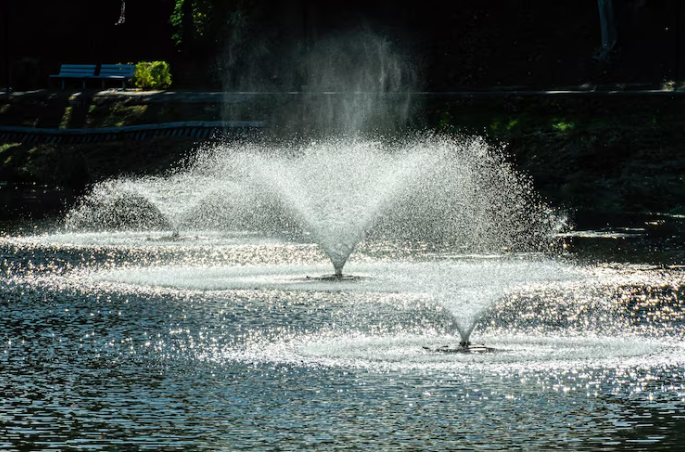
Stagnant water is a pond owner’s nightmare. You’ve probably seen it before: murky green water, dead fish floating on the surface, and that unmistakable smell that makes you want to stay far away from your once-beautiful pond. When water sits still for too long, oxygen levels drop. Fish struggle to survive. Algae blooms take over. What was supposed to be a peaceful water feature becomes an eyesore and a health hazard.
Floating fountains offer a practical answer to this problem. They work by pulling water from below the surface and spraying it into the air. This simple action creates movement throughout the entire pond. The spray breaks the surface tension, allowing oxygen from the air to dissolve into the water. At the same time, the circulation prevents water from sitting still long enough to develop the conditions that lead to stagnation. Property owners who install these systems often see results within weeks.
The real issue with stagnant ponds goes deeper than aesthetics. Without circulation, ponds develop layers. Warm water stays on top while cold, oxygen-depleted water sinks to the bottom. This thermal stratification creates dead zones where nothing can live. Beneficial bacteria that break down organic matter need oxygen to function. When oxygen disappears, these bacteria die off and harmful anaerobic bacteria take their place. These produce hydrogen sulfide, the gas responsible for that rotten egg smell.
Breaking Through Water Layers
Most people don’t realize that ponds naturally form distinct temperature zones during warm months. The top layer heats up from sunlight while deeper water stays cool. Between these layers sits a barrier called the thermocline. This invisible wall prevents oxygen-rich surface water from mixing with the depths below. Fish that normally inhabit deeper water are forced to crowd near the surface, where oxygen levels are higher. This stress makes them vulnerable to disease and temperature shock.
Floating fountains attack this problem head-on. The spray pattern creates vertical movement that disrupts stratification. Water from the bottom gets pulled up and exposed to air. Oxygen dissolves into this water before it falls back down and mixes with the rest of the pond. This constant churning prevents the formation of distinct layers. The entire water column maintains similar temperature and oxygen levels.
How Water Movement Stops Algae Growth
Here’s something that surprises most pond owners: algae need water that is still to thrive. When water moves, algae cells can’t settle and form colonies. The constant motion from a fountain keeps these microscopic plants suspended and prevents them from clustering together. Moving water also distributes nutrients more evenly throughout the pond. This prevents the buildup of phosphorus and nitrogen in certain areas, which are the main food sources for algae blooms.
Beyond just preventing algae from developing, circulation helps beneficial organisms. Aerobic bacteria that consume organic debris need oxygen to survive. When fountains keep water moving and oxygenated, these bacteria populations grow stronger. They break down leaves, fish waste, and dead plant matter before it can accumulate on the pond bottom. This natural cleaning process reduces muck buildup and keeps the water clearer.
The Physics of Water Spray
Let’s break it down. When water shoots into the air, it breaks into thousands of tiny droplets. Each droplet has a large surface area relative to its volume. This matters because oxygen transfer happens at the surface. More surface area means more contact with air and faster oxygen absorption. By the time those droplets fall back into the pond, they’re carrying dissolved oxygen with them.
The height and pattern of the spray affect how well this works. Higher sprays create more droplet surface area but may lose effectiveness in windy conditions. Wider spray patterns cover more surface area of the pond but might not achieve the same oxygen transfer rates as taller sprays. Most systems balance these factors to provide consistent circulation regardless of weather conditions.
Seasonal Considerations
Cold weather changes everything. As temperatures drop, ice formation becomes a concern. Many pond owners shut down their fountains when freezing temperatures arrive. This makes sense from an equipment protection standpoint, but it can create problems. Winter fish kills often happen because ice cover prevents oxygen from entering the water. Snow on top of ice blocks sunlight, killing underwater plants that produce oxygen through photosynthesis.
Some fountain designs can run in partial ice conditions. They keep a small area of the pond open, allowing gas exchange to continue even in winter. The circulating water around the fountain stays liquid because movement prevents ice formation. This open water acts as a window, letting oxygen in and harmful gases out. Fish gather near these areas because they offer the best survival conditions during harsh months.
Placement Matters More Than You Think
Where you put a floating fountain determines how well it works. Installing it too close to shore means half the circulation effect is wasted on land. Placing it in the deepest part of the pond might seem logical, but it can actually reduce effectiveness if the fountain can’t pull water from various depths. Most experts recommend positioning fountains away from the shoreline where they can create circular flow patterns that reach all areas of the pond.
Wind direction plays a role, too. If prevailing winds always blow the spray toward one side of the pond, circulation becomes uneven. Some areas get plenty of movement while others remain relatively stagnant. Adjusting the fountain’s position based on seasonal wind patterns can improve overall water quality. This might mean moving it slightly between spring and fall.
Energy Use and Operating Costs
Running a fountain uses electricity. That’s unavoidable. But the amount varies widely based on motor size and efficiency. Smaller ponds need less power to circulate effectively. Larger bodies of water require bigger motors that consume more energy. The good news is that modern motors are designed to operate continuously without excessive power draw. Running a fountain 24/7 often costs less than people expect, especially when compared to the expense of treating a stagnant pond with chemicals or restocking dead fish.
Timer systems let you run fountains during peak oxygen demand periods. Fish need more oxygen during hot summer nights when photosynthesis stops, but respiration continues. Running the fountain from evening through early morning addresses this critical window. Some pond owners only operate their systems during these hours to save energy while still preventing stagnation.
Real Results You Can See
The changes start within days. Water that was cloudy becomes clearer as suspended particles settle and circulation distributes them evenly. That musty smell fades as oxygen levels rise and anaerobic bacteria die off. Fish become more active and spread throughout the pond instead of crowding in one area. Aquatic plants grow healthier because their roots receive better oxygen levels in the sediment.
Long-term benefits add up. Less muck accumulation means fewer expensive dredging operations. Reduced algae growth means less money spent on chemicals. Healthier fish populations mean lower replacement costs. The fountain pays for itself through these savings while also making your pond something you actually want to spend time around again.