World rankers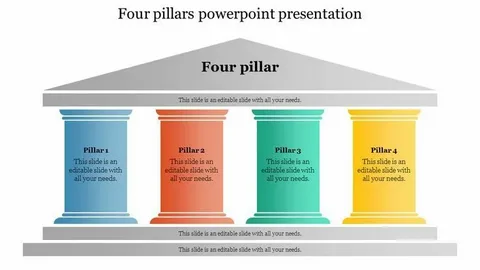
Most people don’t repeat the same mistakes because they “lack discipline.” They repeat them because they run the same internal script under pressure. It shows up as the same arguments in relationships, the same late-night overthinking before big decisions, the same sprint-and-crash work cycle, the same attraction to people who trigger the same emotional loop. BaZi (Four Pillars of Destiny) is a divination-rooted Chinese system that treats your birth moment like a time map—not to promise outcomes, but to make your patterns visible so you can work with them on purpose.

BaZi is built from four pillars—year, month, day, and hour—each formed by a Heavenly Stem and an Earthly Branch. Those pillars link into the Five Elements (Wood, Fire, Earth, Metal, Water) and their interactions: what feeds you, what drains you, what stabilizes you, what pushes you into extremes. The zodiac animal year is the doorway; BaZi is the room inside the house. It’s more specific because it focuses on structure: where your energy naturally concentrates, where it leaks, and how your default reactions behave when something matters.
The part that hooks people is not “prediction,” it’s recognition. A chart can highlight tendencies like pushing harder when you feel uncertain, retreating when intimacy increases, needing control to feel safe, or turning standards into self-pressure. When someone sees that pattern described cleanly, it often feels like a mirror with better lighting. The value is practical: a named pattern becomes a solvable pattern. Instead of “Why am I like this?”, the question becomes “What triggers me, what restores me, and what strategy fits my design?”
⚖️ A simple way to understand BaZi without getting lost in terminology is to look at balance. Too much of a certain kind of energy often looks like “strength” on good days and “overdrive” on bad days. Too little often looks like a blind spot: the thing you keep trying to force with willpower. For example, a chart with strong Metal/Water themes can produce sharp thinking and high standards, but also rumination and emotional shutdown when stress spikes. A strong Fire tendency can create confidence and charisma, but also impatience, impulsive choices, and burnout if recovery is ignored. Weak Earth often shows up as difficulty feeling grounded—lots of motion, not enough stability—while weak Wood can show up as hesitation or trouble sustaining momentum. The point isn’t to label you; the point is to identify what you naturally overuse and what you underbuild.
The Day Pillar (and especially the Day Master within it) is often treated as the “engine” of the chart. It reflects how you operate when life gets real: how you protect yourself, how you process emotion, how you regain control, how you recover after conflict. Many people feel stuck because they’ve been using a strategy that fights their engine. They try to calm anxiety with more effort, they try to fix relationship tension with more intensity, they try to solve burnout with more discipline. BaZi tends to redirect that approach: strengthen what stabilizes you, reduce what drains you, and stop asking your weakest function to carry your whole life.
✨ This is where “divination flavor” can be used in a grounded way: BaZi is not a verdict, it’s a lens. The chart doesn’t force your future; it highlights your default settings and the kinds of seasons where certain themes become louder. If you’ve ever noticed that some years you become restless and question everything, while other years you suddenly want structure and commitment, the BaZi lens frames that as timing and theme shifts. Used well, it functions like seasonal planning: you still choose, but you choose with better awareness of what you’re likely to overdo, what you’re likely to avoid, and what kinds of decisions will cost you more energy than you expect.
❤️ Relationship patterns are one of the main reasons people seek a BaZi interpretation, and the most useful angle isn’t “Who is my soulmate?” It’s: what do I do when I feel unsafe, misunderstood, or uncertain? Some people seek closeness by accelerating—more talking, more intensity, more pushing for clarity—until the other person shuts down. Some seek safety by distancing—less emotion, less vulnerability, less commitment—until the other person escalates. Some turn love into a performance, some turn it into control, some turn it into self-sacrifice. BaZi is often used to spot these loops early, so you can replace them with a cleaner strategy: clearer boundaries, calmer communication, better timing of hard conversations, and partner choices that fit your nervous system rather than your old story.
✅ The biggest shift happens when the chart stops being “interesting” and starts being actionable. A good interpretation connects the symbols to decisions: what kind of work rhythm you actually sustain, what environments trigger your worst habits, what you need in partnership to stay open rather than defensive, and what to watch during periods when you’re more likely to make fear-based choices. That’s also why many people prefer a personalized reading once they’ve learned the basics—because the chart is interconnected and it’s easy to misread one strong feature as “the whole truth.” A structured, personalized breakdown can turn scattered insights into a coherent plan you can actually use: fewer guesses, fewer repeated mistakes, and more intentional moves based on your real pattern rather than your ideal self.
If a practical, personalized interpretation is what you want—especially around chart balance, decision tendencies, relationship dynamics, and timing themes—this is the direct starting point: BaZi reading.
BaZi works best when you treat it as a reflection tool, not a guarantee. A chart pointing to avoidance, intensity, over-responsibility, or control doesn’t trap you; it gives you leverage. Once you see the script clearly, you can interrupt it early, build the missing supports, and choose strategies that fit how you’re built. That’s the real “magic” people feel—not fate, but clarity that leads to better choices.