 Admin
2027 AI Shopping Assistant & Guided Commerce Trends
Shoppers increasingly ask AI tools what to buy before they ever visit an online or a physical store. That single change is reshaping online retail. Discovery is moving from search boxes and category grids to conversations, and the brands that win will be the ones whose AI Shopping Assistant can ask the right questions, understand the answers and recommend with confidence. This is where guided selling takes center stage.
Agentic Commerce and Guided Discovery
The first of the big guided commerce trends is agentic commerce: AI agents that compare options, track prices and even complete purchases on a shopper’s behalf. For brands, this means products must be understandable to machines as well as people. Complete attributes and clear answers to “who is this for?” decide whether an agent picks your product.
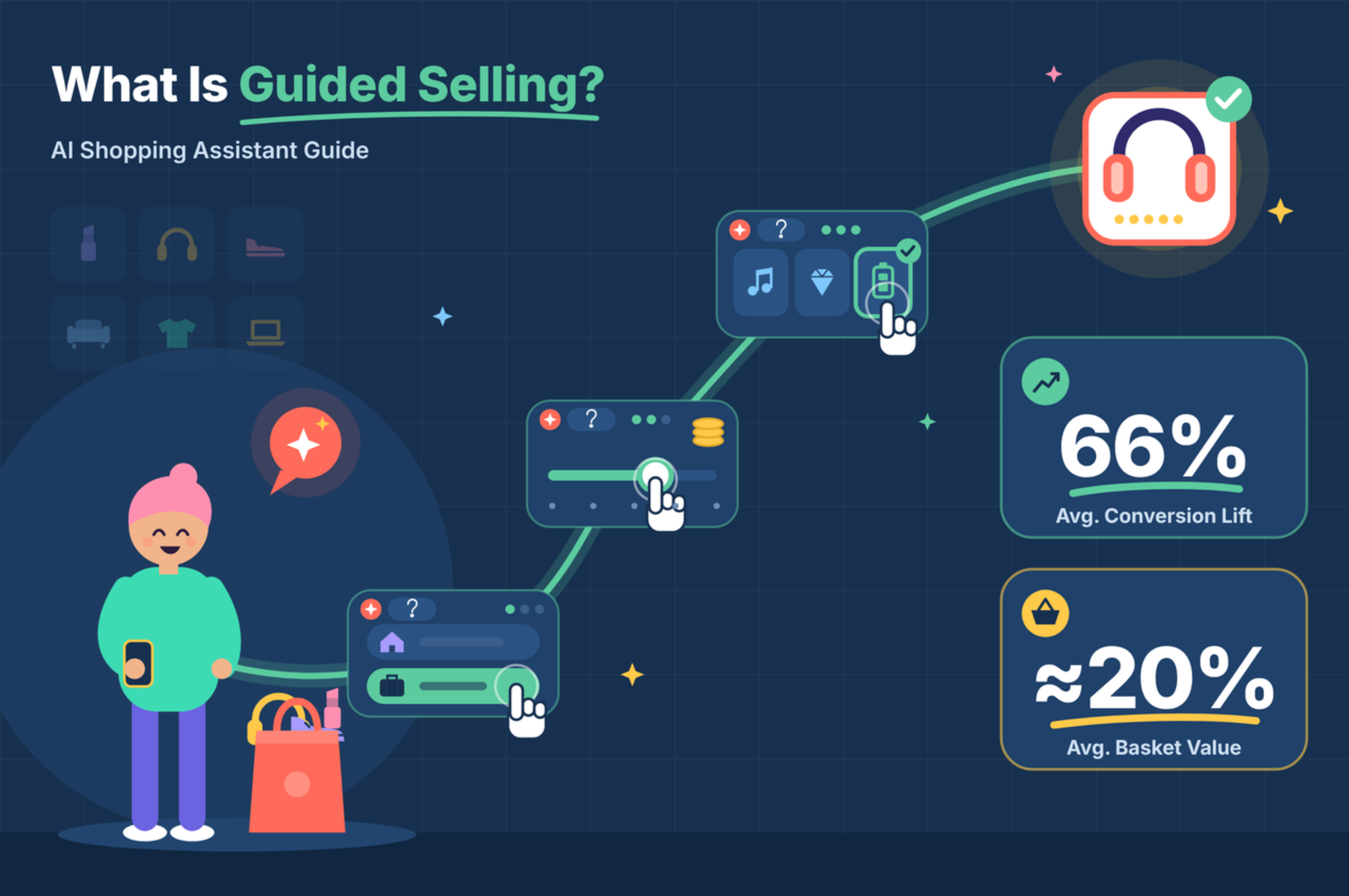
On brand websites, the same shift is visible. The AI Shopping Assistants & Conversational Product Finders are replacing static filters as the default entry point for undecided shoppers. In 2027, the category page opens with a question, not a grid. This is AI powered product discovery at its most practical: describe the need, get an answer. And if you’ve ever wondered what is guided selling, this is it: asking shoppers about their needs before recommending products.
Zero-Party Data as a Competitive Advantage
With tracking signals weaker and AI platforms sitting between brands and shoppers, zero-party data, the information customers intentionally share, is one of the few advantages competitors cannot copy. Every guided flow is also a data strategy. In guided selling ecommerce, the answers shoppers give power personalization across the website, email and advertising, and personalization built on stated preferences is easier to explain and trust.
Guided experiences are also leaving the product page. Brands are placing product finders in campaign landing pages, social ads and even in-store screens, turning every touchpoint into a guided journey that collects data.
AI Shopping Assistant Implementation in Five Steps
A successful AI shopping assistant implementation does not need a large project to start, especially with modern guided selling platforms:
- Pick your first category: the one with the most traffic and the most “which one should I buy?” questions.
- Prepare your product data: add attributes, use cases and shopper-language tags.
- Launch one flow: 3–6 needs-based questions, with a reason for every recommendation.
- Connect answers to your CRM: turn stated preferences into segments.
- Measure, then scale: compare the conversion of shoppers who complete the flow with the category average.
What Stays the Same in the Future of Ecommerce
For all the change, one thing remains constant in the future of ecommerce: shoppers buy when they feel confident they are making the right choice. AI changes how that confidence is built, not the need for it.
The numbers already point the way. Across its customers, Poltio reports that shoppers in guided flows convert 66% better than the site average, with around 20% higher basket value. The brands that lead in 2027 will not be the ones with the most AI features, but the ones whose AI Shopping Assistant asks the best questions and gives the clearest reasons. That is the real promise of guided selling AI.
Read More at Gorod