Khizar Seo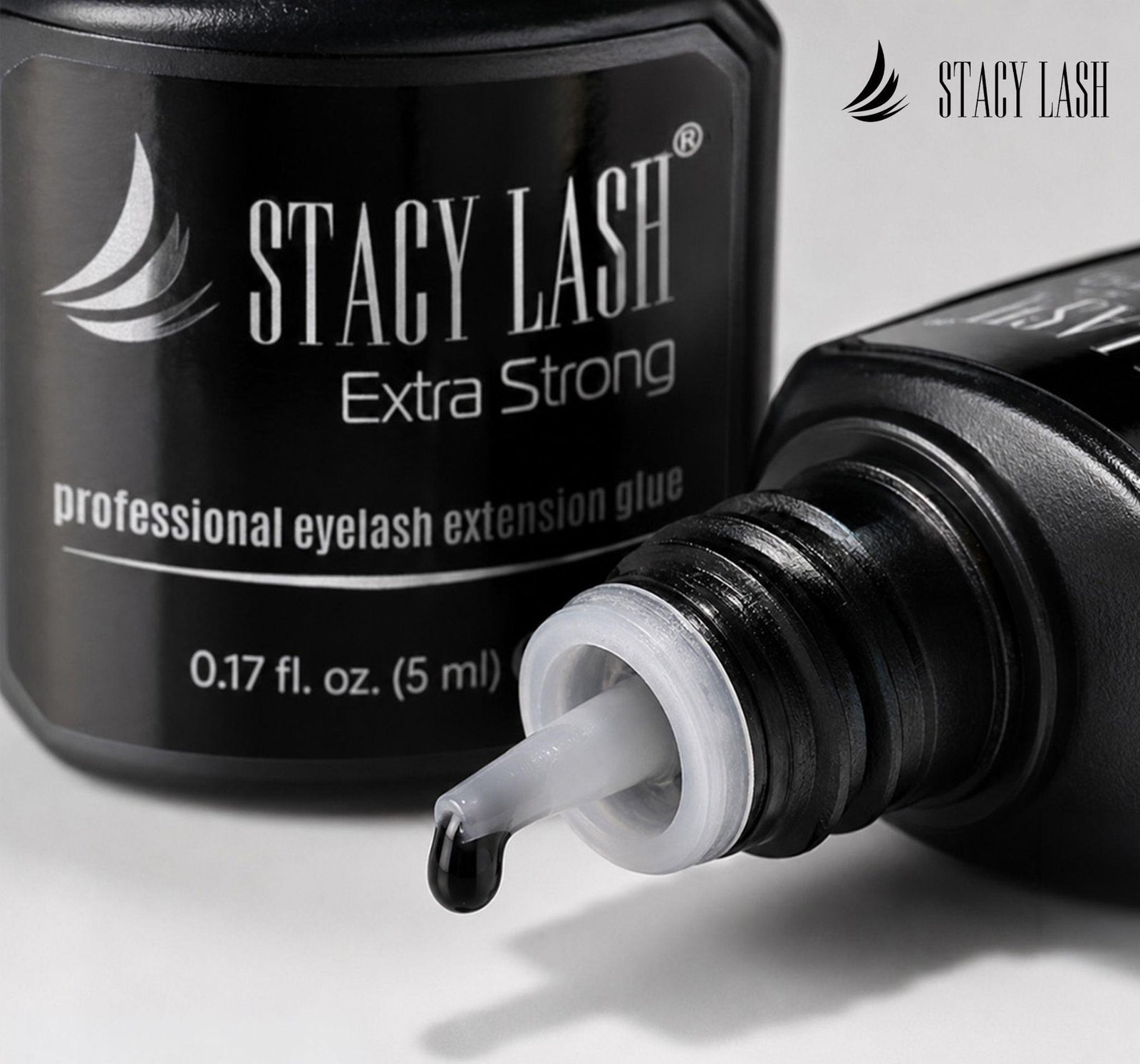
Welcome to the chemistry side of lashing. Professional eyelash extension glue is a carefully formulated adhesive designed to create a durable bond between an extension and the natural lash. Once the adhesive is exposed to moisture, a chemical reaction begins, transforming the liquid adhesive into a solid polymer.
And that little transformation explains a lot: why humidity matters, why some formulas cure in a fraction of a second while others take longer, why a fresh glue drop matters, and why removing extensions requires an actual lash glue remover.
What Is Professional Lash Adhesive Made Of?
Most professional lash extension glue formulas are built around one key ingredient: cyanoacrylate.
But cyanoacrylate isn’t working alone. The final adhesive formula can contain several components designed to control how it behaves during application and curing.
Cyanoacrylate
Cyanoacrylate is the primary adhesive component responsible for creating the bond.
When it encounters moisture, cyanoacrylate begins polymerization, a chemical reaction in which individual molecules link together into long polymer chains. As those chains form, the liquid adhesive hardens and creates the bond holding the extension in place. This is why professional lash adhesives are moisture-sensitive by nature.
Pigments
Some lash glue ingredients are added to create the characteristic color of the adhesive. Black adhesives, for example, contain pigment that gives the finished bond a dark appearance. Clear adhesives are formulated without the traditional black pigment, making them useful when a more invisible-looking bond is preferred.
Stabilizers
Adhesive formulas can also contain stabilizing ingredients that help control the product’s behavior and shelf life. The goal is to keep the adhesive stable inside the bottle while still allowing it to cure efficiently once it is exposed to the conditions required for polymerization.
Other Formula-Specific Ingredients
Every professional adhesive is formulated differently. The exact combination of eyelash glue ingredients, cyanoacrylate type, stabilizers, pigments, and other components can influence characteristics such as viscosity, curing behavior, flexibility, and storage requirements. In other words, two bottles can both be called “lash glue” and still behave completely differently on your lash bed.
How Lash Adhesive Creates a Bond
So, how does lash glue work once you pick up an extension? The magic word is polymerization. Before application, the adhesive is a liquid. Once a tiny amount of moisture comes into contact with the cyanoacrylate, polymerization begins. The molecules start linking together, and the adhesive transitions from a liquid into a solid polymer.
That solidified material creates the bond between the extension and the natural lash.
Polymerization: The Big Picture
Adhesive molecules are like individual puzzle pieces. Moisture essentially gets the reaction moving, allowing those pieces to connect into a much larger structure. The result is the cured adhesive bond you see between the natural lash and extension.
The reaction happens quickly, which is exactly what professional lash artists need. But there’s a catch: the environment matters too.
The Role of Temperature and Humidity
Temperature and relative humidity can affect how quickly an adhesive cures. Humidity is particularly important because moisture participates in the polymerization process. When relative humidity is higher, some adhesives may cure faster. When humidity is lower, curing may slow down.
Temperature can influence the behavior of the adhesive as well. That’s why a glue that felt perfect on Monday can suddenly seem way too fast on Friday after the studio conditions change.
For professional lash artists, monitoring the workspace and following the adhesive manufacturer’s recommended temperature and humidity range is essential.
Why Curing Speed Differs Between Formulas
Not every adhesive is designed to cure at the same speed. Different lash glue ingredients, cyanoacrylate types, concentrations, viscosity, and formulation choices can affect curing behavior. That’s why you’ll see professional adhesives marketed for different working speeds.
A fast adhesive can be fantastic for an experienced artist whose placement is quick and precise. A slower formula can give another artist more time to position the extension before the adhesive fully cures. The “best” speed isn’t universal.
The best adhesive speed is the one that matches your technique and working conditions.
What Makes a Lash Bond Strong or Weak?
A strong bond isn’t determined by the adhesive alone. Even the fanciest bottle of eyelash extension glue can’t compensate for poor application technique, an old adhesive drop, or inadequate preparation.
Here are four major factors to keep an eye on.
1. Adhesive Quantity
Too much adhesive can create unnecessary bulk and may interfere with clean attachment Too little adhesive may not provide enough contact between the extension and natural lash.
The sweet spot is a controlled amount that creates sufficient contact without flooding the lash.
2. Attachment Area
The extension needs adequate contact with the natural lash. If only a tiny portion of the extension touches the natural lash, the bond has less surface area to hold onto.
Clean, consistent attachment is one of the foundations of good retention.
3. Freshness of the Adhesive Drop
Your glue drop has a shelf life after opening and an even shorter useful life once it’s sitting exposed to the environment.
Every time you dispense adhesive, it begins interacting with the surrounding air. As the drop becomes exposed to moisture and oxygen, its properties can change.
That’s why professional lash artists typically refresh their adhesive drop regularly rather than trying to stretch one drop throughout an entire appointment.
4. Preparation of the Natural Lash
Clean lashes provide a better surface for the adhesive to interact with. Oil, makeup residue, skincare products, dust, and other buildup can interfere with proper attachment.
Proper preparation doesn’t mean aggressively stripping the lashes. It means creating a clean surface appropriate for the adhesive and service being performed.
Why Water and Regular Cleansers Cannot Remove Extensions
This is where things get interesting. Clients sometimes assume that soaking extensions in water, cleanser, oil, or another household product will make them slide right off.
Unfortunately, polymerized adhesive doesn’t work that way. Once the cyanoacrylate has cured, it has undergone a chemical transformation from a liquid adhesive into a solid polymer.
Regular cleansing products are designed to remove surface residue, things like makeup, oil, sweat, and everyday buildup. They aren’t designed to chemically break down a cured lash adhesive bond.
So while regular cleansing is absolutely essential for maintaining clean extensions, it shouldn’t be confused with professional lash removal.
How Professional Lash Remover Works
When it’s time to remove extensions, professionals use a specially formulated eyelash extension glue remover. A professional lash glue remover is designed to interact with the cured adhesive and soften or break down the bond, allowing extensions to be removed more safely and efficiently.
This is completely different from simply washing the lashes.
Cream Remover vs. Gel Remover
Professional removers come in different textures and formulations, including cream lash remover and gel removers. A cream formula has a thicker consistency that can make it easier to control during certain removal techniques. Gel removers have a different texture and can also be formulated specifically for professional extension removal.
Neither format is automatically “better.” The right choice depends on the product instructions, the artist’s technique, and the specific service being performed.
Preventing Contact With the Eyes
This part is non-negotiable. Professional lash removers should be used carefully and according to the manufacturer’s directions. The product should never be allowed to contact the eye itself.
During removal, the client’s eyes should remain closed, and the artist should take appropriate precautions to prevent remover from entering the eye.
Lash remover is for the adhesive, not the eyeball. Always follow the product’s safety instructions.
Adhesive and Remover Safety Rules
Professional products deserve professional handling.
Use Products as Intended
Professional lash glue and removers should be used by trained professionals according to the manufacturer’s instructions. Avoid improvising with household products or trying to create DIY removal solutions.
Store Adhesive Properly
Adhesive storage matters. Keep the bottle tightly closed and store it according to the manufacturer’s instructions. Excessive heat, moisture, or improper storage can affect adhesive performance and shelf life.
Pay Attention to Expiration and Opening Periods
A bottle doesn’t stay at peak performance forever. Always check the manufacturer’s expiration information and recommended period after opening. If the adhesive has changed significantly in color, consistency, smell, or performance, it’s worth checking whether it should be replaced.
When it comes to professional lash glue, “but there’s still some left” isn’t a good reason to keep using it indefinitely.
Understanding Adhesive and Remover Compatibility
Here’s another place where winging it isn’t worth the risk.
Not every remover is necessarily appropriate for every adhesive system. Professional removers are formulated to interact with cured adhesive, but artists should always follow the specific instructions provided by the manufacturer.
If you’re switching adhesive brands or trying a new remover, don’t assume that every combination will behave identically.
Check:
● The adhesive manufacturer’s instructions
● The remover manufacturer’s instructions
● Recommended application and removal procedures
● Safety precautions
● Storage requirements
● Professional-use requirements
The goal isn’t simply to find something strong enough to dissolve glue.
It’s to use a purpose-designed remover with the correct professional technique.
Key Facts About Lash Adhesive Chemistry
Let’s wrap this whole chemistry lesson into a few takeaways.
1. Cyanoacrylate is the primary adhesive component.
It’s responsible for creating the durable bond used in professional lash extensions.
2. Moisture triggers polymerization.
The adhesive cures when it reacts with moisture, transforming from liquid into a solid polymer.
3. Humidity and temperature matter.
Changes in your studio environment can affect curing speed and adhesive behavior.
4. Different formulas have different working speeds.
Your ideal adhesive depends on your technique, experience, and working environment.
5. Good retention is more than good glue.
Adhesive amount, attachment area, freshness, and natural-lash preparation all matter.
6. Cleansing doesn’t equal removal.
A lash shampoo can remove oils, makeup, and buildup, but it isn’t designed to break down a cured adhesive bond.
7. Professional removers are specifically formulated for adhesive removal.
Whether you prefer a gel or cream lash remover, use the product according to its instructions.
8. Safety always comes first.
Professional adhesive and remover products should be handled, stored, and used according to manufacturer guidelines.
The chemistry behind lash extension glue might sound intimidating at first, but once you understand what’s happening, a lot of everyday lash problems start making more sense. Your glue isn’t being dramatic for no reason, humidity changed, the drop got old, your room temperature shifted, or your technique and adhesive speed aren’t quite matching.
And once you know what you’re looking at, you can troubleshoot the problem instead of blaming the bottle. That’s the real power of understanding your adhesive.