Admin
Admin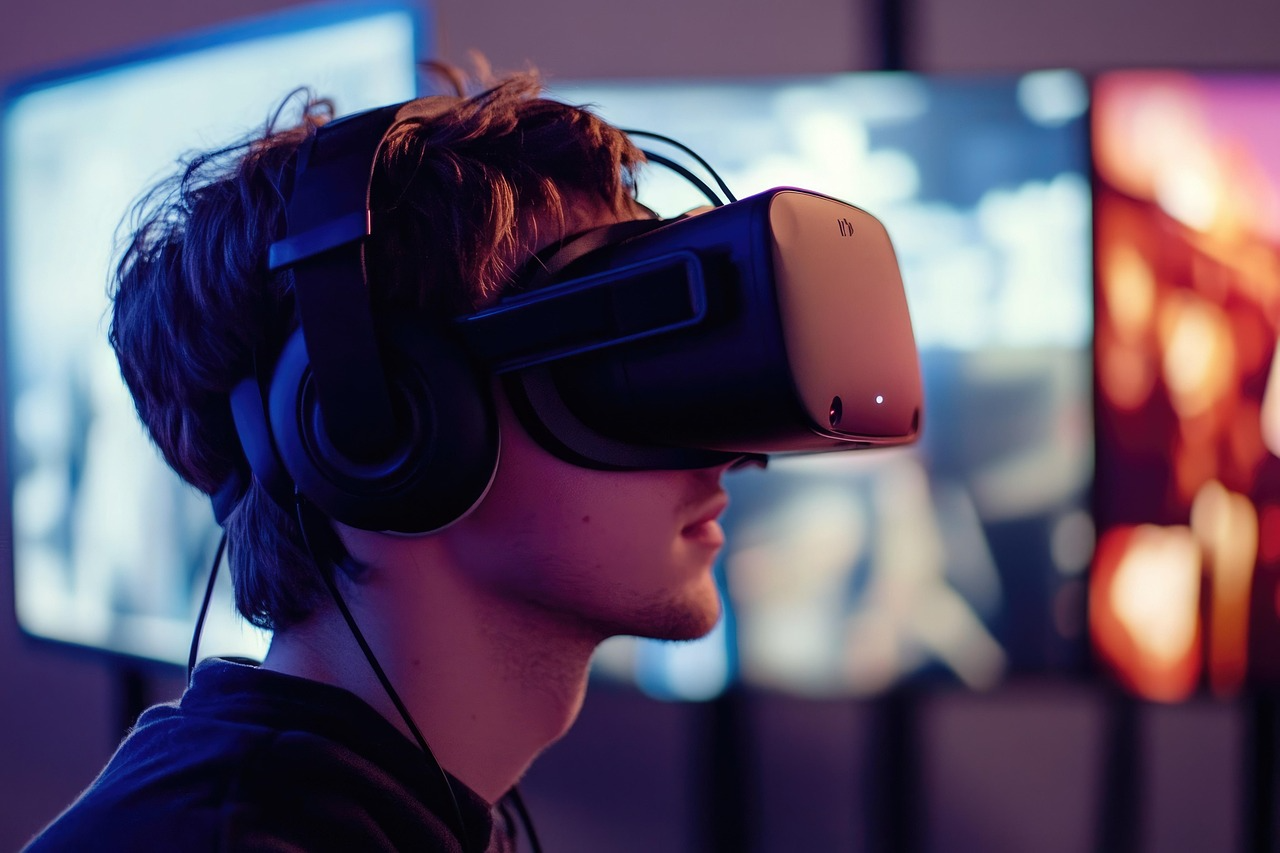
Watching people engage in athletic contests has always been a popular pastime. Over the past century, doing this remotely became possible and elevated sporting leagues into billion-dollar-making businesses. As TV developed, the number of individuals who viewed sports events as a leisure pastime exploded. Today, these contests dominate the TV landscape, as evidenced by the fact that three years ago, ninety-six out of the top one hundred US telecasts were sporting ones.
This is unsurprising because scripted content, over the past decade, has slowly moved to streaming services, making live sports the most reliable way to make millions tune into a broadcast, with engagement in these events boosted by viewers’ surging willingness to bet on them. Debates on social media and the sporting documentaries fad have also grown interest and viewer investment, but not to the level that betting has. Moreover, high-profile wagering sites now offer live streams within their interfaces and real-time trackers that provide in-depth stats during games.
One could say that these websites implement smart technology to better convey the on-the-field/floor goings-on. They, no doubt, provide a taste of how modern tech has affected the viewing experience, and transferred watching athletic contests from large living room screens to smaller ones on hand-held devices. Many are waiting for wearable sensors worn by players to provide even deeper, granular insight into their performance, and below, we get into how technological advancements that incorporate connectivity, data processing, and autonomous adaptation have affected live sports, and what to expect next in this field.
AI-Powered Personalization
Artificial intelligence, or AI as most call it, has become one of the hottest topics of discussion, as this technology is changing the world, and naturally, it is also impacting modern sports broadcasting. From the 1950s onwards, until very recently, everyone watched the same thing. There were production teams, usually on-site, in a trailer, or in a studio, which decided how a sporting event would get presented, meaning what angles would get covered, and what the focus would fall on. Of course, this helped create a narrative, not one that everyone agreed with or liked. Until a few years ago, there was no room for customization; there was only one unified feed.
However, that is changing, and has already changed quite a bit. There is now architecture available that can deliver tailored feeds that are provided via personalization engines, AI that learns from behavior data, and then modifies the broadcast to meet viewers’ personal preferences. High-end systems have these kinds of capabilities to remember what camera angles you like to linger on, which segments you often skip, and so on. Audio descriptions for visually impaired viewers are also very common, and so is customizable text.
AI can build a profile for you based on what you like, and then tweak the broadcast to meet your needs. This already happens in terms of notifications, and Amazon Prime allows viewers to choose from different audio feeds. Platform recommendation agents offer games they know a user will have a higher chance to view than ones that they predict will evoke little to no interest. It is all about curated content in this digital age of ours, and the sporting sphere is no different, as personalization everywhere represents an irreversible shift.
Real-Time Data Analytics
We already went into this above, and the most serious sports fans are now all about data. Again, this is, in part, fueled by the growing popularity of sports betting, and in-play or live wagering as well, which makes people who wager want to consult as many statistics as they can and implement various prediction models that lean on things like player tracking metrics.
When it comes to live sports, companies like Opta, Sportradar, and Genius Sports have established themselves as providers of advanced broadcast metrics, implementing computer-vision tracking and ultra-wideband tracking, among other things, to enhance event feeds. There are also wearable providers such as STATSports and Catapult, which have sensor devices that can deliver real-time data, like distance covered, work rate, high-speed running, average speed or pace, heart rate, sprint maps, etc. Most of this information is not shared publicly, and it is primarily used to manage training load and for teams to make informed substitutions. However, metrics like top speed and distance covered are shown on live broadcasts for top rugby games, and are sometimes featured in cycling contests, which are famous for sharing biometrics.
Expectations are that the visual presentation of this and other data will cause a massive revolution in how people perceive what is happening in contests, and this info will power increasingly more accurate predictive analytics. Such tools will provide fans with means and a vocabulary that will enable them to discuss sports through a heavily probabilistic lens.
Social & VR Features
Watching sports, in person or through a TV, has commonly been a social activity. Yes, some people often watch sports alone, but there is a much bigger rush when one views a competition with others around. To replicate the feelings that social viewings supply, platforms have integrated comment threads, reaction feeds, and interactive polling. These elements look to enhance communal participation. Live-tweeting served this purpose before, and now, it is not unusual for broadcasts to curate social media reactions during games and display trending hashtags, among other things.
Virtual watch parties are also a hot trend, and virtual reality promises to take this phenomenon to a whole new stratosphere. In past years, there have been experiments with 360-degree camera feeds and VR boxes for events like the Super Bowl. Unfortunately, these were not a super success. Nevertheless, advancements in VR have now lowered latency, while improving multi-angle rendering. NBA League Pass offers VR functionality as well, and so have tennis Grand Slams such as Wimbledon and the US Open. Sadly, headset costs remain prohibitive for mass-market adoption, and VR broadcasts are less about perfect in-person replication and more about offering a different kind of futuristic experience that has a luxury novelty to it.
Read More at Gorod