Sky Bloom IT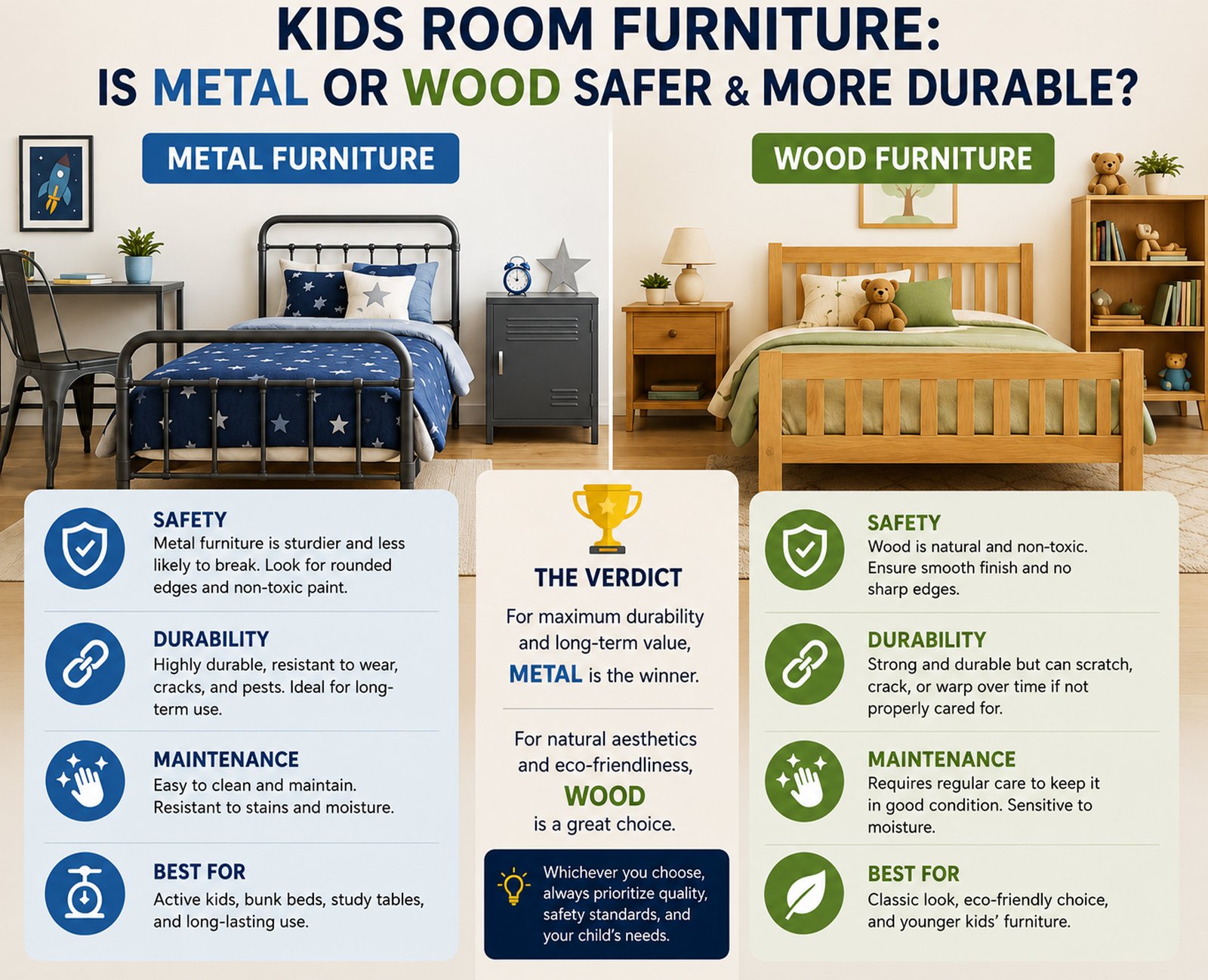
Introduction
Choosing furniture for your child’s room is more than just picking a color or style. It is about safety, durability, and making a smart long-term investment. Whether you are setting up a study corner for a 7-year-old or completely redoing a teenager’s bedroom, the furniture you pick will be tested in ways adult furniture rarely is.
That brings us to the question most Indian parents eventually face: when it comes to kids room furniture, metal vs wood, which one actually makes more sense? Both materials have genuine strengths. Wood feels warm and classic. Metal is tough, low-maintenance, and increasingly popular in modern Indian homes. But when you factor in safety, the climate, and long-term value, one of them pulls ahead quite clearly.
In this guide, we break it all down so you can make the right call, and we will also walk you through three solid furniture picks from Honeytouch.co that are worth serious consideration.
Why Kids Room Furniture Needs Extra Attention
Kids are genuinely hard on furniture. A bed becomes a trampoline. A study table collects crayon marks, water spills, and the occasional half-eaten biscuit. A chair gets tilted back on two legs until someone yells, and then the same thing happens five minutes later.
This is why safe furniture for kids rooms in India is not just a marketing phrase. It is a real and non-negotiable requirement. Sharp edges, unstable frames, and toxic finishes are not minor inconveniences, in a child’s room, they are actual hazards. Before aesthetics or price even enter the conversation, safety and durability have to come first.
There is also the Indian climate to consider. Rajasthan summers push past 45 degrees Celsius. Coastal cities stay humid almost year-round. Monsoon moisture gradually seeps into untreated or poorly sealed wood over time. These are conditions that affect different materials very differently, and they often tip the furniture decision in one direction quite firmly.
Then there is the financial angle. Cheap furniture feels like a smart buy until you are replacing it every two to three years. A piece of durable kids bedroom furniture that holds up for a decade costs less over time than three rounds of budget replacements. Durability is not just about convenience, it is a long-term money decision.
Metal vs Wood: What You Actually Need to Know
Durability
When it comes to structural strength, metal has a clear advantage in the mid-range furniture market. A powder-coated steel frame does not crack, warp, or weaken over time the way wood can, particularly in humid or high-temperature environments. Metal beds and study tables routinely hold up for 12 to 15 years with very little maintenance. That kind of longevity is genuinely hard to find in mid-range wooden furniture.
Solid wood, when well-made and properly treated, can last just as long, but it costs significantly more, requires regular upkeep, and remains vulnerable to termites. Engineered wood, which dominates the affordable wood furniture market in India, typically lasts 5 to 8 years before showing real wear.
Termite Resistance
This matters more than most buyers realise. Termites are a serious problem across many parts of India, especially in older buildings or regions with high soil moisture. Wooden furniture, even premium solid wood, is vulnerable. Metal is not. There are no organic fibers for termites to eat through and no material for pests to burrow into. For families in termite-prone areas, this factor alone is a convincing reason to choose metal.
Easy to Clean
Spills, crayon marks, sticky residue, a damp cloth handles all of it on a metal surface. No special products, no risk of water damage, no long drying times. For a room that takes daily punishment, that kind of easy maintenance matters every single day. Wood surfaces require more careful cleaning, and engineered wood can swell or peel with repeated water exposure.
Cost
Quality solid wood that can genuinely withstand the Indian climate is expensive. Metal gives you comparable or better structural performance at a lower price point. When you are buying a bed, a study table, and seating together, that price difference adds up meaningfully.
Where Wood Wins
Wood, particularly solid wood, wins on aesthetics. The natural grain, the warmth of the finish, the way it looks and feels in a room, metal simply cannot replicate that. Some parents also feel that metal furniture looks too industrial for a child’s space. That said, modern powder-coated metal furniture in whites, warm greys, and soft colors has closed this gap considerably. It is a fair preference, but it is largely the only category where wood has a consistent advantage.
Metal vs. Wood: Head-to-Head Comparison
Here is a straightforward comparison across the features that matter most for kids’ room furniture in Indian homes.
| Feature | Metal | Solid Wood | Engineered Wood | Winner |
| Durability | Excellent | Very Good | Moderate | Metal |
| Child Safety | High (if finished well) | High | Moderate | Tie |
| Easy to Clean | Very Easy | Moderate | Moderate | Metal |
| Termite Proof | Yes | No | Partially | Metal |
| Indian Climate Fit | Excellent | Moderate | Low-Moderate | Metal |
| Aesthetic Warmth | Moderate | Excellent | Good | Wood |
| Affordability | High | Low-Moderate | Moderate | Metal |
| Longevity | 10-15+ years | 10+ years (if maintained) | 5-8 years | Metal/Wood |
As the table shows, metal wins across most practical categories. Wood, particularly solid wood, holds its own on aesthetics and can be long-lasting when well-maintained. However, for most Indian households balancing budget, climate, and maintenance needs, metal is the more practical choice.
Best Kids Room Furniture from Honeytouch.co
If you have decided that metal furniture is the right call for your child’s room, the next step is finding pieces that are genuinely well-made, safe, and designed with children’s needs in mind. Honeytouch.co offers a range of kids’ furniture that ticks all these boxes. Here are three standout options worth considering.
1. Single Metal Bed for Kids
A metal single bed for kids is the centerpiece of any child’s bedroom, and this one from Honeytouch.co is built with that exact purpose in mind. It is well-suited for kids aged 5 to 16, so you are not investing in something that needs replacing in a few years.
The frame features rounded edges, a detail that sounds small but matters more than people expect. Kids roll around at night, bump into things, and interact with their bed in ways adults simply do not. Rounded corners eliminate the risk of cuts and scrapes. The powder-coated finish is smooth, chip-resistant, and easy to wipe clean after the inevitable spills. And because it is metal, there is zero termite risk, a real advantage for Indian homes. It pairs with any standard single mattress, giving you full flexibility on the comfort side.
2. Computer Table for Kids
Between school assignments, online classes, and creative projects, children are now spending serious hours at their desks. The furniture they use during those hours directly affects posture, focus, and comfort. That makes a good computer table for kids far more important than it used to be.
This table from Honeytouch.co is designed at an ergonomic height appropriate for school-going children and teenagers, supporting healthier posture over long study sessions. The metal frame ensures there is no wobble at all during use, which matters when a child is writing or working on a laptop for extended periods. The compact footprint is a thoughtful feature for urban Indian homes where space is often limited, you get a fully functional study surface without the table dominating the room.
3. Folding Chair for Children
Every kid room eventually needs flexible seating. Friends come over, the room gets rearranged for a project, or you simply need an extra chair that does not permanently eat up floor space. The folding chair for children from Honeytouch.co is built to handle all of that without fuss.
It is lightweight enough for kids to carry and reposition on their own, but the metal construction means it is strong enough for daily use without any structural concerns. When not needed, it folds flat and stores easily against a wall or inside a cupboard. It works at the study table, as extra seating during meals, or pulled out during sleepovers. The weight capacity is suited for growing kids, so it will not need replacing as your child gets bigger.
Tips for Choosing Safe Kids Furniture
Whatever material or brand you go with, there are some universal principles that should guide every furniture purchase you make for your child’s room.
- Always check for smooth, rounded edges before buying. Run your hand along corners and joints. If anything feels sharp, move on. This applies to both metal and wood furniture.
- Look for powder-coated or non-toxic finishes. The coating on metal furniture should be thick and chip-resistant. For wood, confirm the finish is child-safe and does not contain harmful chemicals. Children in younger age groups are particularly vulnerable to chemical exposure.
- Ensure the weight capacity suits growing children. Your child will gain weight and height over the years. Make sure the furniture you buy today can safely support them through their teenage years, not just their current size.
- Choose furniture that grows with the child. The best furniture investment is something that remains functional for many years. A study table that works for a 7-year-old should ideally still be practical for a 14-year-old. Look for designs that are not too juvenile or too age-specific.
- Prioritize easy-to-clean surfaces. This sounds simple, but it has a real impact on daily life. Surfaces that require special treatments or that absorb stains easily become a constant source of frustration in a home with active kids.
- Check stability before purchase. Whether buying online or in a store, look for information about the base design and how the furniture handles uneven weight distribution. A table or chair that tips easily is a safety hazard, regardless of how good it looks.
- Consider room ventilation and air circulation around furniture. In warmer parts of India, metal furniture with open frame designs allows better airflow, which contributes to overall room comfort during summer months.
Conclusion: Which One Should You Choose?
The metal vs. wood debate does not have a one-size-fits-all answer, but for most Indian parents, the practical advantages of metal are hard to ignore. Metal furniture wins on durability, ease of cleaning, termite resistance, climate suitability, and affordability. These are not small advantages. They are the factors that determine whether your furniture investment holds up over five, eight, or ten years of daily use by an active, growing child.
Wood, particularly solid wood, remains beautiful and can be long-lasting when properly maintained. If aesthetics are a high priority and you are willing to invest in quality and ongoing upkeep, wood is a perfectly valid choice. However, for the majority of Indian households dealing with heat, humidity, and the practical demands of raising children, metal is the smarter and more cost-effective option.
When it comes to kids’ room furniture in India, the best approach is simple: prioritize safety and durability first, then factor in aesthetics and budget. With brands like Honeytouch.co offering well-designed metal furniture that checks all the right boxes, you do not have to compromise on any of these fronts.
Ready to Furnish Your Child’s Room the Smart Way?
Explore Honeytouch.co for durable, safe, and stylish metal furniture designed for kids. From sturdy single beds to wobble-free study tables and versatile folding chairs, find everything your child’s room needs in one place002E