IQnewswire
The consumer technology landscape is undergoing a seismic shift. For the better part of a decade, we have been promised a future where digital information seamlessly overlays our physical reality. While early iterations were bulky or tethered, 2026 is seeing the arrival of more capable, standalone optical AR devices.
At the vanguard of this evolution is the RayNeo X3 Pro AI Display Glasses. This device represents a departure from mere notification screens, offering a fully integrated visual assistant. It bridges the gap between sci-fi concepts and daily utility.
Unlike competitors focused solely on audio, the RayNeo X3 Pro AI Display Glasses prioritize the visual spectrum. They can deliver key functions on-glasses, while pairing with a phone and network connection for certain advanced AI features. For the tech enthusiast, this is the hardware upgrade we have been waiting for.
Reason 1: The Crystal-Clear MicroLED Optical Engine
The primary stumbling block for early AR was always the display engine. Legacy devices often utilized “Birdbath” optics, which are commonly associated with “virtual screen” designs rather than see-through HUD overlays. The RayNeo X3 Pro AI Display Glasses solve this engineering challenge with advanced MicroLED technology.
MicroLED is self-emissive, meaning pixels generate their own light without a backlight. This allows the RayNeo X3 Pro AI Display Glasses to achieve high perceived contrast and strong legibility—especially in bright environments. The result is a sharp, vibrant image that looks natural, not washed out.
Paired with binocular diffractive optical waveguides, the visual experience is seamless. The digital overlay sits comfortably within your field of view, supporting a more balanced, two-eye viewing experience that can feel more natural for heads-up information.
This optical stack ensures that the RayNeo X3 Pro AI Display Glasses deliver clear text and UI readability for everyday heads-up tasks.
Display Tech Specs
- Technology: Full-color MicroLED + Optical Waveguide.
- Benefits: High-transparency waveguide design for natural eye contact.
- Visuals: Binocular display for comfortable, balanced viewing.
Reason 2: True AI Integration and Real-Time Translation
Hardware is useless without intelligence. We are entering the golden age of ai smart glasses, where context is king. The X3 Pro is not just a notification center; it is a proactive assistant powered by a multimodal AI engine.
A critical feature missing from many competitors is robust, real-time translation. The RayNeo X3 Pro AI Display Glasses support translation and AI features through the RayNeo App and typically require a Wi-Fi connection or phone hotspot for cloud AI processing.
Imagine sitting in a bistro in Tokyo or Paris. You look at a menu written entirely in a foreign language. The ai smart glasses identify the text and surface a translation in your field of view (with the best results when connected).
Similarly, during face-to-face conversations, the device can provide live subtitles. This keeps you engaged with the person, rather than looking down at a translation app on your phone.
This level of integration defines the next generation of ai smart glasses. Whether it is object recognition—identifying a flower species on a hike—or translating speech, the RayNeo X3 Pro AI Display Glasses act as a second brain.
Reason 3: Visibility That Conquers Sunlight
A historic pain point for augmented reality has been outdoor usability. Most waveguide displays wash out completely when competing with ambient daylight. This limitation previously confined AR experiences to indoor, controlled lighting environments.
The RayNeo X3 Pro AI Display Glasses tackle this limitation with a peak brightness of up to 6,000 nits. This figure is not just a spec sheet number; it is a practical necessity for real-world usage.
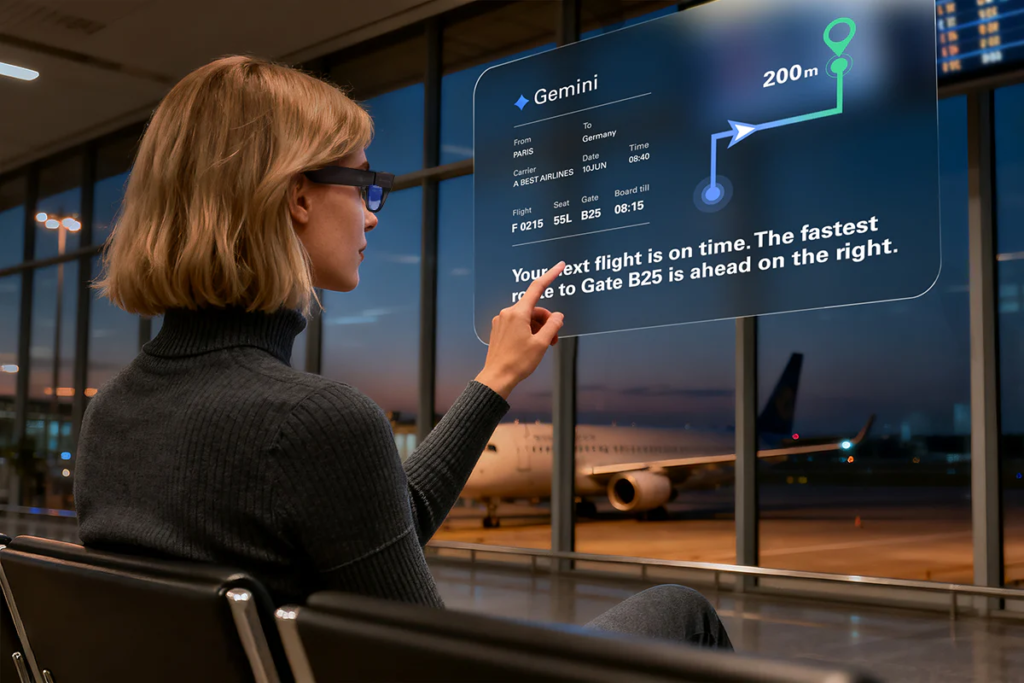
Whether you are cycling under the midday sun or navigating a bright city street, the display is designed to remain more readable. The RayNeo X3 Pro AI Display Glasses help ensure that navigation arrows and notification text can better cut through glare.
This high-brightness capability makes the RayNeo X3 Pro AI Display Glasses better suited for outdoor use, so you typically do not need to seek shade just to read an incoming message. By pushing brightness higher, RayNeo has made AR more viable for outdoor adventures.
Reason 4: Performance Driven by Snapdragon AR1
To run complex SLAM (Simultaneous Localization and Mapping) algorithms, you need significant processing power. The RayNeo X3 Pro AI Display Glasses are built on the Qualcomm Snapdragon AR1 Gen 1 platform.
This chipset is purpose-built for the unique thermal and power constraints of ai smart glasses. General-purpose mobile processors would overheat in such a compact form factor, but the Snapdragon AR1 is optimized for efficiency.
The RayNeo X3 Pro AI Display Glasses utilize this silicon to deliver smooth, stable graphics. This is critical for reducing visual discomfort and keeping overlays steady during prolonged use.
Furthermore, the dedicated AI processing unit (NPU) on the Snapdragon chip handles the heavy lifting for voice and image recognition where feasible, helping reduce latency and supporting a more responsive experience.
With the Snapdragon AR1, the RayNeo X3 Pro AI Display Glasses are positioned to handle evolving software features, as updates introduce more capable AI experiences over time.
Reason 5: A Design You Can Actually Wear
The final reason to choose the RayNeo X3 Pro AI Display Glasses is design. For any wearable to succeed, it must be socially acceptable. It cannot look like surveillance equipment or a medical device.
RayNeo engineers prioritized a “glasses-first” aesthetic. The RayNeo X3 Pro AI Display Glasses feature a balanced weight distribution that prevents nose fatigue. They look like premium, thick-rimmed eyewear rather than a computer on your face.
Ergonomics are crucial for adoption. The device includes adjustable air nose pads and optimized temple pressure. You can wear the RayNeo X3 Pro AI Display Glasses for hours without discomfort.
This attention to design means you are more likely to wear them daily. The best technology is the kind you have with you, and the RayNeo X3 Pro AI Display Glasses are designed to be worn, not carried.
By blending into social environments, these ai smart glasses avoid the “glasshole” stigma of the past. They offer a discreet way to stay connected without breaking eye contact or disrupting social interactions.
Conclusion: The Future is in Sight
The market for augmented reality is crowded, but few devices strike the right balance. The RayNeo X3 Pro AI Display Glasses offer a compelling mix of visual fidelity, AI intelligence, and wearable design.
They represent a mature step forward for the industry. For the developer, the creator, or the tech enthusiast, the RayNeo X3 Pro AI Display Glasses are a robust choice for 2026.
We are no longer waiting for the future of ai smart glasses; the day-to-day use cases are becoming practical. The convergence of MicroLED optics and Snapdragon processing has delivered a product that aims to live up to the potential.
Whether for travel, work, or exploration, the RayNeo X3 Pro AI Display Glasses provide a tangible upgrade to your digital life. They are a tool for those who want to see the world differently.