Khizar Seo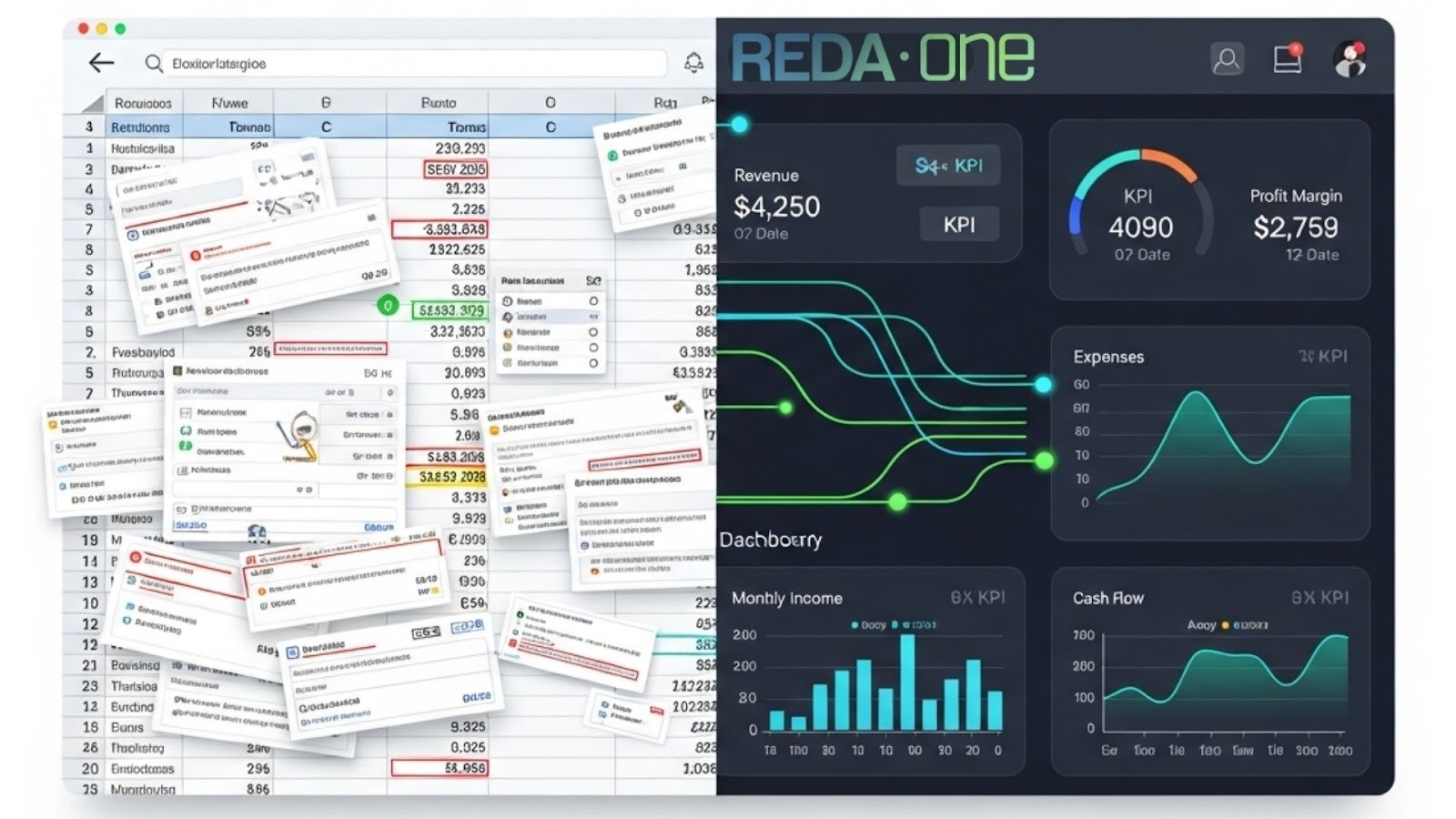
If you’re managing a multi-entity real estate portfolio – a mix of residential buildings, commercial assets, SPVs, JVs, or rental properties – you know how heavy the month-end close can feel. Different ledgers, different bank accounts, different rent cycles… and a single reporting deadline.
You start every month aiming to deliver clean financials on time. But when each property runs on its own system or spreadsheet, that promise quickly becomes a balancing act. One missed payment, one unmatched journal, one late approval – and the entire consolidation falls apart.
It doesn’t have to be this way.
Why Multi-Entity Accounting Breaks Traditional Workflows
The core issue is fragmentation. Each legal entity lives in its own ecosystem, with its own chart of accounts, bank accounts, vendors, and rent cycles. Scaling this setup across a portfolio means the complexity compounds:
1. Different Entities, Different Ledgers
Each SPV typically maintains its own books. Consolidation means stitching together multiple spreadsheets and adjusting for variations in revenue, expenses, taxes, and currencies.
2. Manual Bank Reconciliation Across Many Accounts
Most portfolios operate several operating, escrow, and credit-card accounts. Reconciling them manually becomes a time sink – and a major source of errors.
3. Diverse Rent Rolls & Lease Structures
Variable rent terms, CAM charges, utilities, late fees, and deposits vary across buildings. Tracking them manually creates inconsistencies that slow month-end close.
4. Complex AR/AP Across Entities
Invoices, vendor payments, receivables, and maintenance expenses flow in at different times. Without a unified system, things get missed – or posted incorrectly.
5. Compliance and Audit Risk
Fragmented data means incomplete records, missing audit trails, and mismanaged escrow accounts. For multi-entity structures, this risk compounds quickly.
The result?
A “month-end marathon” where teams spend 20–30 days manually fixing spreadsheets instead of driving financial strategy.
When Accounting Chaos Becomes a Growth Bottleneck
Slow month-end close doesn’t just inconvenience the finance team – it affects the entire organization:
- Delayed decision-making → leaders operate on outdated financials
- Shaky cash-flow visibility → planning becomes guesswork
- Frequent errors → unbalanced ledgers, mis-posted entries, and rework
- Team burnout → finance becomes a reactionary firefight
- Damaged credibility → investors and partners lose confidence
- Scaling becomes painful → every new entity adds more complexity
In short: without the right system, growth becomes a liability.
What the Ideal Solution Looks Like
A modern real estate organization needs accounting tech built specifically for multi-entity portfolios, not a generic ERP duct-taped together.
The ideal solution should:
- Support multi-company / multi-entity ledgers with independent books
- Automate bank and credit-card reconciliation
- Manage rent rolls, deposits, CAM, utilities, and lease accounting
- Centralize AR/AP, approvals, disbursements, and cash receipts
- Provide project, CAPEX, and fixed-asset accounting
- Enable automated consolidation with intercompany eliminations
- Offer audit-ready documentation and regulatory compliance
- Provide portfolio-level financial reports instantly
In short: a system that makes consolidation feel automatic.
REDA: Built for Multi-Entity Real Estate Portfolios
This is exactly what REDA’s Enterprise Accounting module delivers.
Unlike generic accounting software, REDA connects leasing, operations, property management, and enterprise accounting in one unified database.
Explore the platform → https://www.reda.one/real-estate-enterprise-accounting
Key capabilities include:
- Full multi-entity general ledger (cash or accrual) with real estate–native COA
- Banking integrations & automated reconciliations for all accounts
- Complete AR/AP workflows, e-invoicing, late fees, security deposits
- Automated rent-roll posting with CAM, variable charges, and deposits
- Escrow, management fee, and equity distribution accounting
- Purchase orders, invoice approvals & project-level budgeting
- Portfolio-level P&L, Balance Sheet, and Cash Flow with real-time drill-down
- Audit-ready history and approval trails
This architecture eliminates manual consolidation entirely – because the data is unified from the start.
A Real-World Before/After Scenario
Before REDA (Reality for many finance teams):
A 9-entity portfolio took 25+ days to close:
- Manually downloading statements for 15+ bank accounts
- Reconciling tenant receipts and vendor invoices entity by entity
- Eliminating inter-company transactions using Excel
- Correcting late entries and mismatched journals
- Merging individual P&Ls and balance sheets manually
Reports were often late – and sometimes inaccurate.
After REDA (One accounting cycle later):
- All bank accounts auto-synced
- Intercompany entries auto-matched and eliminated
- Rent rolls + vendor bills auto-posted with entity metadata
- Consolidated statements ready in 5 calendar days
- Zero manual merging
- Fully audit-ready documentation
The finance team reclaimed 15–20 workdays per month.
This is the difference between surviving growth and scaling confidently.
Benefits That Matter – Not Just features
This isn’t about saving time for the sake of it. Faster, cleaner consolidation unlocks real business value:
- Faster decision-making. Executives get accurate, consolidated financials sooner and can act on fresh data – acquisitions, refinancing, or portfolio rebalancing no longer wait on month-end.
- Stronger cash-flow control. With unified bank reconciliation and AR/AP visibility, teams manage working capital proactively.
- Lower audit and compliance risk. Every entry is traceable, with source documents attached, audits become cleaner and less disruptive.
- Operational scale without chaos. Adding a new SPV or asset no longer multiplies month-end workload; the system absorbs growth.
- Finance teams become strategic. Freed from manual cleanup, controllers and analysts spend time on forecasting, scenario planning, and investor communications.
Conclusion: It’s Time to Modernize Real Estate Accounting
If you’re still closing books the old way – manual reconciliations, Excel merges, late night corrections – you’re not just wasting time. You’re limiting the speed of your business, increasing operational risk, and putting strain on the team that should be driving insight.
Modern real-estate portfolios demand a real-estate-native accounting foundation. When ledgers, leases, bank feeds, and approvals are connected, consolidation becomes a process you can rely on – not a crisis you fear. That’s how organizations move from reacting to leading.
If you manage multiple entities and want an immediate discussion on how to shorten your month-end from weeks to days, REDA’s enterprise accounting capabilities are worth a look: