IQnewswire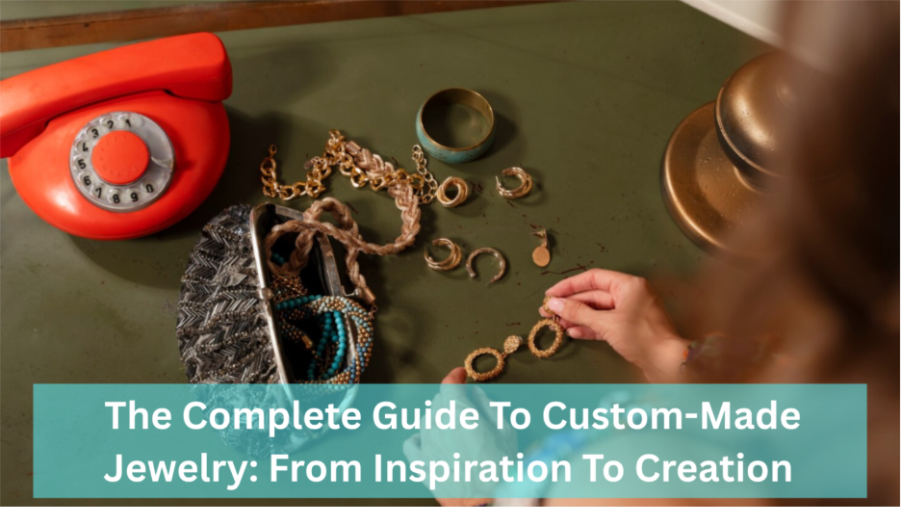
Custom-made jewelry gives people the opportunity to turn ideas into practice and create a significant object. In contrast with the ready-made jewelry, custom jewelry is created to represent the personality, milestones, and style of the wearer.
Engagement rings, pendants, bracelets, and earrings can all be used to create a personal story. This involves creativity, craftsmanship, and teamwork with trained artisans who ensure no detail is left out, as per the client’s vision.
This process allows clients to select materials, designs, and gemstones that appeal to them, thus resulting in jewelry that perfectly fits the style and meaning. Each detail, from the first idea to the last touch, is done with extreme care to create a work that is not only beautiful but also significant.
In the following section, you will learn what goes into making custom jewelry, so you have all the answers to why it carries unique value.
1. Starting Your Custom Jewelry Journey

The process of the custom made jewelry starts with a carefully designed consultation. This step enables the clients to share their vision inspired by memories, favorite designs, or special occasions.
Designers exchange ideas, discuss possibilities, propose materials, and provide guidance so that the piece fulfills both functional and aesthetic requirements. Such consultation is necessary since all details are clarified before proceeding.
It is a satisfying process for many clients as they participate in creating an art that embodies their own narrative. Clients and designers work together by exchanging ideas, drawings, or inspirational photos in order to come up with a concept that is creative and feasible.
Meanwhile, artisans record each detail behind the scenes so that there is no error during the design process.
2. Selecting Materials and Gemstones
Once the design is described, the next step is selecting metals and gemstones. Colors like yellow, white, and rose gold, in addition to platinum, have their differences in their appearance and also in their durability.
Gemstones are chosen based on color, cut, clarity, and personal meaning. Most clients value the advice of professionals who demonstrate how every material complements the design and lasts long.
There are also the ethical sourcing and the personal inclination of the piece, which add more depth. The correct selection of materials helps turn a design idea into a complete product that is both beautiful to the eye and long-lasting.
In the background, craftsmen ensure that every stone is accurately measured and positioned to look natural.
3. Designing and Visualization

The next step is to develop a comprehensive design on a CAD (Computer-Aided Design) application. This enables designers to create an accurate 3D model of the jewelry before crafting.
The clients are able to see the design from all angles and make adjustments to the size, shape, or positioning of stones. Visualization makes the completed work resemble the initial idea and prevents any surprises.
Many customers are happy to view an actual preview of their jewelry because it brings their imagination to life in a way sketches cannot. During this stage, designers make changes to proportions and details to balance the aesthetics and integrity of the structure, that is, between imagination and reality.
4. Crafting And Production
After the design is approved, the crafting process starts with the help of skilled artisans. Metals are sculpted with great care, and gemstones are set exactly.
This step must be done cautiously by focusing on detail and technical knowledge so that the piece is completed according to the agreed specifications. As work flows in the workshop, the jewelers use specific instruments to reveal the brilliance and structure of the design.
Most clients share that seeing this process or receiving updates adds value to the end product, as they realize that a dedicated team worked to make their vision a reality. Compared with mass-produced jewelry, which is standardized, custom jewelry offers a degree of uniqueness and perfection that is impossible to reproduce.
5. Final Touches and Personalization

The last step involves polishing, quality tests, and additional personalization. Surfaces are polished, stones are set, and details are worked out to ensure brilliance and stability.
One can also add personal touches, such as engravings or other special design features, which convey even more meaning and make the jewelry one-of-a-kind. Customers often observe that the end product feels like a tangible manifestation of their thoughts and memories.
Finishing is done with strict attention to lighting so that all surfaces appear shiny and comfortable. The result is a timeless piece of jewelry that is a personal statement of expression and a blend of art, style, and personality.
Benefits Of Custom Jewelry
Handmade jewelry has distinct benefits compared to mass-produced products. Each artwork is crafted to fit perfectly, in accordance with the style of the wearer, and laced with a sense of meaning.
Clients are also engaged in the jewelry creation process, which fosters a special emotional bond. Individual choice of materials, gemstones, and design details is available during the customization process, ensuring stability and beauty.
A lot of customers share that their experience of creating a piece is equally significant as getting one because it represents individuality and creativity. Custom jewelry is also a timeless family heirloom, and stories, milestones, and moments are captured in a manner that mass-produced jewelry cannot.
It integrates style, technical craft, and individual meaning in a manner that is indeed remarkable.
Conclusion
Handmade jewelry transforms the idea into beautifully durable and meaningful creations. From consultation and material selection to CAD design, crafting, and final polishing, every step is taken to ensure the final work is what the wearer desires.
The process gives benefits as compared to the mass-produced jewelry and offers a perfect fit, original design, and personal meaning. The process of teaming up with designers can be a fulfilling experience, and clients usually feel that they are involved in the creative process.
Handcrafted jewelry is not just another accessory, but a valuable symbol of uniqueness, achievements, occasions, and recollections.